Four years, two fertiliser shocks - global conflicts hit Irish farmers

Ireland as an island is no stranger to rough waters but the economic forecast in the Middle East signals turbulent conditions will continue.
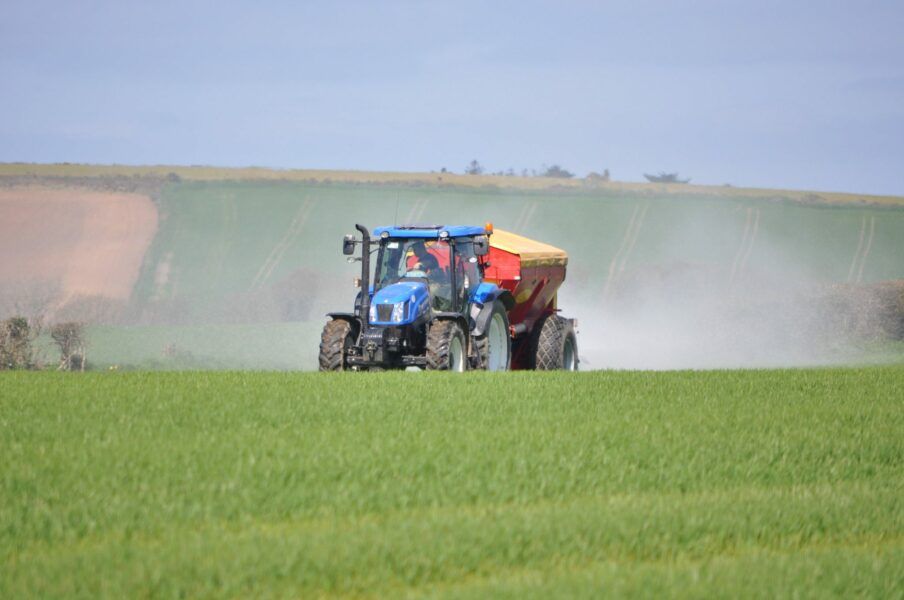
The unrest in the Middle East has caused significant upheaval in Irish farmers' pockets and their plans on spreading fertiliser this spring.
The geopolitical conflict has caused nitrogen (N) fertiliser prices across Ireland to significantly increase since the war started on February 28 this year, with one TD outlining a 60% rise in the input cost.
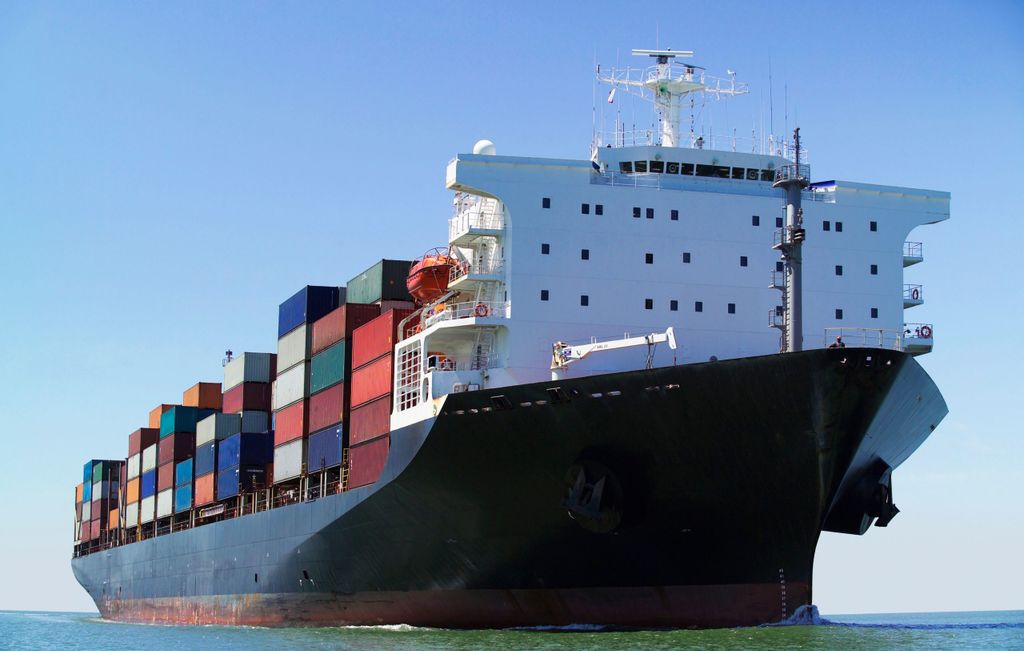
About 25-30% of global N fertiliser exports pass through the Strait of Hormuz, according to Rabobank.
Despite the transport route being almost 7,000km away from Ireland, the impact of its closure has had considerable effects on both the price and supply of chemical fertilisers here.
Volatility in natural gas prices, which makes up around 60% of the cost of producing N fertiliser, is the main culprit for the recent spike in fertiliser costs.
Rabobank reports that within the first 48 hours of the start of the war, EU natural gas prices rose by 45%.
According to data obtained by Agriland from the Central Statistics Office (CSO), Ireland imported 317,436t of fertiliser from the Middle East region in 2025.
History repeating itself
When Russia invaded Ukraine in March 2022, gas and oil prices surged, with the knock-on-effect increasing fertiliser prices "in excess of 200%" Teagasc economists reported at the time.
This conflict created an unprecedented impact on stock levels in co-ops across the country with some co-ops temporarily ceasing all sales of fertiliser at the time.
The CEO of the International Fertilizer Association, Alzbeta Klein, told Agriland that in comparison to 2022, "what stands out is the lack of obvious alternative routes that can quickly replace flows through the Strait of Hormuz.
"After the immediate shock of the Russia-Ukraine market disruption, fertiliser export volumes were able to shift via the Baltic Sea," she added.
From CSO data, in 2021, Ireland imported 378,460t of fertiliser from Russia.
After the EU imposed restrictions on Russian imports, this figure plummeted to only 24,163t in 2023.
As for 2026, fertiliser prices are coming off a higher base than when the Ukrainian war began, with prices in 2025 at about 50% above the five-year average price of pre-2022, according to ifac.
"In percentage terms, the price increases are not as drastic as in early 2022 but in euro terms the price of urea, for example, is getting near 2022 levels," - ifac.
Ifac's head of Public Sector Services and Economics, Karol Kissane, says the Carbon Border Adjustment Mechanism (CBAM) "has insulated Ireland a little up to this stage as large quantities of fertiliser was imported in late 2025 before this tax was imposed".
However, these stocks will be sold out soon which, in turn, means any fertiliser imported will now suffer this tax, plus a much higher global market price.
While the initial hike in prices from the conflict in the Middle East has not been as severe as the immediate aftermath in 2022, ifac has said the long-term issues "may be more drastic".
Duration
Yara chief executive, Svein Tore Holsether in recent media reports claimed: "If the Strait of Hormuz was closed for a year, it would be catastrophic... you will see significant reductions in the farm yield."
Tightening margins, particularly on the dairy front, will curtail farmers' outlook on profit for the rest of the year.
Ifac has said: "If the issues in the Gulf region persist, then we are looking at global supply pressures and the probability of much higher prices as the year progresses."
Analysis has shown an average cost of production on ifac client farms of 42c/L in 2025.
"With much higher fertiliser and diesel prices, it seems likely the cost of production in total costs in 2026 will be in excess of the 2025 figure," Ifac stated.
A spokesperson for the Department of Agriculture, Food and the Marine (DAFM) told Agriland that Irish importers had prepared well "in the last quarter of 2025, with CAN [calcium ammonium nitrate] imports increasing by 55% and urea by 260%.
"An analysis of the National Fertiliser Database indicates that there is sufficient fertiliser in the country... but products such as urea may be in shorter supply."
Perseverance
Geopolitical issues have become much more frequent in recent years and are a constant factor in agri-economics according to professor of economics at Dublin City University (DCU), Edgar Morgenroth.
Taking a positive environmental stance on the situation, he said that there is "a correlation between fertiliser application and water eutrophication".
Some evidence suggests that farmers were "overusing fertiliser" and in the wake of this unrest, farmers could "rethink their production practices by using a low nitrogen regime", the professor suggested.
"You can make yourself more resilient using simple management techniques, as a low cost model can still provide a high stocking density."
Farmers will look to treat fertiliser as a strategic asset and by incorporating "a high clover content as a substitute to chemical nitrogen", Morgenroth said this would enable lower N fertiliser usage.
In principle, consumers want certainty, but with farmers being price-takers in a world market for fertiliser, there is nothing certain about this commodity crisis.