Area of forage maize grown in Ireland expected to grow again


A late start to the spring planting season is expected to encourage further growth in the area of forage maize grown in Ireland.
To produce a good crop, plants need to grow very rapidly once they have germinated.
They will do this if the soil moisture and structure are good, the temperature is warm and nutrition is adequate.
Maize can easily produce 50t/ha in a period of four months.
To support this rapid growth, it has a large demand for nutrients and any shortage will restrict early growth and final yield.
According to the Potash Development Association (PDA), phosphorus (P) is required particularly by the growing tips of the plant, hence its importance for root growth.
Any shortage, especially in the very early stages, reduces root growth and nutrient uptake. This can adversely affect the growth of the crop for the rest of the season.
Typical phosphate removal is 1.4kg P2O5/t fresh crop, that is 55kg/ha P2O5 for an average 40t/ha forage crop.
Potash
Potash (Potassium, K) has several diverse roles in plants.
It plays an important role in regulating the water content of the plant and with an adequate supply of K plants can survive drought stress more easily.
It plays a major role in maintaining the turgor (i.e. rigidity) of plant tissue.
Leaves need to be turgid to remain fully extended to maximise the surface exposed to sunlight that provides the energy to convert carbon dioxide in the atmosphere to sugars in the leaves.
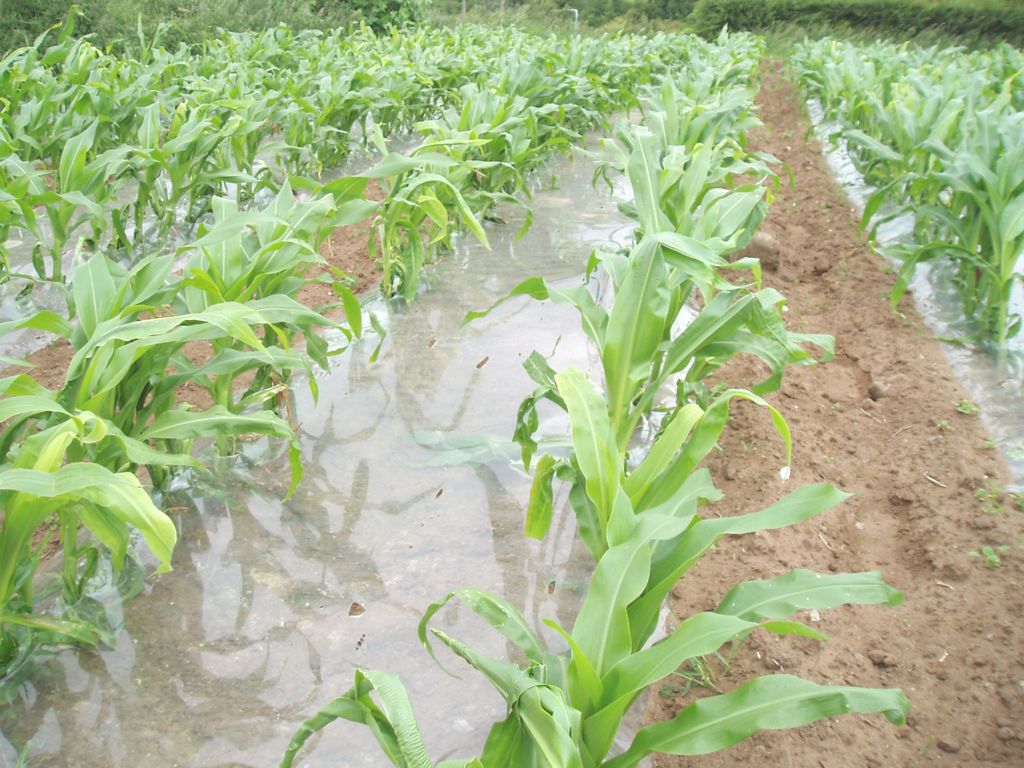
Plants well supplied with K also seem to be less susceptible to fungal and pest attacks.
Potassium is the nutrient required in the greatest amount by maize. An average 40t/ha crop takes up around 360kg/ha K2O by early August.
The demand for potash is particularly large in the period of rapid growth, when the crop needs to take up about 8kg/ha K2O per day.
The soil must be able to supply both the total demand of 360kg/ha and the daily requirement of 8kg/ha without any hindrance.
This requires an adequate level of readily plant available soil potassium.
Magnesium
Magnesium (Mg) is an essential element in chlorophyll and hence for photosynthesis. Crop removal is 40kg/ha MgO.
The total requirement (to be supplied from manure and fertiliser) should be related to Mg level in the soil.
Additional Mg is only justified at soil Index 0 when 50-100kg MgO/ha should be applied every 3-4 years.
If both potash and magnesium soil levels are below the optimum, then apply the larger amount (100 kg MgO/ha).
Sulpur
Sulphur (S) is a constituent of protein together with nitrogen and the supplies of these nutrients in plants are highly inter-related.
Studies have shown that one nutrient will accumulate in plants when the other is deficient, and when this deficiency is corrected the accumulated nutrient is then used in protein synthesis.
Therefore, a shortage in the availability of sulphur will reduce the efficiency of nitrogen use.
Sulphur deficiencies are possible in areas where the soil sulphur level is below optimum.
Sulphur is applied in animal manures, but much of this is unavailable.