25 years on from the launch of EBI, is it worth it?

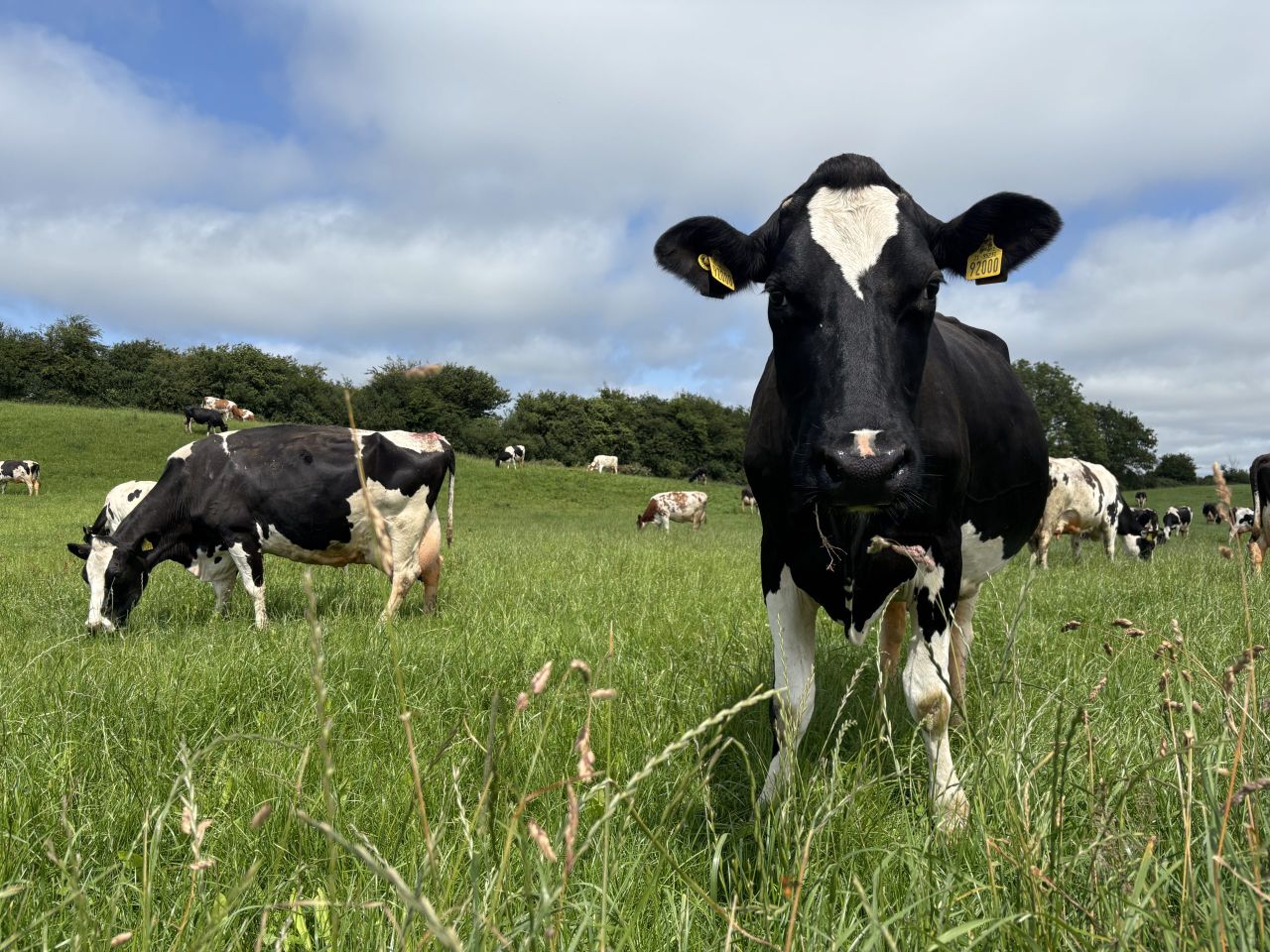
It was 25 years ago that the Irish Cattle Breeding Federation (ICBF) launched the Economic Breeding Index (EBI), bringing an end to the Relative Breeding Index (RBI).
Over the two and a half decades since its launch, there has being a whirlwind of change in the industry, the most notable being the abolishment of the milk quotas, which saw rapid expansion in Ireland's dairy herds.
But through all that time and change, has EBI actually proven its own worth?
EBI
Breeding for EBI has divided farmers for years, with plenty of farms keeping the tool at the heart of their breeding strategies, while some avoid altogether, and others take minimal notice of it.
Farmers across the country have told Agriland that they feel the tool punishes some breeds, while feeling some traits are 'weighted disproportionately'.
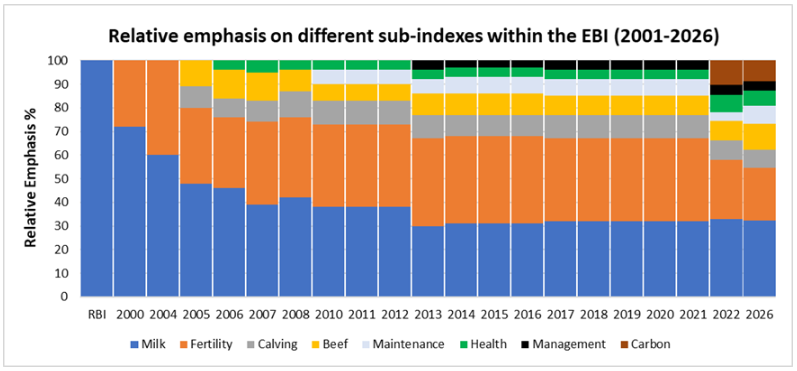
And maybe they are not wrong when you consider details such as the maintenance sub-index, which applies a minus figure to any animals over 600kg.
For example, farms milking a 675kg Holstein have €43 taken from their overall EBI index straight away, while a Jersey-cross weighing in at 525kg will have an additional €44 on their overall index.
ICBF says this €87 difference across 150kg is due to the feed required by the cow to simply maintain herself.
There is an argument there on which breed suits Irish dairy the best, but does it seem fair that a heavier cow suiting a specific system and hitting high performance and financial goals should get penalised?
So how is EBI calculated?
EBI is a a single profit index designed to work across all dairy breeds for grass-based systems.
The calculations stems from the base cow, a virtual animal based off a group of animals which acts as a 'starting line' - farmers will remember this line changing in September 2025 to keep up with advancing genetics.
As it stands, the base cow yields 6,287kg of milk at 4.2% fat and 3.6% protein, equating to 490kg of milk. This is while maintaining a calving interval of 385 days.
Therefore, a cow with an EBI of €100 is expected to have calves €100 more profitable over their lifetime than the base cow, or vice versa if the figure is in the minus.
Is the index worth it?
The short answer is 'yes', because at the end of the day studies suggest that every €1 in the EBI equates to €2 of profit on the farm.
The more complex answer is difficult and generates the debate on whether EBI suits every system.
What we do know are the results the EBI has generated over the last 25 years.
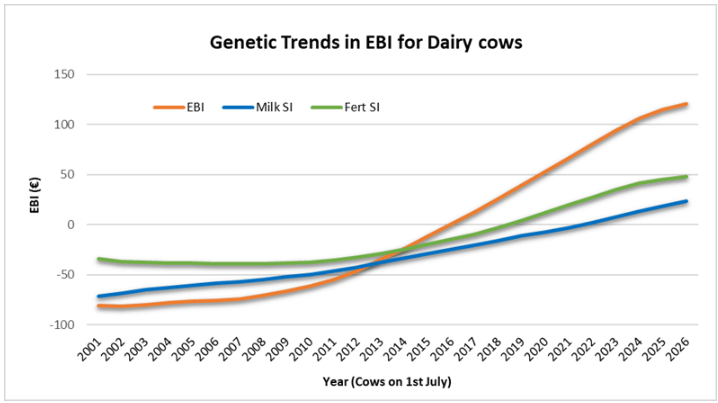
Since its launch, the average EBI figure in Ireland has risen €202, with the average dairy cow sitting at €121 in 2026 - while the current annual rate of genetic gain in terms of EBI stands at €10.8 per year.
With this, indexes have rose across the board, from milk and fertility, to health and sustainability, and more.
This has corresponded with national average milk solids rising from 390kg per lactation in 2015 to 459kg per lactation in 2025.
Meanwhile, the average calving interval dropped from 389 days in 2016 to 383 days in 2026, while the average six-week calving rate increased from 58% to 69%.
Considering half of that performance gain comes from genetic progress, the rest was down to improved environmental and management factors, which has come from tools such as heat detection, targeted diets, pasture utilisation, and more.
So yes, the EBI is a brilliant tool when used alongside other breeding factors and good management, but is there scope for improvement to prevent farmer pushback?