Putting a price on reproductive efficiency in the suckler herd

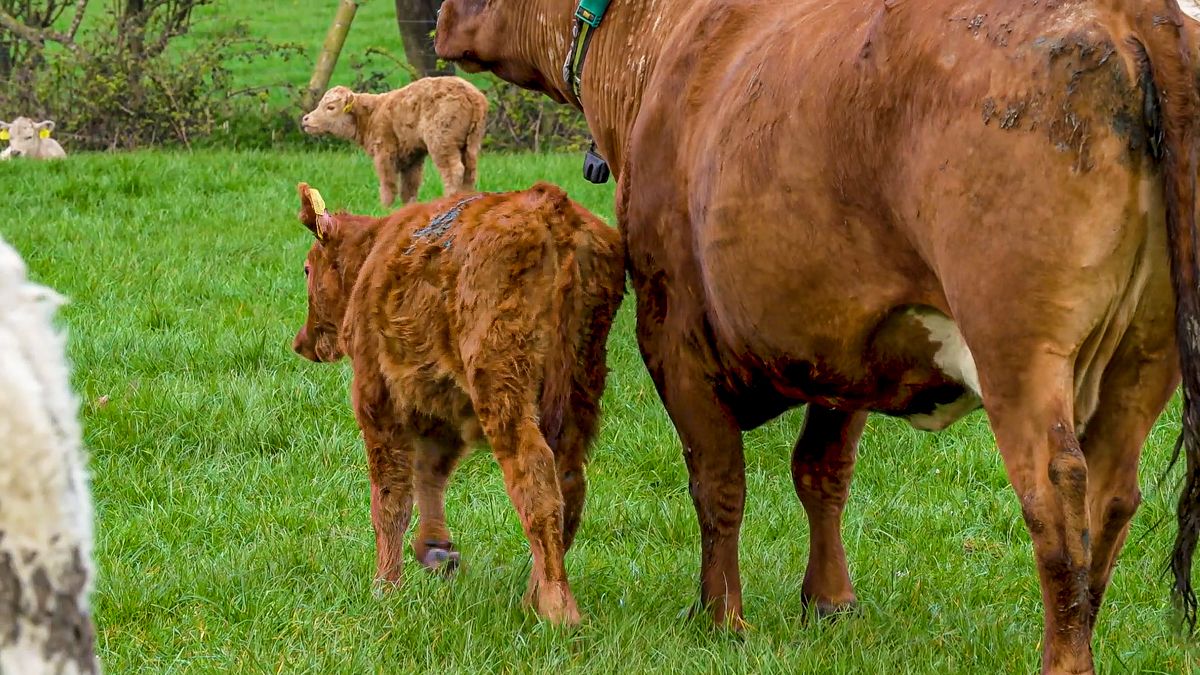
While the key performance indicators (KPIs) vary on suckler farms around the country, the importance of getting calves on the ground cannot be understated.
According to Irish Cattle Breeding Federation (ICBF) data on spring 2026 calving, the top 10% of herds are achieving a 358-day interval compared to 445-day interval for the bottom 10% of herds.
A 445-day interval equates to 15 months between calves, with every extra day adding to feed, labour and maintenance costs.
The ICBF data reveals that the bottom 10% of herds average 0.64 calves/cow/year in comparison to the top 10% of herds achieving 1.01 calves/cow/year.
In real terms, if both herds had 100 cows, the top 10% herd would produce 101 calves in the year vs 64 calves for the bottom 10% herd, a difference of 37 calves over a year.
A longer interval may be caused by a cow calving a few weeks later each year, but over a number of cows, this figure adds up, leading to:
- Fewer calves for sale or finishing;
- Higher feed costs for each calf produced;
- More labour associated with longer calving seasons.
While many of these costs are intangible, they can play a significant role in overall profitability.
Heifer calving
According to the ICBF data, the herds in the top 10% had 75% of heifers calving between 22-26 months-of-age, while the bottom 10% of herds had no heifers calving in this age bracket.
Delayed heifer calving leads to more time the animal is consuming feed and using farm resources prior to producing a calf.
Where earlier heifer calving takes place, these animals can enter the breeding herd earlier, thus generating output sooner.
Small improvements in replacement management, calving interval, and calf output can lead to major benefits around your suckler herd's performance.