Will spring reseeding be a possibility this year?

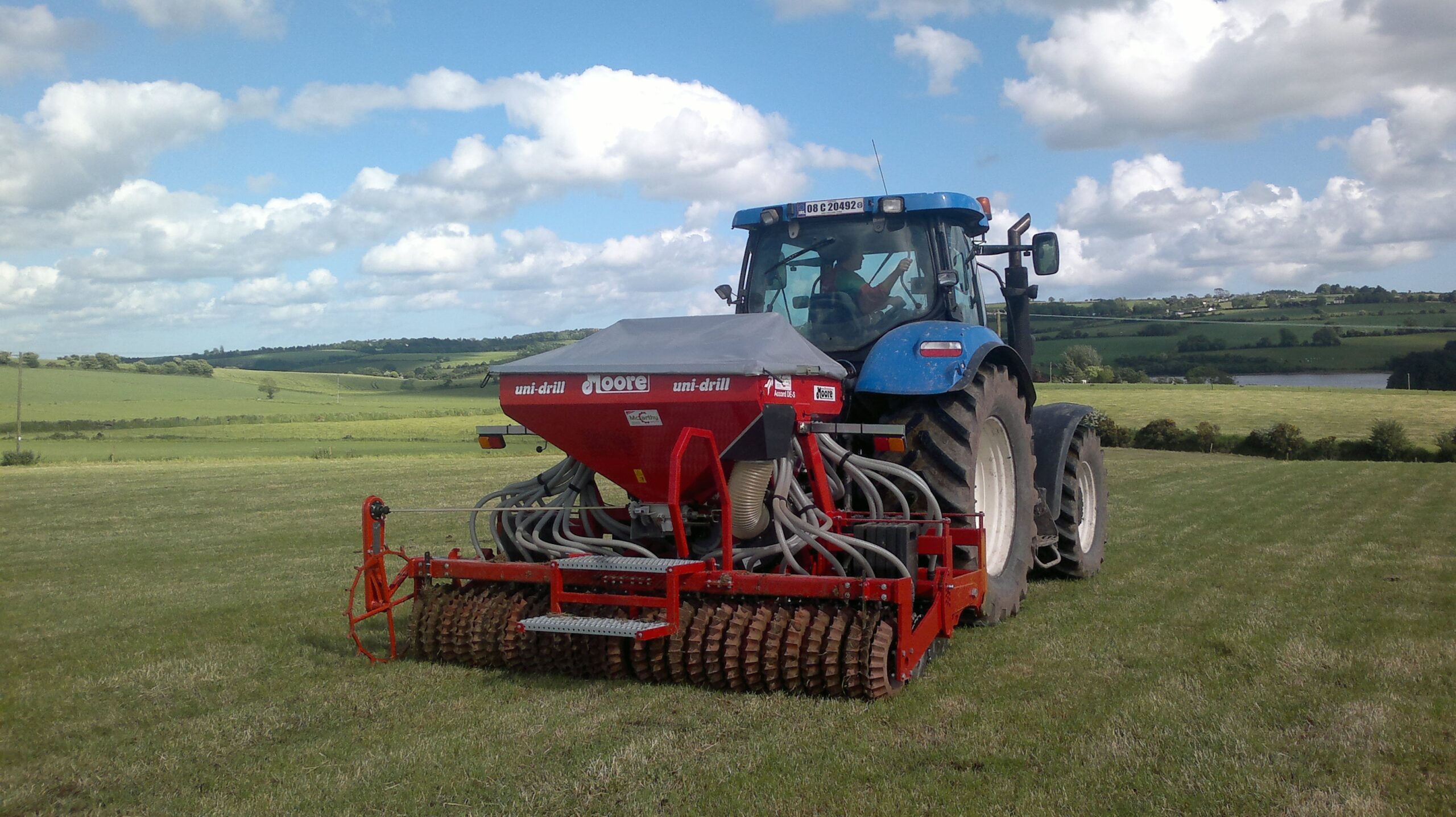
Considering the current grazing conditions, any thoughts of spring reseeding may seem well out of reach.
However, by the time the clocks go forward at the end of this month, cows will be hopefully full steam ahead at grass.
Once cows are rotating through the platform, the thoughts of spring reseeding become much more plausible.
Farmers may also be sceptical about reseeding this year considering where milk prices are at; but if any investment is going to be made on-farm, it should go towards the building blocks of the enterprise, which are simply cows and grass.
Spring reseeding can result in 10-20% more grass grown within the season, as well as rapid growth, higher palatability, and higher digestibility.
As well as the increased growth and nutrition, fertiliser usage will be heavily reduced, and with prices rising once again that has never been as important.
Cost factor
It is estimated that only 2% of our national grassland area is reseeded annually.
One of the biggest reasons for this is the large cost of reseeding.
However, increased production of high quality grass can actually lead to the costs being covered in just two years, making it one of the most cost-effective on-farm investments.
Reseeding can also be put on the long finger if farmers are struggling for grass or feel as if production is already sufficient on the farm.

In reality, old swards can actually cost farmers up to €300/ha/year due to reduced herbage production and reduced nitrogen (N) use efficiency.
Spring reseeds can have a turnaround time as low as 50-60 days, which should be manageable on the majority of farms.
Reseeding was typically said to cost around €750/ha in 2025, but with increasing fuel and fertiliser prices, it could cost in excess of €1,000/ha in 2026.
This seems like a massive investment with the way milk prices are, but it is still far more cost-effective than upgrading the tractor or buying a new jeep.
In 2025, the breakdown of costs per hectare to reseed was as follows:
| Operation | Cost/ha |
|---|---|
| Glyphosate (incl. spraying) (€34/ac Roundup Flex) | €123 |
| Ploughing | €138 |
| Levelling | €57 |
| Sowing | €161 |
| Rolling | €40 |
| Spreading fertiliser | €40 |
| Grass seed (€5.50/kg @35kg/ha) | €194 |
| Fertiliser (3 bags of 10-10-20/acre) | €200 |
| Post emergence spray and spraying (spray 40/ac) | €138 |
| Total cost (excl. fertiliser) | €1,091 (€851) |
| Cost per year (10 year lifetime) | €109/year |
As it stands, with such a fluctuation in green diesel prices and rising fertiliser prices, no fixed quote can be giving for 2026 reseeds just yet.
If you are planning a reseed for this spring, set aside at least €1,000/ha, but do not be surprised if prices rise once again.
Spring reseeding
If you are going reseeding, paddocks must be identified in March or early April.
Farmers should analyse the pasture performance, as well as checking for the percentage of open ground, clover establishment, weed content, and other issues.
Pastures should contain more than 60% cover of ryegrass; as pastures age, unsown grass species which are far less productive start to grow.
The principles of reseeding are as follows:
- Aim to reseed as early as possible in April, May, or June when soil temperatures are consistent and rising and there is adequate opportunity for weed control;
- Identify paddocks that are low in phosphorus (P), potassium (K) and pH;
- Spray off old pasture with a minimum of 5L/ha of glyphosate and allow a minimum of seven to 10 days after spraying before cultivating;
- Prepare a fine, firm seedbed;
- Use grass and white clover varieties from the Teagasc Pasture Profit Index and the Department of Agriculture, Food and the Marine (DAFM) recommended list;
- Sow at a rate of 25-28kg/ha of grass plus 2.5-5.0kg/ha of medium-leaved clover;
- Include no more than three or four cultivars per mix;
- Avoid sowing white clover too deep - a depth of approximately 10mm;
- Roll well to ensure good soil contact;
- Apply a suitable post-emergence spray when weeds are at seeding stage.
Despite poor clover growth in 2024, it is still worth incorporating it into fields that have a low weed burden and a high level of soil fertility.
Aim for soil indexes of three for P and K and a soil pH of 6.5.

Its also worth remembering that stricter management is necessary for success with clover pastures; having more than 20% of the farm with high clover content can be quite difficult to manage.
Clover should ideally be planted in April when there is a combination of good sunlight and moisture available.
Planting in late May onwards can be troublesome as it can often be too dry and the seed will not be able to penetrate down into the hard soil.