'Widened' income gap and gender disparities in CAP payments highlighted


A "widened" income gap and gender disparities in Common Agricultural Policy (CAP) payments have been highlighted in a report by the European Commission.
A recently published analytical brief provides an overview of women in EU agriculture and an assessment of the characteristics of the farms they manage.
This comes as 2026 is the International Year of the Woman Farmer, declared by the United Nations to highlight the vital roles women play across agri-food systems.
Gender imbalance
Farming in the EU is "characterised by gender imbalance", the report said.
"In 2023, less than one third of farms in the EU were managedby women (32%)," it said.

In 2023, the share of farms run by women varied among member states and ranged from 6% in the Netherlands, to 43% in Lithuania and 44% in Latvia, the report said.
"More than two thirds of EU female farmers were concentratedin Romania (38%), Poland and Italy (both 15%) in 2023 (thesethree countries hosting 58% of EU male farmers)."
Young farmers
Only 26% of young farmers are female in the EU.
Female managers tend to be older with 41% over 65 years-of-age, compared to 32% of male farmers being over 65.
"Among the new entrant farmers in the previous three years,the share of women is higher than within the overall farmingpopulation (38% compared to 32%)," the report said.
"This enhanced proportion of women among new farmers is consistent across all member states, except for Ireland.
"However, only 28% of these newly entered women are young farmers."
The report highlighted that female managers tend to possess a lower level of formal agricultural education than male managers.
"Furthermore, a significantly smaller proportion of womenparticipate in vocational training compared to men, withwomen's participation being roughly half that of men's."
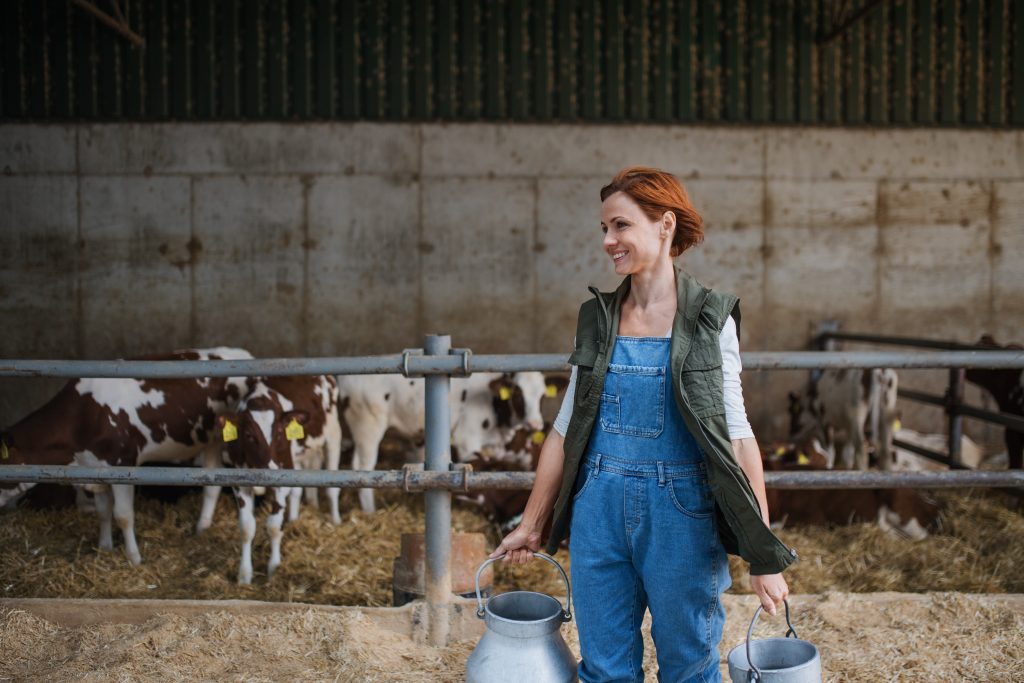
The main types of farms managed by women are specialist field crops (37% of holdings run by women), specialist permanent crops (22%) and mixed crops / livestock (12%).
In all member states, farms run by women tend to be smaller in both physical and economic size, according to the report.
Income
Farms managed by women had an average farm income per worker of €18,700 in 2023, which is 42% lower than the average income of farms run by men, the report highlighted.
"The gap has increased in 2023, following a long trend of reduction whereas average income had an opposite trend."

To finance their assets, female farmers "tend to rely less on credit compared to men, across all age groups", the report added.
CAP support
Based on data from DIB (Database on interventions and beneficiaries) and APR (Annual Performance Report), the first yearof implementation of the current CAP in 2023 reveals "notable gender disparities", according to the report.
"Women account for 31% of beneficiaries (APR), yet only 15% of overall CAP payments (DIB), whereas men are 63% of beneficiaries and receive 69% of funds.
"This discrepancy may arise from CAP payments being largely dependent on farm size, where women typically operate smallerfarms on average.
"In nearly all member states, the percentage of funds allocated to women is significantly lower than their share as beneficiaries, as the average aid they receive is also inferior."
The commission in the report noted that some member states have introduced incentives for women by providing highersupport rates to young women farmers under both CAP pillars.
"For instance, Spain has included a top-up to the complementary income support to young farmers in the case of young female farmers," it said.
"Ireland has provided a higher level of support for women in the on-farm capital investment scheme."
Underrepresented
The report said that while women play a "crucial role" in rural life and agricultural production, they are "still significantly underrepresented in farm leadership".
"Gender inequality in agriculture is not just about representation," the report said.
"It is also about structural access to land, resources, finance and decision-making power.
"If we want a truly fair, competitive and future-proof agricultural sector in the EU, addressing these structural imbalances is absolutely essential."
The commission said in the future CAP, it foresees "more targeted support and specific provisions aimed at strengthening equality in farming and rural areas".