Why has demand for Irish oats dropped this season?


Recent weeks have been marked by Teagasc highlighting that oats remain one of Ireland’s most reliable tillage crops.
However, current market signals are not reflecting the quality and versatility of this unique grain.
Teagasc tillage specialist, Ciaran Collins explained: “Oats are one of the great success stories of Irish tillage. Crops deliver high nutritional value for both humans and livestock.
“They suit our climate perfectly while consistently producing reliable yields.
“Yet, this season many tillage farmers are understandably asking why demand has dropped so sharply.
“Grain merchants are even considering exporting oats again - not due to a boom in international demand, but rather insufficient demand to use the oats already in the system.”
According to Teagasc, Ireland has a long history with oats.
In 1916, over 294,000ha were grown, an indication of just how well suited the Irish land and climate are to the crop.
Over the last five years, the combined winter and spring area of oats has averaged 27,820ha.
But in 2025, it jumped to 33,600ha, up 21%. This increase is partly responsible for the excess oats in the market.
Meanwhile, the yield of oats has remained very consistent over the last few years, with much less variability that other break crop options.
The five-year yield average for winter oats is 8.7t/ha while its spring counterpart equivalent yield average figure is 7.5t/ha.
Oats advantages
From a rotational perspective, oat crops offer many advantages, according to Teagasc
They are an excellent break crop, as good as oilseed rape or beans in rotation. They have a low nutrient requirement, allied to lower pesticide inputs than wheat and barley.
Oat crops also have a low carbon footprint - carbon neutral, in fact, when straw is chopped.
In addition, demand for high quality oats in the human food sector has grown over the last decade due to well-publicised nutritional advantages.

These include naturally high levels of dietary fibre, thereby increasing their appeal to health-conscious consumers.
There is also a growing recognition that oats constitute an extremely valuable animal feed source
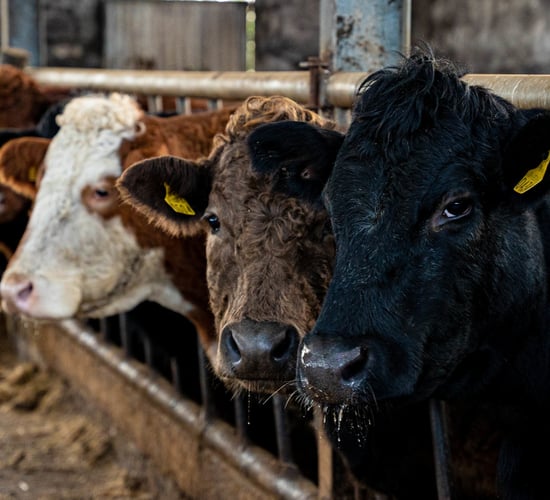
One of the biggest misconceptions in the livestock sector is that oats are inferior to barley or maize as a finishing feed. Teagasc research tells a very different story.
In controlled feeding trials at the Grange research centre in Co. Meath, where rolled barley was directly swapped for rolled oats in concentrate mixes for finishing beef cattle on grass silage, there was no difference in animal performance.