'We can’t keep talking about farmers as if we mean men'

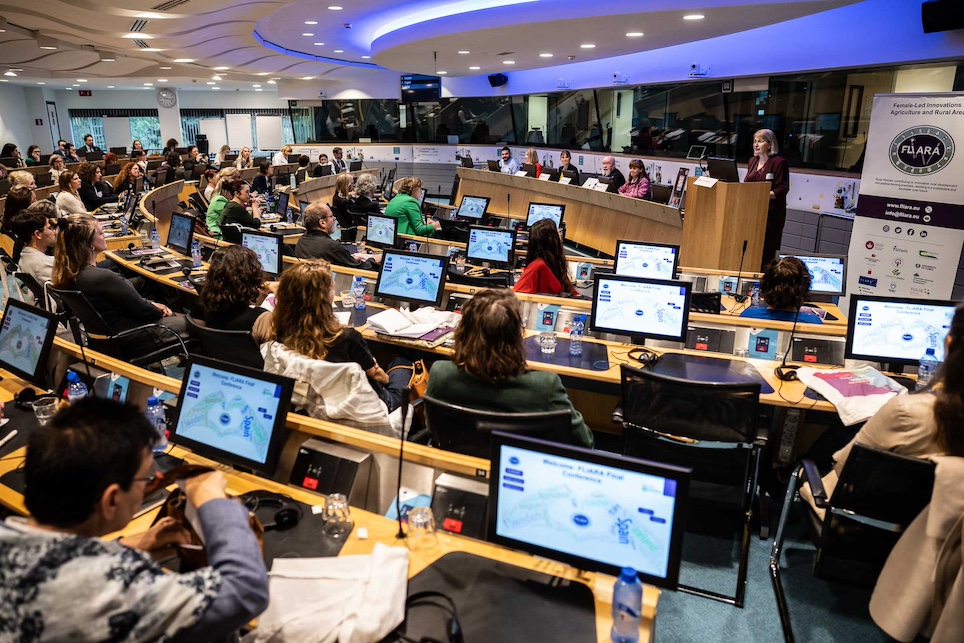
Women farmers and rural residents do not lack ideas or ambition - they lack access to the agriculture sector: access to transparent systems, tailored support, networks, childcare and decision-making spaces in the industry.
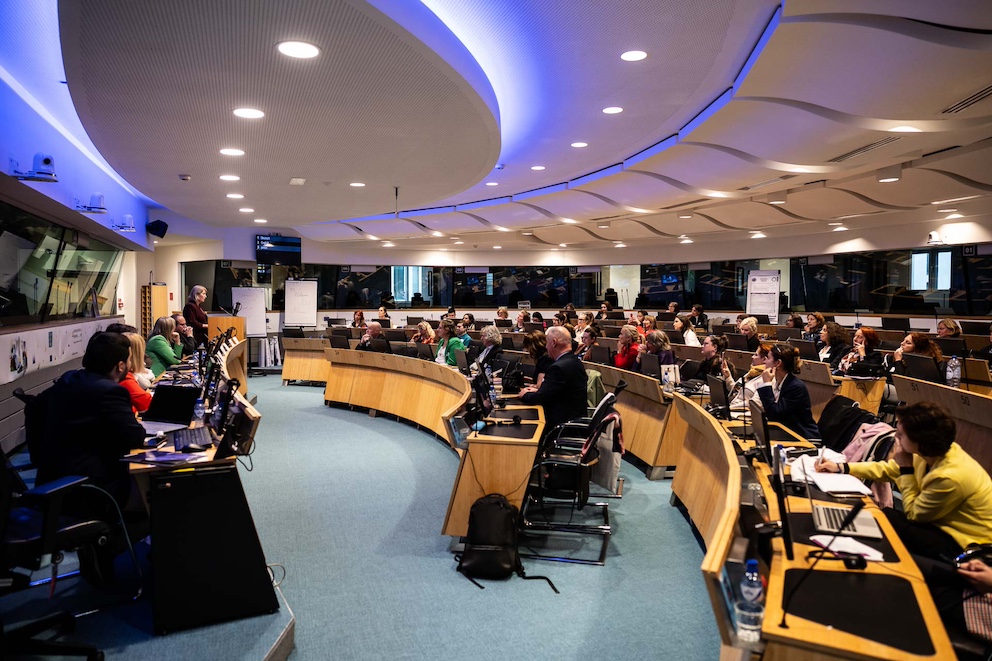
That was the message from Ursula Kelly, Irish ambassador for Female-Led Innovation in Agriculture and Rural Areas (FLIARA) at its final conference at the European Committee of the Regions in Brussels recently.
FLIARA is a Horizon Europe-funded project aimed at enhancing women-led innovation in EU farming and rural areas through a multi-actor approach, fostering collaboration and communication among various stakeholders to ensure effective project implementation and progress.
The project gathered over 300 participants on-site and online from 25 countries - included policy-makers, researchers and the women at the heart of FLIARA'S work - for its final conference, marking a milestone in Europe's effort to strengthen women-led innovation in farming and rural areas.
Held during Rural Women's Week, the event unveiled three years of evidence, policy recommendations, and hands-on experience gathered across 10 countries and celebrated the women shaping the future of rural Europe.
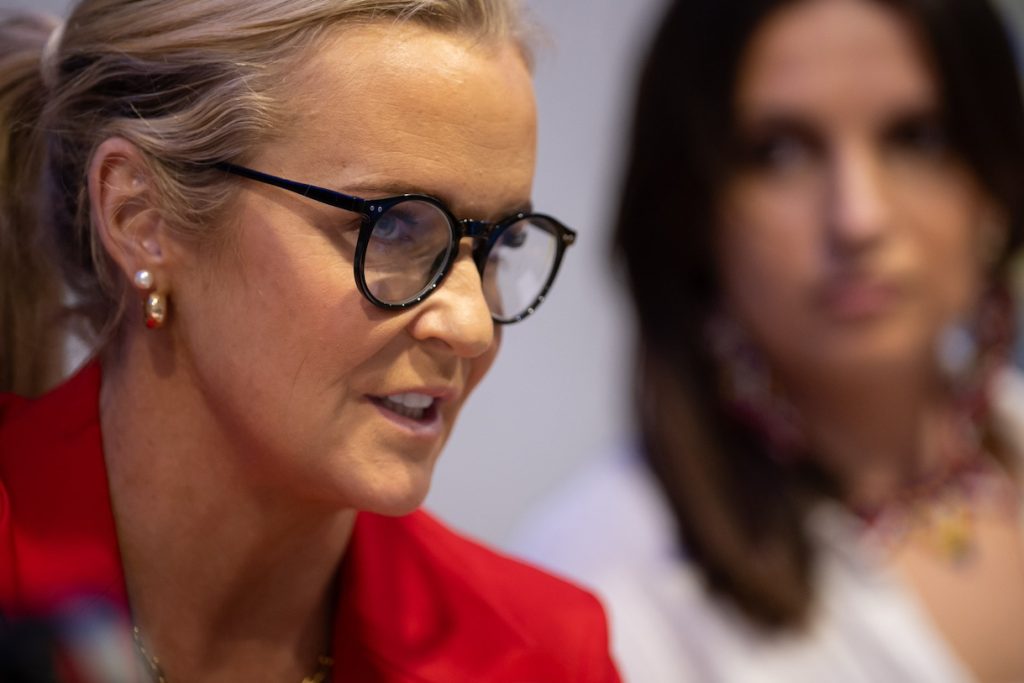
Opening the event, FLIARA project co-ordinator, Dr. Maura Farrell, associate professor at the University of Galway, underlined the urgency of change.
Women, she noted, remain under-recognised in rural leadership despite their central role in driving sustainability, community solutions and new rural economies.
She said: “Innovation cannot be fully realised without women’s voices and visibility."
She also paid tribute to FLIARA’s 20 case studies and network of 200 women innovators as well as the project’s ambassadors, whom she called “the embodiment of innovation in action”.
In a keynote address, María Gafo Gómez-Zamalloa, acting head of unit at the Directorate-General for Agriculture and Rural Development (DG AGRI) of the European Commission, situated FLIARA’s results within the wider EU policy framework, recalling that gender equality is both a founding value and a growing priority.
Gafo Gómez-Zamalloa pointed to persistent imbalances, noting that fewer than one-third of EU farms led by women and only 2% by young women.
She stressed the need for structural support, better data, and targeted measures in future CAP and rural strategies.
Building networks
Representing countries as diverse as Sweden, Finland, Ireland, and Romania, participants shared first-hand accounts of the bureaucratic hurdles, gender bias, and cultural expectations that continue to slow women’s potential alongside stories of resilience, community innovation, and collective action.
Ursula Kelly, capturing a theme that returned repeatedly throughout the day, said: “Networks are not a luxury. They are oxygen."
Kelly, who employs 35 people at Cormac Tagging, said that confidence and innovation grow hand-in-hand with community.
Kelly said: “Empowerment to innovate comes from confidence and that confidence is born in networks.
"Projects like FLIARA spark the fire, but networks keep it burning. They connect us, challenge us, and remind us that we’re not alone."
At the conference, Kelly spoke candidly about rural realities, from limited broadband access to the need for stronger policy recognition of rural women as food producers and business leaders, not just farmers.
“We need to change that narrative,” Kelly urged.
“We can’t keep talking about farmers as if we mean men. Women are running businesses, shaping local economies, and feeding Europe.”
She called for post-project action.
"The legacy of FLIARA cannot end here. As ambassadors, our next mission is to keep these networks alive nationally and across Europe. Without connection, innovation suffocates.”
Cross-sectoral bridges
Adding to the energy of the event, fellow Irish ambassador Blátnaid Gallagher, farmer, co-operative founder and social entrepreneur, brought her own brand of wit and conviction to Brussels.
“If you can see it, you can be it,” she told the audience, to resounding applause.
Gallagher who founded a wool co-operative in east Galway to counter collapsing market prices, shared her dual mission: to unite farmers and to make the farming profession more inclusive.
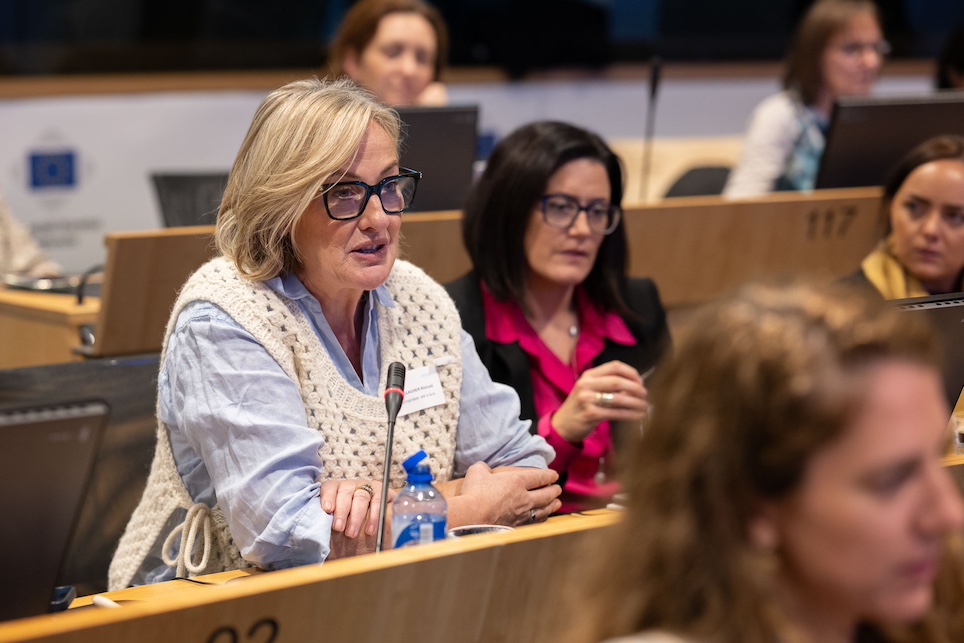
“There are so many enterprises beyond food and fibre production. But where do women find the information?" Gallagher asked.
"We need one European portal, one single place where rural women can discover all the support available to them, whether they’re farmers, educators, or innovators.”
Gallagher called for more cross-sectoral bridges between rural and urban Europe.
"Networking shouldn’t stop at the farm gate. We need to connect with urban entrepreneurs, investors and consumers.
"Rural innovation belongs at the same table as tech, culture and business.”
Reflections
Gallagher's candid reflections on gender, visibility, and rural opportunity reinforced one of FLIARA’s strongest findings, that women’s innovation thrives when structural and cultural barriers are replaced by connection and recognition.
The conference also presented the project’s research backbone including a foresight study with 560 participants, a comparative policy analysis across ten EU member states, and a new benchmarking approach to support gender responsive policymaking.
Researchers and policymakers agreed that women’s innovation is systematically undervalued when success is measured only through narrow economic or scalability indicators.
Instead, they called for a shift toward ecosystem thinking, community-rooted models, and gender-aware governance.
In two high-level panels with representatives of EU networks and initiatives, the European Parliament and the European Commission, speakers stressed that gender equality must move from optional to structural.
Data gaps, siloed policies and rigid funding rules were identified as key barriers, alongside a shared conclusion: Europe cannot afford to lose the talent and innovation of rural women.
Víctor R. Martínez, FLIARA representative for Spain, unveiled the FLIARA toolkit, a long-term resource designed to keep knowledge and guidance available beyond the project’s duration, highlighting that it is a living resource, open, visual and practical, designed to empower women innovators, connect communities of practice, and translate knowledge into real action.
The message closing the conference was one of continuity. The project has ended, but its network and mission will grow.
University of Galway's Dr Farrell said: “The women of FLIARA were not participants, they were partners. They have already transformed their communities.
"Now it is time for policy and institutions to match their ambition.”