Watch: Major farmer protest against Mercosur in Strasbourg


Thousands of farmers from across the European Union are protesting against the EU-Mercosur Trade Agreement in Strasbourg today (Tuesday, January 20).
The protest, organised by France's largest farming union FNSEA, conicides with a plenary (full) meeting of the European Parliament.
Copa Cogeca, which represents EU farm organisations and agricultural cooperatives and is supporting the protest, has estimated that around 6,000 farmers and 1,000 tractors have descended on the French city.
The Irish Farmers' Association (IFA) president Francie Gorman and Irish Cattle and Sheep Farmers' Association (ICSA) president Sean McNamara have travelled to Strasbourg to support today's demonstration.
🇪🇺🚜 L’EUROPE DES AGRICULTEURS FAIT FRONT COMMUN !
— La FNSEA (@FNSEA) January 20, 2026
Aujourd’hui, plus de 5 000 agriculteurs venus de toute l’Europe se mobilisent à Strasbourg pour dire NON au #MERCOSUR.
Nous marcherons jusqu’au @Europarl_EN pour demander aux députés européens de soutenir : une PAC forte, un… pic.twitter.com/usLNcx8xCC
The FNSEA said farmers are marching to the EU Parliament to demand that MEPs support "a strong Common Agricultural Policy (CAP), a dignified income, and a true vision for the future of our agriculture".
The union said that European farmers are being asked to produce better with less, while the CAP budget is being cut.
"And at the same time, we are opening our markets to imported products that respect neither our sanitary standards, nor our environmental requirements, nor our agricultural model," the union added.
Protest
The FNSEA has called on MEPs to vote tomorrow to refer the EU-Mercosur trade deal to the Court of Justice of the European Union (CJEU).
The union said that European farmers are facing "ultra-volatile agricultural markets" and are being hit "by an unbearable cost-price squeeze".

According to Copa Cogeca, farmers have issued the following demands to MEPs:
- A strong, common and well-funded CAP Post-2027 together with an Multi-Annual Financial Framework (MFF) that provides solutions, supports competitiveness and growth;
- Fair and transparent trade that effectively safeguards our production standards and most sensitive sectors while helping improve competitiveness
- Real simplification, better regulation and legal certainty agenda.
"It is now up to the MEPs to act, demonstrating the support they claim to give to the agricultural communities to ensure Europe’s food security," the group said.

ICSA president Sean McNamara said farmers will not back down in their fight to stop the Mercosur trade deal.
"We are in Strasbourg today standing shoulder to shoulder with farmers from every corner of Europe to send a clear message that we will not accept Mercosur, and we will not be bought off with so-called safeguards or compensation.
"No amount of alleged safeguards or compensation will protect either farmers or consumers from the dangerous ramifications of this deal," he said.
McNamara added that the Irish government must now step up its efforts against the deal.
"The government needs boots on the ground in Strasbourg, Brussels and anywhere else necessary to actively galvanise opposition to Mercosur. If this deal passes, the damage will be permanent. Standing back is not an option," he said.
Mercosur
On Saturday (January 17), the EU and the four Mercosur countries (Argentina, Brazil, Paraguay and Uruguay) signed the controversial free trade agreement following 25 years of negotiations.
The agreement would create the world's biggest free trade zone, covering a market of over 700 million consumers and would eliminate tariffs on 91% of all products exported between the two regions.
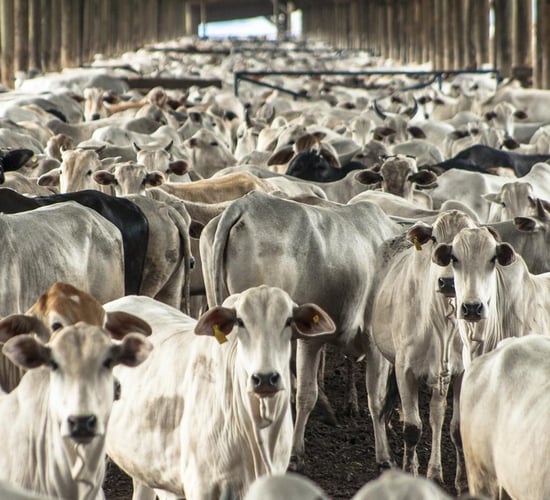
The deal would also allow an additional 99,000t of beef from Mercosur enter the EU at a much reduced tariff rate.
A majority of EU member states voted in favour of the deal during a meeting of the European Council on January 9. Ireland; France; Hungary; Poland; and Austria voted against, while Belgium abstained.
The deal will require the consent of the European Parliament before it can be formally ratified.