Watch: Award-winning vet's top tips ahead of spring calving


Agriland visited Marie-Louise Ryan, a vet working out of Mulcair vets in Cappamore, Co. Limerick to hear her top tips ahead of calving.
The award-winning vet advised farmers on the best practices for early calf rearing, transition management, and issues around calving.
Ryan said getting the basics right, keeping practices consistent, and talking to your vet about issues should get farmers through the season.
Spring calving
Ryan said a successful calving begins with good transition cow management in the three weeks prior to calving and continued through the three weeks post-calving.
She reminded farmers that this period has a major influence on cow health, milk yield, fertility and culling rate in the subsequent lactation.
She also highlighted how poor management leads to the increased risk of issues such as milk fever, ketosis, fatty live, retained foetal membranes, displaced abomasum's, metritis, and mastitis.
Ryan said farmers should have their vet carry out blood samples for the cows mineral status, as well as having their silage tested to ensure they know what they have in the yard and formulate a diet to suit the herd based on the results.
She also advised having freshly calved cows blood tested for calcium and magnesium levels, as farmers may be feeding enough minerals but have issues with high levels of potassium (K).
When feeding minerals, farmers have been advised to avoid calcium in pre-calver minerals and to ensure cows are getting an adequate magnesium intake (20-25g/day of supplemented magnesium).
The vet also said many farmers run into issues if there is not enough silage at the barrier in calving pens, as the majority of pens do not have enough feeding space.
When cows are calving down, Ryan highlighted the importance of giving pain relief to both the cow and calf if it is a difficult calving.
She said: "Tender loving care goes a long way in these situations", meaning the calf should be put under a warm light, and dried off, warmed up and fed.
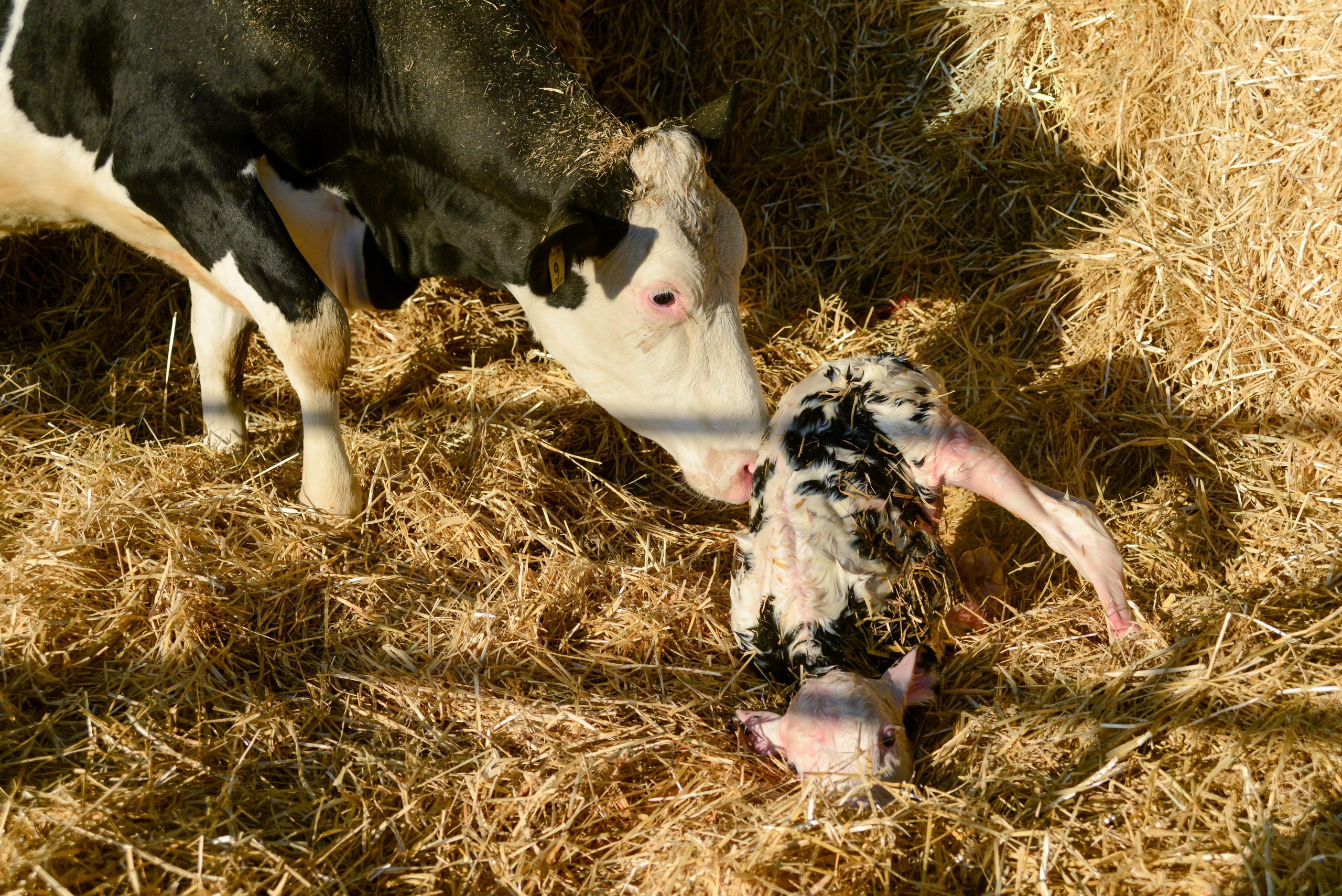
Meanwhile the farmer also needs to ensure the cow is up and eating to prevent any problems in the future.
Ryan also advised farmers to blood test cows within 48 hours after calving if they are having problems with retained cleanings, as it is often a calcium issue such as sub-clinical milk fever.
She said farmers should "leave nature to do it's own thing" in terms of waiting for cleanings to drop.
However, if it has not dropped within seven days, she advised farmers to contact their local vet.
Calf care advice
Ryan said routine visits from the local vet are worthwhile to stay on top of any non-urgent issues.
She said during these visits vets can remove retained cleanings, wash out cows, take bloods from cows, and check passive transfer by taking bloods from calves.
The vet also spoke about colostrum management when rearing these calves, stressing the importance of the '3:2:1 rule'.
Ryan highlighted the importance of hygiene when harvesting, storing, and feeding colostrum to calves.
Another tip was to to hang up a max/min thermometer to understand the temperature in the calf shed and work with it to ensure calves are warm, whether that be through heat lights, calf jackets, or better ventilation.
Vet
Ryan's family run the renowned Goldstar Charolais Herd, a family business where her love for animals originated.
The Thurles native always aspired to be a vet, but unfortunately she missed out on the course by just five points, and went on to study economics and finance.
However through determination and resilience, Ryan repeated her Leaving Cert and eventually went on to study veterinary science in University College Dublin (UCD) in 2010.
Once she graduated, she got straight to work with Finbarr Kiernan in Co. Cavan, where she spent four-and-a-half years learning the ins and outs of the job.
It was there she shifted her focus from beef animals to dairy animals, completing a course in dairy herd health.
The vet said she became more and more interested in the dairy breed when she began working as the industry rapidly progressed and changed.
In January 2020, Ryan moved closer to home with her position in Mulcair vets and has not moved since.
In 2024, Ryan went on to win the prestigious award of 'Dairy Vet of the Year' at the National Dairy Awards.
She said: "I never expected that I would ever win anything like that, you know? I just do my job as well as I possibly can."