Advantage Beef Programme

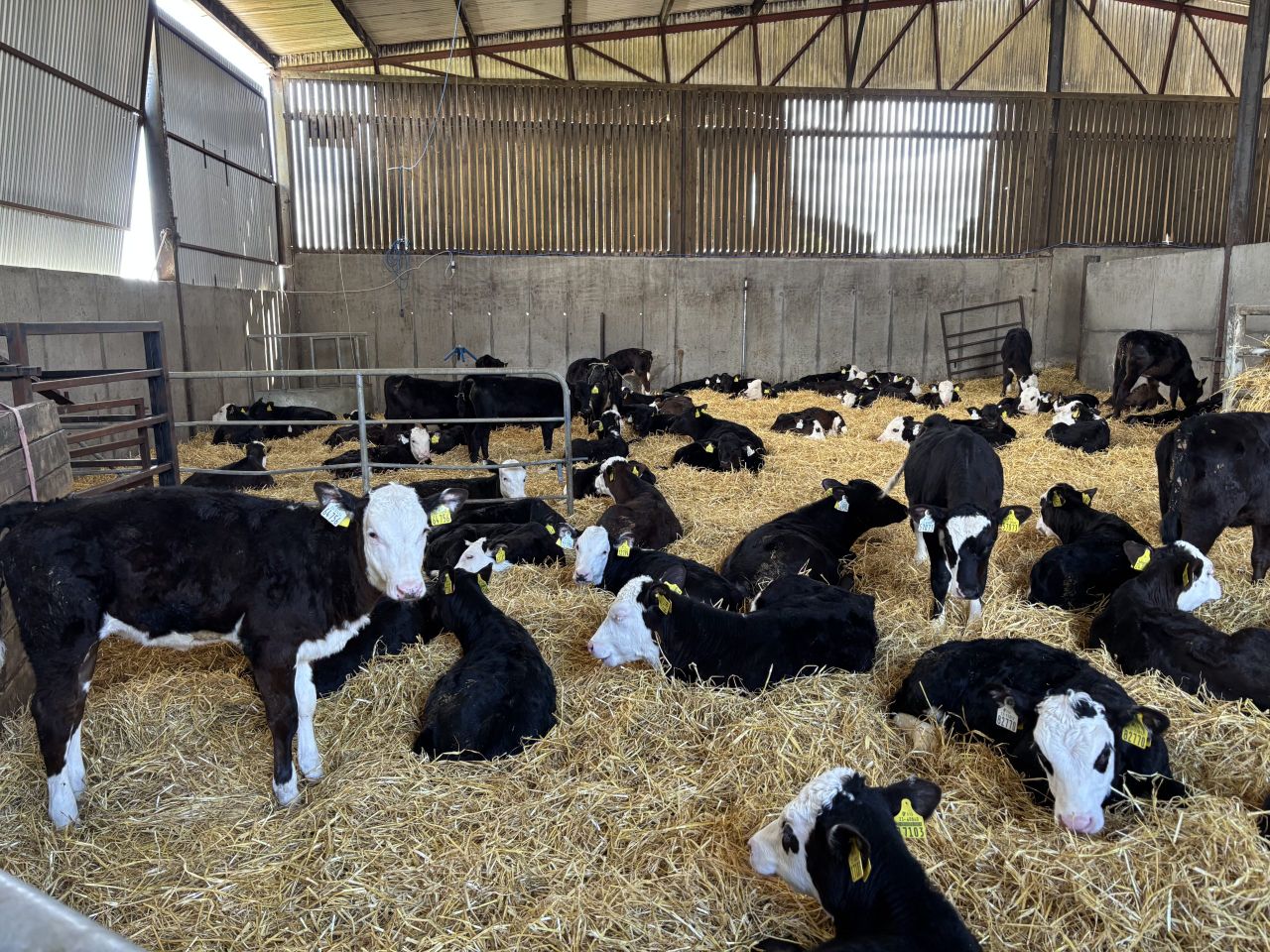
Quinn explained that the farm purchased a total of 426 calves this year.
Calves generally arrive at four weeks-of-age and are bred from a range of different sires.
Their performance will be monitored as part of the Gene Ireland programme in association with the Irish Cattle Breeding Federation (ICBF) and the data will help identify sires with the highest progeny beef performance.
The average arrival weight of the calves on the farm was approximately 54kg this year.
On arrival, calves receive an intranasal vaccine and go on a diet of 3L of milk fed once-a-day until weaning begins when calves weigh over 90kg and are eating sufficient quantities of concentrate feed.
Some of the sire breeds on the farm this year include:
- Angus;
- Hereford;
- Limousin;
- Belgian Blue;
- Charolais.
Matthew said that average calf prices have increased by approximately €200/head on previous years.
Calves are monitored twice-a-day. When calves are being fed milk in the morning, they are health monitored and pens are checked closely again at 4:00p.m-5:00p.m in the evening.
Any calf that appears dull, its temperature is recorded. If a calf has a high temperature, it will be treated and closely monitored.
Matthew explained that any calf with a temperature above 39.5℃ will be noted to receive closer attention.
Any medicine given to a calf if required is then recorded and the calf's condition monitored more closely over the coming days.
As calves are being reared, they are graded with different calves assigned to different pens depending on performance.
Stronger calves eating more concentrates are gradually brought from 3L/day to 2L and then 1L/day over the course of 10 days.
Most pens of calves are grouped in batched of 10-15.
Automatic calf feeder
This year, 300 of the calves are being reared manually on the farm, with an automatic calf feeder was installed to rear the remainder of the calves.
As of Tuesday, May 13, the automatic calf feeder was feeding milk to 106 calves.
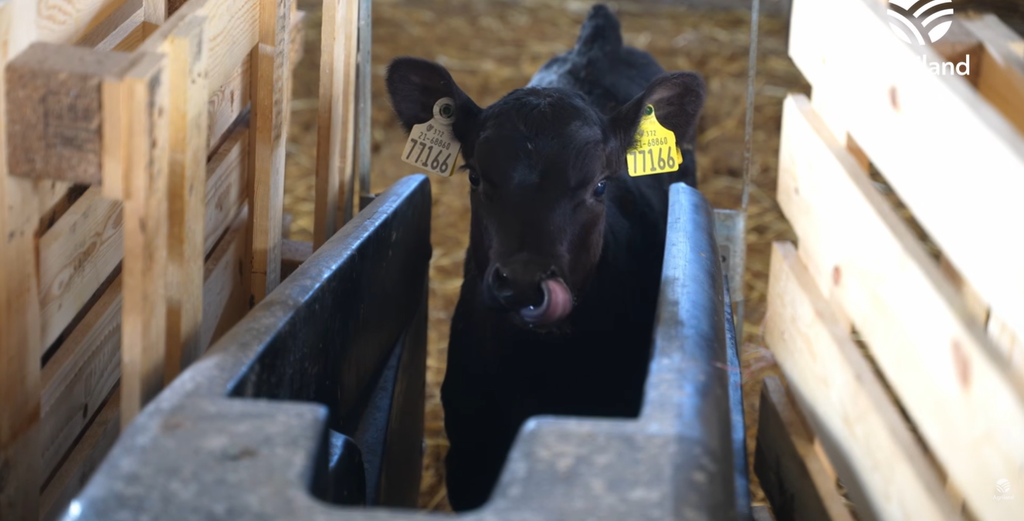
Matthew explained that the automatic calf milk feeder was introduced this year to reduce the amount of labour used on the farm during calf rearing and to gather more data on calves during the rearing phase.
Calves are being fed an 18% protein nut and pens are deep bedded, with bedding generally going in every second day.
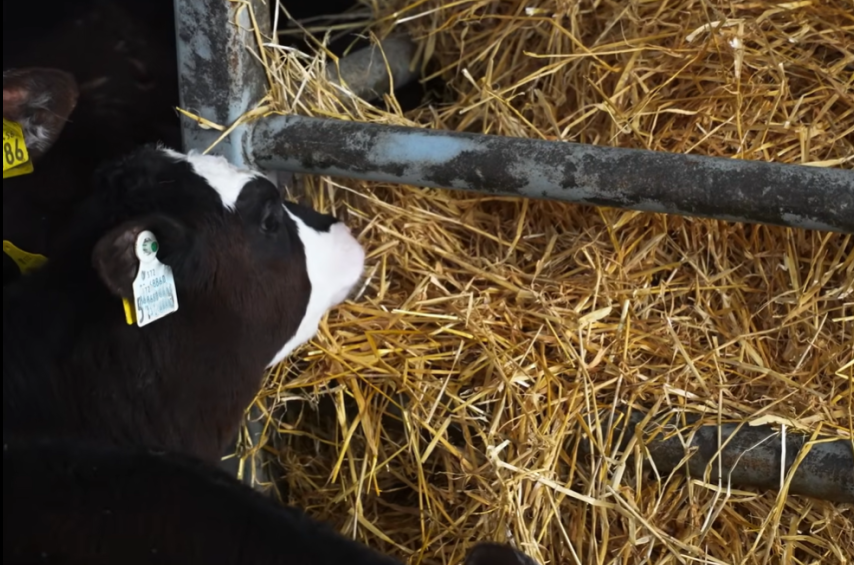
Calves are also separately offered feed straw from a rack. This is to build up the calf rumen. Calves are also sometimes offered haylage as they are weaned.
Calves are weaned on weight rather than age and Matthew said that 85-90kg is generally the target weaning weight but this weight is sometimes higher for continental-sired calves.
The automatic calf feeder begins weaning calves at approximately 100 days-of-age.
Calves are offered a diet of mainly meal, straw and water after weaning. They are are offered 3kg of meal/head/day and the first batch of calves go to grass in mid-late May.
Calves remain housed post weaning, which Quinn explained is "to have a stronger calf going to grass to help avoid summer scour syndrome.
Mortality rates on the ABP Demo Farm have been low to date this season with only one calf lost in the rearing season.
Calf disbudding takes place through the use of a vet and castration takes place when calves go to grass.
Calves are also vaccinated according to farm protocols when going to grass.
Quinn said that the calf rearing season has been going well so far on the farm.
He is hopeful calves will continue to perform well as they are weaned off milk and go out to grass.