'Unlikely Mercosur will have significant impact' on EU agriculture - economist


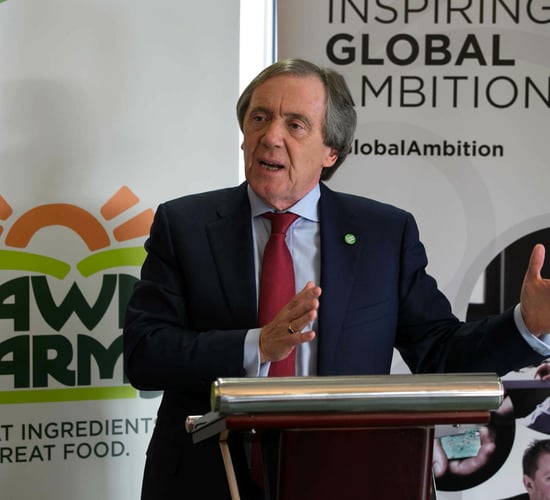
The Mercosur deal will have very little impact on the EU's agri food sectors over the coming years, according to economic research scientist, Dr. Roel Jongeneel.
The Wageningen University-based academic spoke at the 2026 Teagasc National Tillage Conference yesterday (Wednesday, January 28).
He said: “It’s unlikely that Mercosur will have a significant impact on the EU’s farming and food production system.
“In contrast, the trade deal struck between the EU and India is more strategic in nature.”
According to Dr. Jongeneel, the imposition of agreed production and processing standards will be a self-limiting factor within all international trade agreements where farming and food are concerned.
“It’s all about creating a level playing field,” he stressed.

The Dutch academic addressed the conference on the subject of competitiveness within the international farming and food industries.
Competitiveness
From the outset, he criticised a 2024 report on this subject produced by former European Central bank president, Mario Draghi for not including the EU’s farming and food sector within its remit.
Dr. Jongeneel explained: “The reality is that the output from the EU’s farming and food sectors is on a par with that generated by the automotive industry.
“Europe’s farmers are feeding 450 million people on a daily basis. It makes no sense to have excluded all of this economic activity from the Draghi report.”
Europe is mostly self-sufficient from a farming and food perspective, according to the Dutch academic.
Obvious exceptions in this context are the indigenous production of oilseeds and the need to import specific plant fertilisers and specialist crop chemicals.

Adding value is a key driver for exports within a European food processing sector that comprises a very large number of small and medium-sized enterprises.
Underpinning all of this is the activity of some 9 million farmers.
“Significant technical changes will impact across agriculture over the coming years.
"These include the greater use of artificial intelligence and digitisation," the Wageningen University economist continued.
Sustainable competition
He defined the principle of sustainable competition as that of having the capacity to create and maintain inclusive prosperity.
There are six pillars that can be identified in this regard, one of which relates to the economics of business development.
“But personal wellbeing is also very important in this context. Recent surveys have confirmed that wellbeing levels are currently quite high, relative to countries such as France and Germany.
“The months ahead will see the European Commission push to finalise the upcoming review of the Common Agricultural policy.
"However, at this stage it is very unlikely that the principles associated with sustainable competition will feature strongly within this process.
“The focus will be very much on those specific economic drivers that predominate across EU policy as a whole at the present time," Dr. Jongeneel added.