UN food agency to issue guidance on safety of methane inhibitors


The Food and Agriculture Organization (FAO) of the United Nations (UN) is set to issue new guidance on the potential food safety risks related to environmental inhibitors, including methane-mitigating feed additives.
A publication from the FAO will focus on chemicals that can mitigate methane emissions from livestock and nitrogen losses in soils.
These substances and chemicals are collectively known as environmental inhibitors.
The FAO has produced a report and a 'technical brief' as guidance to policymakers and other agri-sector stakeholders in "evaluating any possible food safety risks" linked to those substances.
The report says that any potential transfer of residues from environmental inhibitors into the food chain "requires careful evaluation and food safety risk assessment" to minimise possible negative implication for human health and trade disruptions.
The report focusses on two categories of inhibitor: methanogenesis inhibitors administered to cows and other livestock to reduce methane emissions; and nitrogen inhibitors applied to soils that work to reduce nitrogen losses and nitrous oxide (N20) emissions.
Methanogenesis inhibitors have been identified among the strategies to reduce methane emissions from ruminants.
Many of them work by blocking the key enzyme that catalyses the final step of methane production by microorganisms in the forestomach of ruminant animals. They can be classified as veterinary drugs in some jurisdictions and feed additives in others, leading to different approaches to risk assessment.
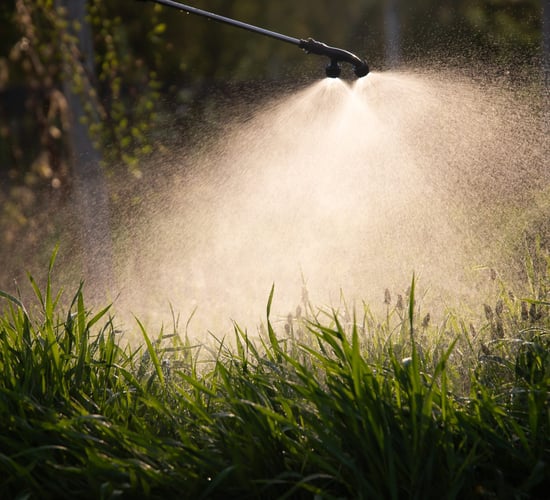
Nitrogen inhibitors, meanwhile, are designed to improve nitrogen use efficiency. As they are generally applied to soils, their potential movement to plant materials consumed by humans or livestock, or direct ingestion by animals in treated soil, can be crucial in the possible entry of these compounds into the food chain, the FAO said.
The agency said that, regardless of how these groups of chemicals may be classified, the minimum data requirements to establish food safety begin with assessing the presence or absence of residues detected in foods.
Commenting on this report and new guidance, Corrina Hawkins, director of the agri-food systems and food safety division of the FAO, said: "Applying a food safety lens is essential when introducing new practices and technologies in agri-food systems.
"By considering food safety at the outset, we can ensure that efforts to reduce environmental impacts are effective, trusted, and well understood," she added.
According to the FAO, the current regulatory framework for environmental inhibitors are fragmented, with data requirements and evaluation schemes differing across regions.
The FAO said there is a need for "a harmonised approach" to these substances.
The new research and guidance is part of the FAO's Food Safety Foresight Programme, which the agency said seeks to identify and monitor emerging food safety issues in rapidly evolving agri-food systems.