Trump tariff threat could shape MEP debate on Mercosur - Mullooly

An Irish MEP has said that US President Donald Trump's renewed threat of tariffs against several EU countries could shape a key debate in the European Parliament on the EU-Mercosur Trade Agreement.
The US president has threatened to levy tariffs on several countries, including France and Germany, as well as non-EU member states the UK and Norway, over their opposition to his demands that the US take over control of Greenland, which is administered by Denmark.
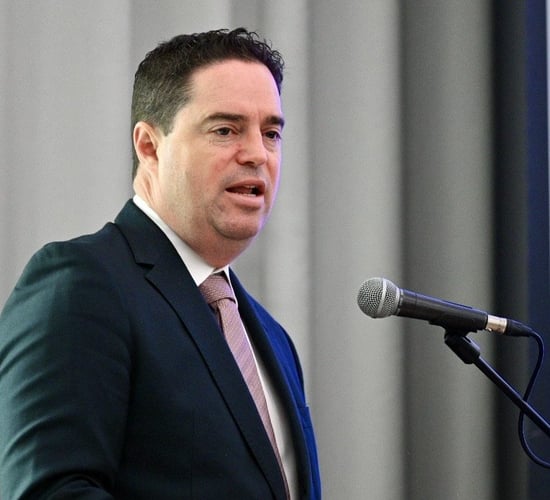
Independent Ireland MEP Ciaran Mullooly has called for "calm and cool heads" to prevail within the EU over Trump's threat.
He said that "knee-jerk" reactions that may damage key European industries and jobs here should be avoided.
Mullooly also reiterated his call for the European Parliament to request a formal opinion from the Court of Justice of the EU (CJEU) on the legality of the procedure used by the European Commission to approve the trade deal with the Mercosur bloc, which was signed at the weekend.
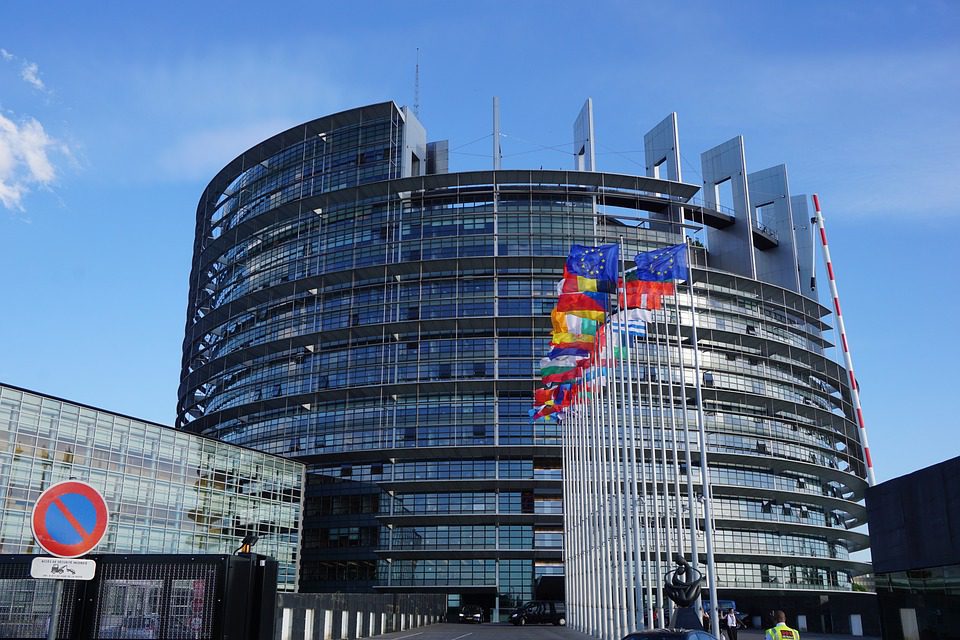
He said that the plenary (full) session of the parliament in Strasbourg, France, this week is likely to be "highly charged" due to the latest statements from Donald Trump.
"This development is likely to generate heightened anti-Trump sentiment across the parliament, shaping several key debates during the session," Mullooly said.
He added: "Against this political backdrop, discussions on the approval of the EU-Mercosur Trade Agreement are expected to intensify.
"In the short term, attention will focus on the motion seeking to refer the agreement to the CJEU for a ruling on whether the commission's approach complies with the EU treaties.
"In the longer term, the broader political climate may also influence the parliament's overall stance on the agreement," the Midlands-Northwest MEP said.
The question over the legality of the approval of the EU-Mercosur Trade Agreement revolves around the commission's move to split the trade deal into a 'partnership agreement' and an 'interim trade agreement'.
The former requires unanimous approval of member states, while the latter only requires the approval of a qualified majority of member states and a simple majority of MEPs in the parliament.
The interim trade agreement can then proceed independently of the wider partnership agreement.
"The fundamental issue is not politics, but legality. Where even a scintilla of doubt exists as to whether the Commission has acted within the Treaties, it is the duty of the parliament to seek legal clarity from the court," Mullooly said.
"While next week’s debate is expected to be lively and politically charged, there remains a strong likelihood that the motion to refer the agreement to the CJEU will pass.
"Support is anticipated from across both the right and the left of the parliament, alongside sufficient backing from other political groups to secure a majority," Mullooly said.
The MEP also said that debates in parliament over a trade deal with the US, which was reached last summer, will also be impacted by the charged political atmosphere.
That agreement had been expected to be approved by the parliament this week. However, Mullooly said there is now growing uncertainty following President Trump's latest announcements.
"These issues are likely to define the dynamics of the plenary session," he said.
"Europe cannot criticise others for disregarding legal norms while allowing legal shortcuts at home. At a time of global trade instability strict adherence to the [EU] treaties is essential for the credibility of the EU," Mullooly added.