Suspension of fertiliser tariffs 'unlikely' to offset CBAM costs

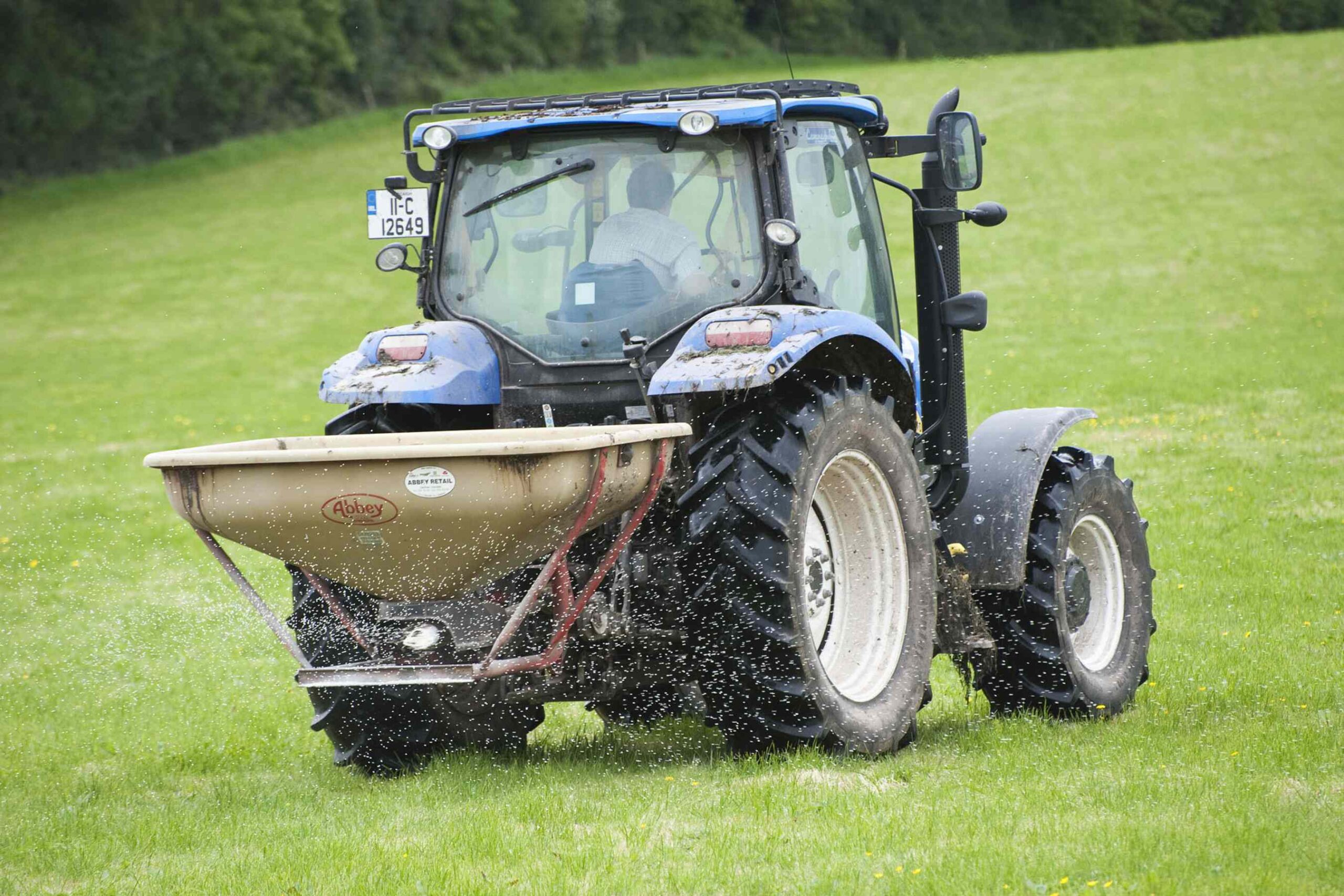
The proposed suspension announced earlier this month of some tariffs on fertiliser imports is unlikely to make a significant difference for Ireland to the costs of the Carbon Border Adjustment Mechanism (CBAM), Minister of State Timmy Dooley has said.
The CBAM is effectively a tax on imports of carbon-intensive products into the EU, including fertiliser.
It will require economic operators, including fertiliser suppliers, to pay for certificates to import these products.
The measure has prompted concern and criticism from farm organisations and sectoral stakeholders, including fertiliser blenders.
These concerns are centred around the additional cost that will be placed on fertilisers, and the additional regulatory and compliance burden for economic operators.
The cost of CBAM certificates would be in addition to any tariffs that exist on fertiliser imports.
On top of that, there is significant concern over the fact that the European Commission will only set the price of certificates retrospectively, i.e. the price of certificates for quarter one of the year will not be known until quarter two, and so on.
Concerns have already been raised over fertiliser suppliers being asked to provide quotes for supplies without knowing what the cost of the CBAM certificates for those supplies will be.
Earlier this month, in what was seen as an effort to court member state support for the EU-Mercosur Trade Agreement, the commission said it will propose to temporarily suspend the remaining most favoured nation (MFN) tariffs on ammonia (6.5%), urea (5.5%) and where necessary, other fertilisers.
The commission said the measure "would broadly offset the costs" linked to the CBAM, which took effect from the start of the year.
The commission also said it would issue guidance on a new proposed measure - which still needs to be approved - that would allow for a temporary suspension of CBAM on certain goods, such as fertilisers.
Council meeting
Despite these concessions from the commission, Ireland has told its fellow member states that the suspension of some tariffs on fertiliser are "unlikely to make a significant difference to the cost increase arising from CBAM".
Speaking at meeting of agriculture and fisheries ministers in the Council of the EU yesterday (Monday, January 26), Minister Dooley said: "I welcome this further discussion on CBAM and the impact it will inevitably have on fertiliser prices, as well as the uncertainty arising from timing of the levy calculations.
"While the announcement of the suspension of MFN [most favoured nations] tariffs on certain products is welcome, in Ireland's case it seems unlikely to make a significant difference to the cost of increases arising from CBAM," Minister Dooley added.
He welcomed the proposal to allow for a suspension of CBAM in certain scenarios.
"Ireland supports the commission proposal...to put in place a system that would allow a temporary suspension of CBAM on fertiliser, should marketing monitoring indicate a rise in fertiliser prices," the minister said.
Minister Dooley noted that this proposed suspension regulation states that it can be applied retrospectively, but he called on the commission to provide "clear guidance on how this would work in practice, given that significant volumes will have been sold with the estimated CBAM levy factored into the increase".
Speaking before the council meeting yesterday, Minister for Agriculture, Food and the Marine Martin Heydon said: "CBAM is a big concern to us in Ireland from an agricultural perspective in relation to the element around fertiliser.
"Fertiliser is key to what we do in our farming system.
"We agree with the general principal of CBAM and what is trying to be achieved, but from the perspective of its impact on increasing the cost of fertiliser, the uncertainty with the quarterly reporting, there are technical measures there that we do need an understanding of, and we'll work with member states on that as well," Minister Heydon said.