Spring beans: Botrytis populations becoming resistant to fungicides

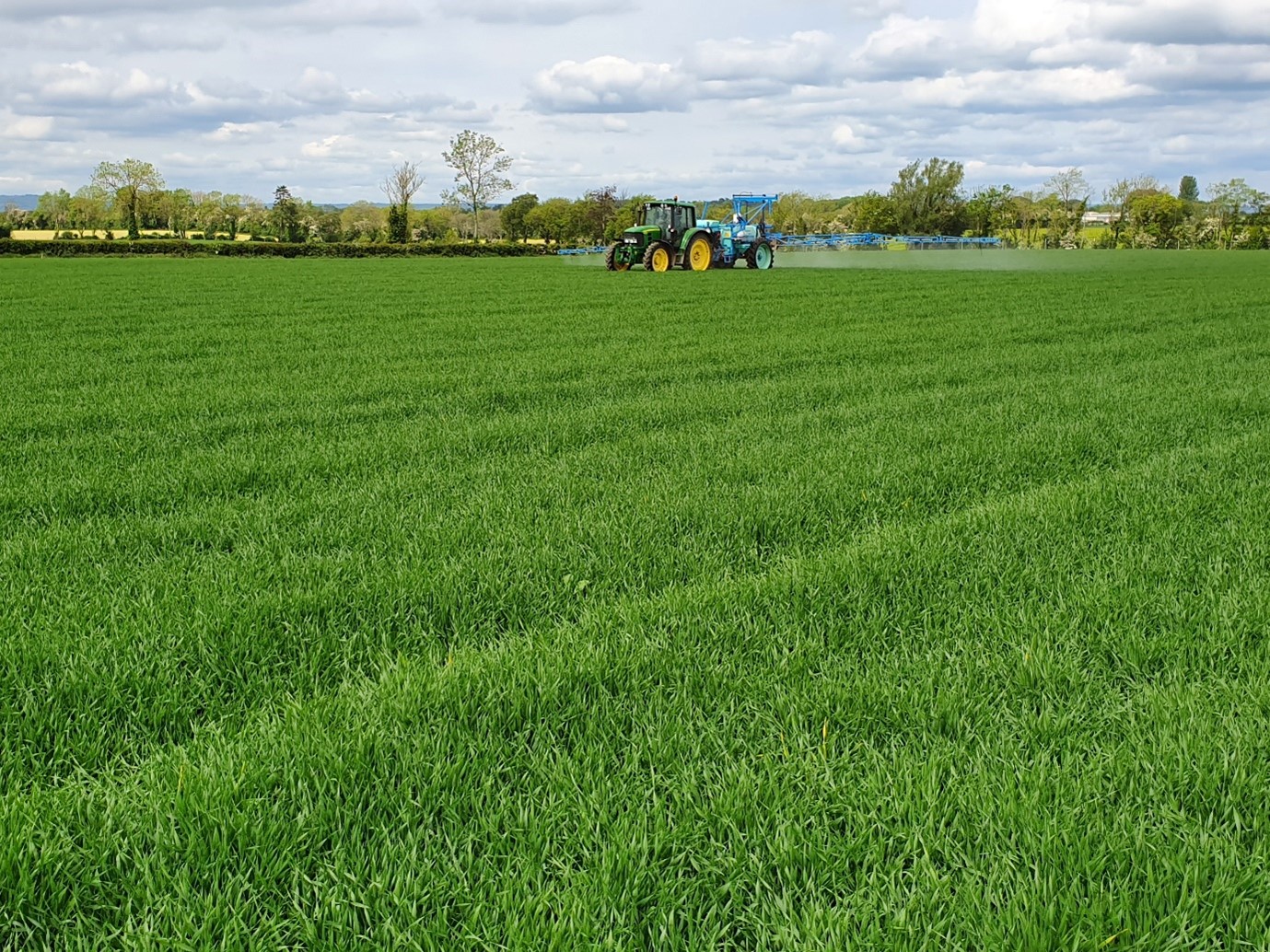
Chocolate spot is one of the main diseases that can impact significantly on crops of spring beans grown in Ireland.
The condition is caused by the fungal pathogen: Botrytis fabae.
Teagasc research scientists have been concerned for some time that specific botrytis isolates may be developing resistance to the range of fungicide chemistries currently available.
And laboratory analysis has confirmed this is a reality.

On the back of these findings, Teagasc has updated its chocolate spot control recommendations.
The matter was discussed at Teagasc’s 2026 National Tillage Conference this week.
The recommendations include the mixing of fungicide chemistries when spraying bean crops. It is also important that full canopy coverage is secured when the fungicide mix is applied.
Fungicides can be used as a disease prevention measure. It is also important to alternate different fungicide mixes when committing to a multi-spray disease programmes.
Beans
All fungicide applications must also act to control bean rust.
Teagasc has specifically highlighted the potential of growing beans in 2026. A number of factors feature in this regard.
These include the significant shortfall in home-produced proteins; the fact that beans grow well in Irish conditions and the continuing eligibility of the crop for the Protein Aid Scheme.
Beans perform well where the soil indices for phosphorus (P) and potassium (K) are high.
Trials from Oak Park have clearly shown that where beans are sown in index 1 or 2 soils for P and K, they never yield as well as those sown in Index 3 soils, regardless of how much fertiliser is used.

Ideally, beans should only be drilled in the same field every five to six years, and, from a disease point of view, the longer between crops the better.
Growers should plan to drill as early as conditions allow. However, soil conditions are as important as planting date, especially if a direct drill or min-till system is used.
Drilling into wet soils can reduce root development and nutrient uptake.
Growers should aim to establish 30 plants/m² and try to complete drilling by early to mid March.
BYDV
Another research-related issue discussed at the conference centred on the performance of Barley Yellow Dwarf Virus (BYDV) tolerant cereal varieties.
Recent work carried out at Teagasc Oak Park has confirmed that the claims made for BYDV tolerance in a number of winter barley varieties do hold up.
Significantly, the trials challenged the varieties under study to the impact of the specific aphid populations found in Ireland
Moreover, there is now an expectation that the availability of new barley varieties with actual resistance to BYDV is not that far off.