Sponsored
Smarter breeding made easy: The Kerry herd showing what Sire Advice can do


Sponsored by

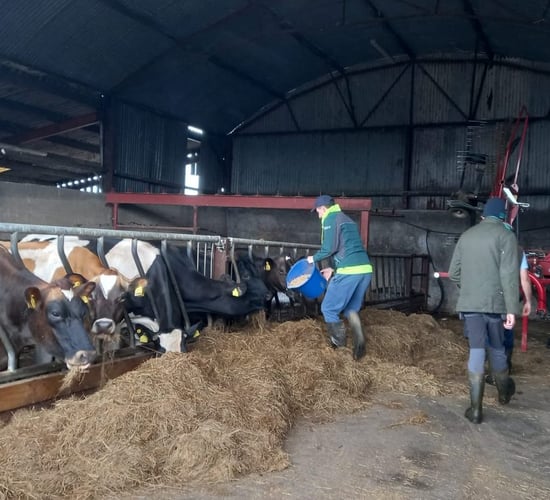
Strong genetics and consistent breeding decisions are driving steady progress in the spring‑calving herd managed by Munster Bovine adviser Jack Walsh near Farranfore, Co. Kerry.
Working alongside herd owner James McCarthy, the 90‑cow grass‑based system delivered over 500kg of milk solids in 2025, producing 4.15% fat and 3.62% protein - the result of several years of focused improvement.
Herd performance on the rise
Jack has overseen a major lift in herd Economic Breeding Index (EBI), rising from €127 in 2021 to €180 in 2025, with gains coming from both milk and fertility.
Fertility performance is strong, with 83% of cows calving in six weeks, and cow longevity now averaging 4.6 lactations.
Production has also moved upwards, with fat and protein yield per cow rising by 152kgs of solids in recent years.
Jack attributes this to the system itself:
He said: “They’re good, strong cows. They put it in the tank, and they’ll put it on their back too.”
Jack’s breeding strategy is shaped by the practical realities of the farm.
With both men working off‑farm, the herd has to run smoothly. Cows must be capable, low‑maintenance and reliable.
“There might be no one around from 10:00 in the morning to 6:00 in the evening, so she needs to mind herself," he said.
Selecting the right cows for replacements
Sire Advice sits at the heart of how Jack identifies which cows should breed replacements.
He begins by selecting high‑EBI females, then ranks them across the key EBI sub‑indexes - milk, fertility, health, and management - to pinpoint the cows to breed daughters from.
He values cows with strong solids and positive milk along with functional correctness.
“Good udders, chest width, strength, that’s what lasts.”
This structured ranking gives clarity when discussing breeding choices with farmers.
“It really helps to bring the farmers along with you," he added.
Jack also values the flexibility of the tool:
He said: “Sire Advice gives you scope to put in what criteria you want, and it’ll give you a list of bulls that suit you.”
Maximising sexed semen with Sire Advice
Heat‑detection collars make timing for sexed semen straightforward, and Sire Advice identifies which cows should receive a sexed straw.
“The collars tell us when she’s in the right window," Jack said.
Young, high‑EBI cows are prioritised for sexed straws to maximise genetic gain.
The breeding chart is especially useful during the busy period, according to Jack.
“The (S) beside the cow makes it easy, you can spot the sexed ones straight away.”
Jack appreciates having two conventional options available when a cow isn’t a suitable sexed candidate on the day.
Smarter dairy-beef breeding
Jack applies the same structured thinking on the beef side.
“A good square, robust cow can carry a better calf,” he explained, and this shapes how he assigns sires.
The Dairy Beef section of Sire Advice assesses calving ease, gestation length and carcass traits.

This feature helps with identifying cows that can be bred to take stronger continental sires and cows that should be paired with easier‑calving Angus or Hereford.
“It helps pick the right cow for the right bull," Jack said.
The system builds the right match every time, ensuring calf value without compromising cow safety.
Why Sire Advice works: Balance, clarity and inbreeding control
Jack values Sire Advice because it enhances every part of the breeding conversation.
As a breeding adviser, it gives him “a great insight into every herd” by letting him assess various EBI sub‑indexes and rank cows accordingly.
These rankings form the foundation for selecting cows to breed replacement heifers from and helps farmers to understand the reasoning behind each decision.

Sire Advice balances weaknesses in milk, fertility and health by recommending bulls that complement those gaps.
It automatically prevents inbreeding, a feature Jack finds invaluable:
He said: “Farmers don’t have to be caught watching sires and pedigrees, the inbreeding just doesn’t happen.”
Seeing the herd laid out in rankings also shifts the tone of breeding discussions.
“No one argues when you show them their lowest cows.”
It turns genetics into practical, understandable decisions that farmers can clearly see the value in.
Putting the results into Practice
The herd uses an artificial insemination (AI) technician, following the Sire Advice plan closely.
“You pick what Sire Advice says — ideally the first one.
"But if you don’t have the first straw that day, option two or three will still suit her.”
This makes busy mornings more manageable and keeps the breeding plan on track.
Sire Advice now on the ICBF HerdPlus App
Jack sees the mobile version of Sire Advice as a game‑changer for advisers and farmers alike.
“You’d leave the laptop at home, but you won’t leave the phone," he said.
Being able to run through bull teams in the yard with farmers has transformed on‑farm breeding discussions.
"It’s handy, accessible - it’s in your pocket.”
Advice for the 2026 breeding season
Jack’s message for farmers is straightforward:
- Run Sire Advice early to ensure your bull team suits your herd.
- Review the March evaluation, as these figures set the tone for the season.
- Keep the plan simple and consistent throughout the breeding period.
For help with running Sire Advice this breeding season, contact the HerdPlus team on 023-8820452 or email query@icbf.com
Sponsored by