Report: Scouring plant needed to add value to Irish wool


A new report on the development of Irish sheep-wool products highlights ways in which LEADER development companies could support the value-chain from processors to producers, including the need for a scouring facility.
The report was commissioned by The Wool Partnership – a joint initiative comprising local development companies (LDCs) in Galway, Clare, Kerry, Tipperary and Kilkenny.
It was launched today (Friday, February 27 in ATU Mountbellew Agricultural College, Co. Galway.
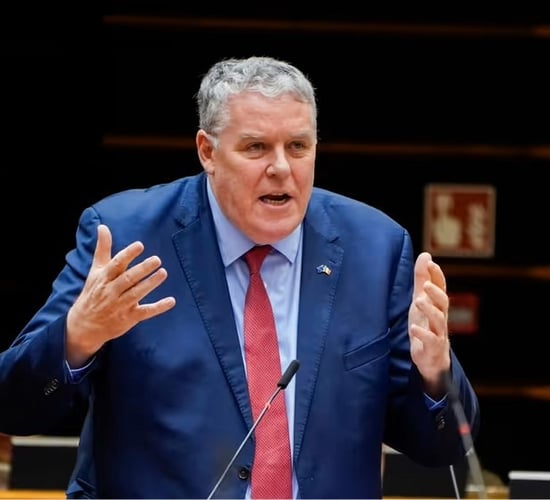
In attendance were Noel Grealish, Minister of State with responsibility for food promotion, new markets, research and development and Sean Canney, Minister of State with responsibility for international and road transport, logistics, rail and ports.
CEO of Galway Rural Development, Steve Dolan said: “We wanted to see if the LEADER programme and LDCs had a role to play in developing this sector.
"The proposed actions on training, enterprise supports, research pathways, and pilot programmes all deserve consideration.
“This partnership shows what rural Ireland can achieve when we work together. Wool has huge potential across product development, nature‑based solutions, tourism, and the circular economy.
"Working together, we can help farmers capture far more of the value they create," he added.
Farmer survey about wool
A farmer survey conducted for the report showed that 18% of respondents are already utilising their wool for a productive application.
A further 47% are motivated to do something with their wool that will add value to the raw commodity.
Coffins, bandages, rope, and pellet fertiliser are just some of the uses for sheep wool identified in case studies from Europe, New Zealand, Mongolia.

Conversations with farmers during the compilation of the report revealed that they would like to see their own wool used in products that they could sell within the farm.
They are also willing to work collaboratively with other local farmers, designers, or product developers.
However, the absence of scouring and small-scale processing is one of the most significant national bottlenecks identified in the report.
The establishment of a micro-scale, wool scouring plant in Ireland was identified as a potential demonstrator hub for the bioeconomy.
CEO of Kilkenny LEADER Partnership, Declan Rice said: “Interestingly, the report advises us to build a broad base of skills across the value chain, ensuring we reach shearers, community groups, craftspeople and emerging processors, as well as farmers – particularly in relation to training.
"I believe this is something we could deliver.
“But beyond training, the LEADER programme has a unique ‘tool box’ of support measures it can offer eligible project promoters: analysis and development (research); marketing; capital towards equipment and buildings; as well as the training measure.
"These supports are available at a relatively high level in both percentage and monetary terms for small and medium-sized enterprises. If the right idea emerges, LEADER can certainly help.”
It is hoped that The Wool Partnership will now move forward with feasibility work and pilots aimed at building a stronger value‑chain, from processing to high‑quality yarn and garment production, so Irish wool becomes a sustainable commercial resource.
Minister Noel Grealish explained that Irish wool is "a wonderful natural resource" and farmers should be supported to gain value from it within the supply chain.

Meanwhile, Minister Sean Canney said he remembers his family shearing sheep in his youth and the takings from the wool sold would be used for spends in Tuam, the local town, on items such as communion or confirmation outfits.
He said it's important that the government now gets past the strategy phase and actually gets around to "implementation' in order to create value around wool.

Recommendations of report
The report makes the seven recommendations listed below, as well as giving a county focus on Galway, Clare, Kerry, Tipperary and Kilkenny.
- Support national wool awareness, capacity-building and skills development;
- Enable early-stage processing and aggregation infrastructure;
- Lead a national programme of pilot projects and peer-learning;
- Act as the national coordinator and convenor of a fragmented sector;
- Act as a bridge between local innovation and national policy;
- Support development of a coherent Irish wool narrative and identity;
- Position LEADER as the long-term steward of place-based wool development.