Reminder: Late calving cows at risk of milk fever


The risk of metabolic issues such as milk fever (hypocalcemia) will be increasing on the farm as cows continue to calve down.
Older cows and late calvers are more at risk for these issues than fresh cows and heifers, who more than likely will have already calved down.
Older animals are typically more of a risk due to poor calcium mobilisation and greater demand for milk production.
While late calvers, which often happen to be older cows, are at risk of getting over-conditioned during the longer dry period which can ultimately lead to milk fever.
As well as that, simple things like feeding dry cow minerals often get overlooked as the calving season progresses, as labour gets stretched thin.
Preventing milk fever
Clinical milk fever is estimated to cost up to €300/cow, while unseen clinical milk fever can cost up to €120 per case through reduced production.
Therefore, it is in the farmer's best interest to put measures in place to prevent milk fever during the calving season.
One of the main ways to do this is to ensure dry cows are receiving the correct amount of minerals per cow, which should be about 100–120g/cow.
Dry cow minerals should include at least 22% magnesium and high levels of vitamin D - about 14,000 units plus.
Studies have shown that by increasing magnesium (MG) in the diet from 0.3% to 0.4%, the risk of milk fever can be reduced by up to 60%.
Older cows need high levels of vitamin D to prevent milk fever.
Trace minerals should not be overlooked either, make sure minerals contain copper, selenium, zinc, and other trace minerals.
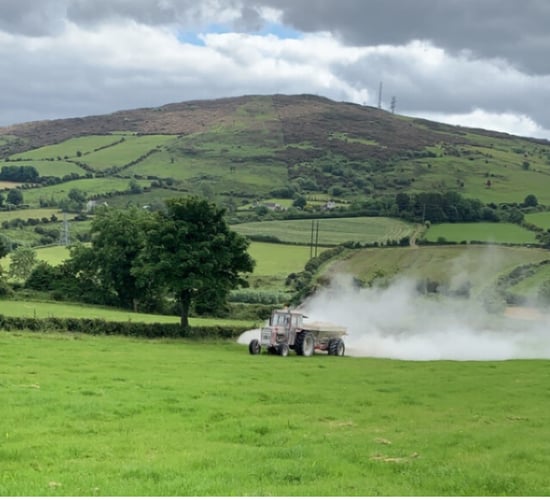
Considering most cows are still insides, farmers should be dusting minerals on silage.
Minerals should be offered twice daily (60g/cow in two feeds) to ensure that intake is controlled and that all cows have access to minerals, especially if feed space is limited.
If cows do not receive adequate minerals during this time, they can be prone to a number of health problems other to milk fever such as;
Freshly calved cows should be grouped together to ensure they get adequate nutrition during their their withdrawal period.
If there has been a history of health issues, such as milk fever at calving, the mineral content of your silage should be tested.
High potassium (K) silage can often be the cause of the problem, so the farmer should target a low K silage of less than 2.2% from four weeks pre-calving.
Treatment
A lot of vets recommend using a high calcium bolus with vitamin D instead of straight calcium bottles under the skin.
This is because boluses act as a quick way of supplementing calcium to cows, and can also protect the cow from the caustic nature of calcium chloride in a liquid form.
However, this can be labour-intensive, as cows need to be restrained to administer the bolus.
As well as that, the boluses can break relatively easy if dropped, and some cows can even cough them back up, with re-administration not possible in either of these cases.
Some farmers also use calcium drenches, dosing the cow with 500-600ml.