Reminder: Chemical fertiliser can be spread in Zone A tomorrow

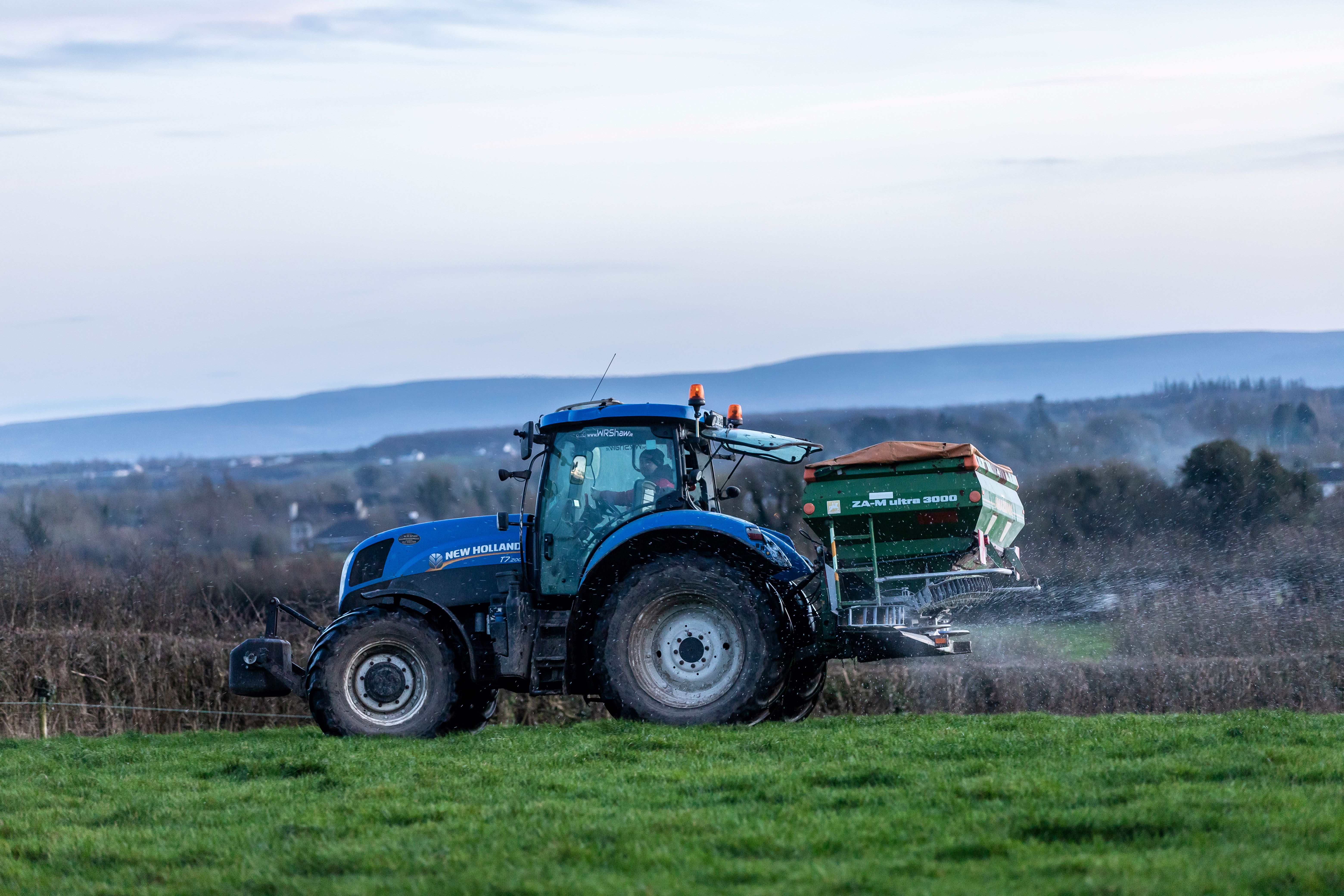
Farmers in 'Zone A' are being reminded that they will be able to spread chemical fertiliser from tomorrow (Tuesday, January 27).
Farms located in ‘Zone A’ include those in counties Carlow, Cork, Dublin, Kildare, Kilkenny, Laois, Offaly, Tipperary, Waterford, Wexford and Wicklow.
Farms located in these counties can apply chemical fertiliser with nitrogen (N) and phosphorus (P) from tomorrow on.
Farmers in ‘Zone B’ will not have to wait long either, with the restricted period lifting on Friday (January 30).
This zone includes farms in counties Clare, Galway, Kerry, Limerick, Longford, Louth, Mayo, Meath, Roscommon, Sligo, and Westmeath.
‘Zone C’ will not reopen until Sunday, February 15, for counties Cavan, Donegal, Leitrim, and Monaghan.
Chemical fertiliser
Spring grass is vital for spring calving herds as each day the cows are at grass in the spring is worth more than €3/cow.
In order to keep grass in front of cows and meet the herd demand, chemical fertiliser is going to be crucial.
Early nitrogen will be crucial this spring, with it been recommended to apply 20-30kg of chemical nitrogen (N)/ha (16-23 units/ac) in the form of protected urea from early in the season.
For early nitrogen to be worthwhile, spread when no major rain has fallen and when soil temperature is above 5.5℃ and rising.
By spreading this low rate of N early on will result in a large increase in growth rates in March and early April, with 20-30kg of N being sufficient to capitalise on this.
A yield response of 13 to 16kg of grass dry matter (DM) per kg of N applied is typical at this rate applied in February.
Farmers can lose out on 400-700kg of grass growth over the course of the year if they missed fertiliser N applications up to St. Patrick's Day.
N response rates declines to around 6-8kg for applications above 30kg/ha applied in February, and delaying application reduces overall grass grown.
Soil temperatures have not been an issue in recent years; however, rainfall and sometimes the lack of rainfall has stopped people from spreading fertiliser.
The advice is to have your fertiliser bought and in the yard and to not wait for the perfect moment to spread the whole farm with fertiliser, but rather, spread where it is suitable to spread.