Reconstitution scheme 'provides clear path to restoring productive forests'


The €55 million Reconstitution Scheme for Windblow has been welcomed as a "vital step to get trees back on the ground".
Through the Reconstitution Scheme for Windblow 2026, financial support can be made available for reconstitution of windblown forests as a result of the storms.
This involves the restoration of wind-damaged forest areas following tree clearance.
The scheme will be administered by the Department of Agriculture, Food and the Marine.
Path to replanting
The Social, Economic, Environmental Forestry Association of Ireland (SEEFA) has welcomed the scheme, introduced in response to Storm Darragh and Storm Éowyn.
This scheme is a "significant step" in restoring storm-damaged forests and offers affected farmers and forest owners a "clear path to replanting", SEEFA said.
SEEFA has commended Minister of State Michael Healy-Rae and the department for the "prompt action in developing a practical scheme, including forming a windblow taskforce, to assess damage and support safe management of affected sites".
SEEFA said the situation "remains urgent, and it is essential that clearance and replanting proceed without delay".
Opportunity
To date, the industry has responded well, with public and private sectors, farmers, and stakeholders working together, according to SEEFA.
"Thousands of hectares have already been cleared, and many farmers are engaging with local foresters about replanting."
Teige Ryan, SEEFA PRO, said the launch of this scheme along with increasing activity in the sector "now provide a real opportunity for additional employment in forestry for the first time in years".
SEEFA said that for farmers and forest owners, the scheme "provides a clear path to restoring productive forests and offers financial support to make replanting feasible, rather than an unaffordable burden".
"By providing set grant rates across a range of replanting options, the scheme makes it easier for owners to choose what is right for their land, whether that is native woodland, broadleaves, mixed conifers or continuous cover forestry, and to plan the work with greater confidence and less uncertainty," the association said.
"The scheme addresses the entire process from damage to recovery.
"It supports farmers through clearing, replanting, and establishing young trees, with staged grant payments to ease upfront financial pressure."
SEEFA also welcomed that the scheme "recognises the practical realities" that determine whether a site succeeds.
These include support for essential establishment works in the first years after planting, and clear provision for deer protection measures where needed, which can be the difference between a crop thriving or failing on many farms, the association said.
"The scale of the damage underlines why the scheme matters," SEEFA said.
"The wind damage assessment referenced in the scheme guidance estimates that just over 26,000 hectares of forest were damaged by windblow, including approximately 13,000 hectares of private forests.
"Recent storms have significantly impacted many forest owners. Support schemes are important because they offer reassurance and a clear path to recovery."
Need for certainty
SEEFA said that "need for certainty" has also been shaped by recent experience with ash dieback.
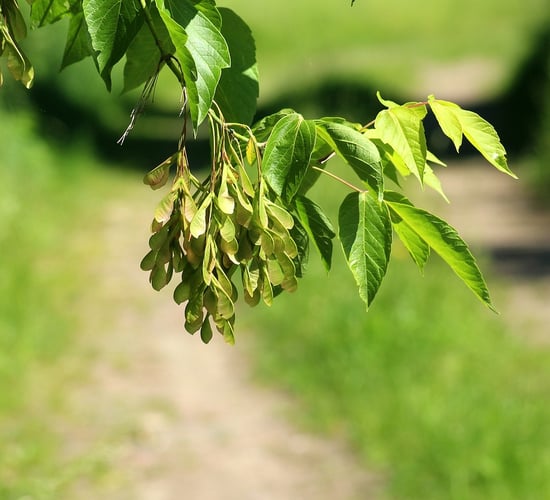
15,897 hectares of grant-aided ash were planted between 1990 and 2013, and it is estimated that up to 90% of ash trees may succumb to the disease.
Farmers received grants "that did not cover actual costs, leaving them less confident that their forests’ interests were being protected", SEEFA said.
Paddy Bruton, SEEFA chairperson, explained: “Farmers have had a difficult time with their forests after ash dieback, and we could not have that again.
"This is a chance to rebuild and strengthen confidence, and to show that forestry can remain a strong and dependable land use option for farm families."
SEEFA said it believes the "speed and direction" of this response are important.
"The combination of government leadership and direct engagement with those on the ground has resulted in a more practical scheme," the association said.
"The current challenge is to ensure the scheme operates efficiently, avoids bottlenecks and supports consistent decisions across regions."
Looking ahead, SEEFA stated that forestry "remains essential as Ireland faces more frequent extreme weather".
"Rapid and effective forest restoration is vital for farm diversification, rural employment, timber supply, biodiversity, climate action and resilience against future storms," it added.