'Potentially serious implications': Heydon responds to bluetongue investigation in NI

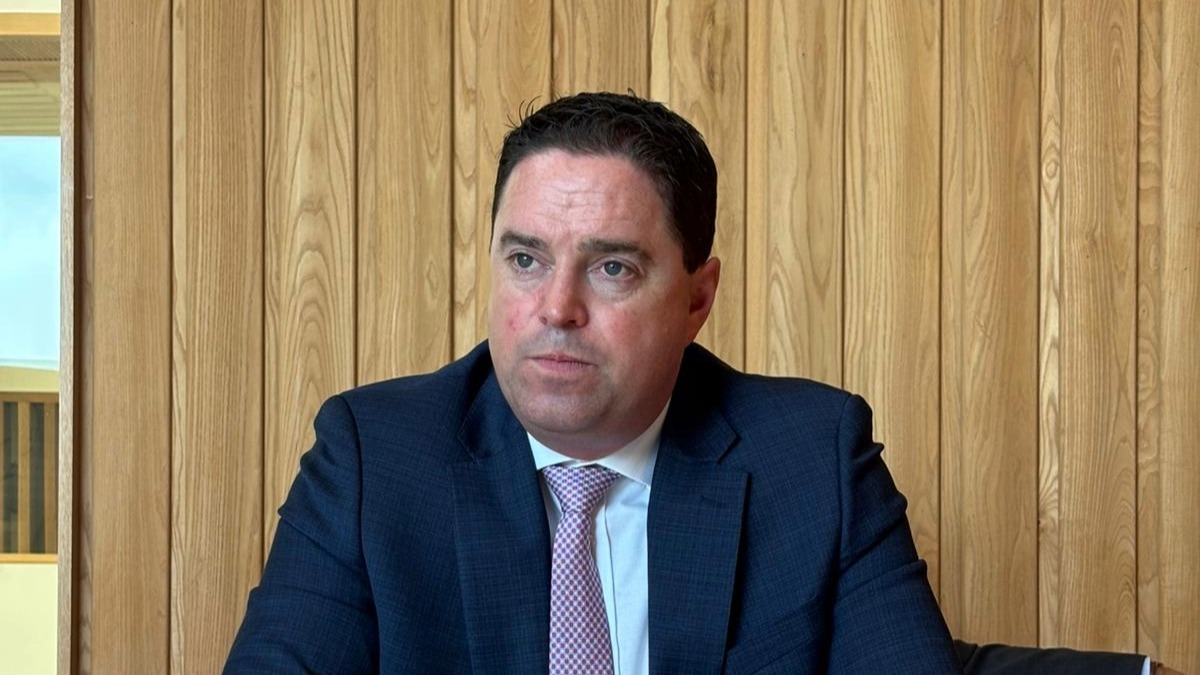
Minister for Agriculture, Food and the Marine, Martin Heydon has responded to the investigation of suspected bluetongue cases in Northern Ireland.
Department of Agriculture, Environment and Rural Affairs (DAERA) vets are investigating the suspicion of bluetongue virus at a holding near Bangor in Co. Down.
Results from DAERA’s active surveillance for bluetongue have indicated the presence of the disease in two cows, the department confirmed on Saturday night (November 29).
Minister Martin Heydon said the news of a suspected bluetongue outbreak in Northern Ireland is "unwelcome".
"My thoughts are first and foremost with the affected farm family, and those farmers in the locality who will be worried about their own herds now," he said.
"This development has potentially serious implications.
"If the disease becomes established in one part of the island, it will be that much easier for it to spread, with consequences for animal health and welfare, and financial and emotional stress for farmers.
"However, I must emphasise that bluetongue does not have any implications for human health or food safety."
Minister Heydon said he will be engaging closely with his counterpart, Minister Andrew Muir in Northern Ireland on this, "ensuring that we continue to take a collaborative and supportive approach, building on the very close relationships already in place on animal disease control north and south".
Addressing the next steps to take, Minister Heydon said: “It is important to note that, because bluetongue is spread by midges, disease spread is much less likely in the winter and early spring months.
"I am taking firm action now to carry out enhanced and targeted surveillance to find the disease, if it is here.”
These actions will include on-farm surveillance blood sampling of cattle and sheep; testing livestock submitted to regional veterinary laboratories, sampling of cattle routinely slaughtered at meat plants, and encouraging farmers and vets to report any suspect cases to their regional veterinary office.
Suspected cases of bluetongue
Following the confirmation of suspected cases in Co. Down, a 20km temporary control zone was introduced, effective from 9:00p.m on Saturday, November 29.
Moves of susceptible species (cattle, sheep, goats, deer and llamas/apalcas) on or off premises within the control zone are now prohibited whilst officials carry out further investigations.
Moves direct to slaughter are permitted under a general licence available on the DAERA website.
Minister Andrew Muir said while the suspect cases are of great concern, it is essential all producers impacted by the control measures play their part in limiting the potential for further spread of the disease.
'Very disappointing'
Irish Farmers' Association president Francie Gorman said the development is "very disappointing".
He said everybody in farming had "worked very diligently to avoid this scenario over the last 18 months since the virus was first detected in England".
“Farmers are actively playing their part in monitoring livestock for any signs of the disease and reporting any suspicions to their vets and the department,” Gorman said.
The IFA president said most EU member states with BTV-3 have overcome the issues with live exports through bilateral trade arrangements.
"The Department of Agriculture must immediately move to have trade from Ireland facilitated should BTV-3 be found here. We cannot have any disruption for this vital trade," Gorman added.
IFA animal health chair TJ Maher said it is "critical everything is done to prevent this disease from spreading".
“At this time of year, vector activity is low which creates potential for the disease to be contained and eradicated," Maher said.
"Trade disruption and potential production losses on farms would impact directly and solely on farmers, if the disease spreads.”
The IFA is urging the Department of Agriculture to "immediately move to have BTV-3 vaccines licensed and available for use".