Opportunity to get nutrients to grass


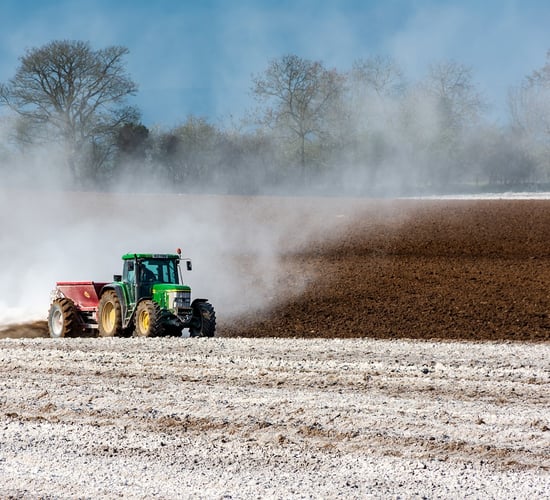
It was a nice change of scenery to see a bit of sun this week, and with the week ahead forecasted to be relatively dry, farmers may be able to get nutrients out on grass.
Slurry has become such a valuable asset on farms in today's era, worth approximately €30/1,000gal, as regulations and allowances on chemical fertilisers tighten.
However, with the wet start to the season, farmers will have too much of it to hold, and will be looking for any given opportunity to get some of it out.
But just because the weather has ever so slightly dried up does not mean slurry should be wasted in a bid to empty tanks.
It goes without saying you should be targeting the driest paddocks that are holding the least water to minimise damage.
However, testing the nutrients within your slurry and cross referencing them to your soil sample reports will allow you make the most of the available nitrogen (N), phosphorus (P), and potassium (K) within the slurry.
Once you decide the best rate to apply your slurry at, and decipher how much nutrients your ground is actually receiving, you will be able to plan how much chemical N will be needed as a top up, significantly reducing nitrogen-related costs.
Testing slurry
Testing slurry is a worthwhile task considering its value, as the nutrients available will dictate application rates.
Previous Teagasc surveys found that the average values of slurry were: nine units of N, five units of P and 32 units of K within 1,000gal of cattle slurry.
However, there can be huge variation in the nutritive content of cattle slurry from one farm to the next, or even from one tank on the farm to the next.
Follow these instructions to take a slurry sample:
- Agitate the slurry tank;
- Suck up a load of slurry into the tanker;
- Take the sample from the fill point of the slurry tanker;
- Place the sample in a sealed plastic container.
To test the slurry yourself, a hydrometer can be used to get a rough estimate of the value of your slurry, or for more accurate results, your sample can be sent to a lab.
When using a hydrometer, you will be fed back a percentage indicating the density of the liquid.
The following table can be used as guide for the value of your slurry:
| Slurry dry matter % | N units/1,000gal | P units/1,000gal | K units/1,000gal | € Value/1,000gal |
|---|---|---|---|---|
| 2% (very diluted) | 4 | 2 | 13 | 16 |
| 4% (watery) | 6 | 3 | 21 | 25 |
| 6% (typical) | 9 | 5 | 32 | 39 |
| 7% (thicker) | 10 | 6 | 36 | 45 |
The majority of farmers across the country will be happy to just take pressure off tanks this week if possible.
However, dry farms that can travel should be getting as much out as possible, as spring applications of cattle slurry typically have a higher recovery of N, by up to 50%, compared to summer applications.
The lowest N loss through ammonia is when slurry is spread on a cool, damp, overcast day, with temperatures less than 13°C, according to Teagasc.