O'Mara: Farmers 'by and large' won't notice Teagasc cost cutting


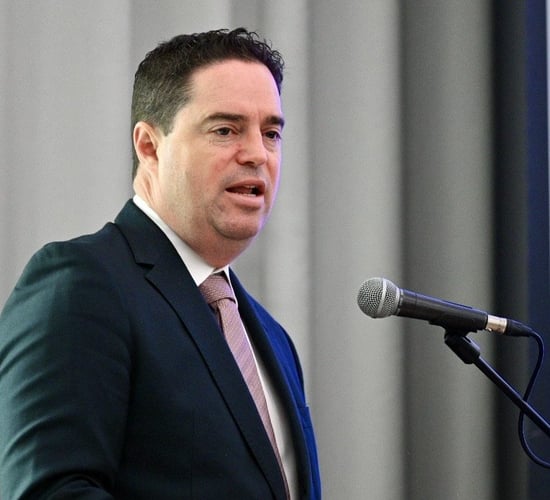
Teagasc director Prof. Frank O'Mara has said that the body's farmer clients and students will "by and large" not notice efforts to cut costs and make savings in certain areas.
As reported by Agriland this week, Teagasc confirmed that not all vacant posts in the authority will be filled this year due to an allocated pay ceiling.
As well as that, The Signpost Advisory Programme, while continuing in 2026, is being "adapted to ensure the best use of available advisory sources".
This will include a reduction in the number of advisers dedicated solely to specialised climate and sustainability advisory roles.
This is part of a wider effort in Teagasc to make savings across the agency in various areas.
However, according to Prof. O'Mara, this will not impact Teagasc's provision of services to farmers and students.
Speaking at the launch of Teagasc's Achievements 2025 publication yesterday (Tuesday, February 18), Prof. O'Mara said: "It won't be a huge change to be honest anywhere... The change is relatively small in the context of our overall budget.
"We do have to focus in on finding efficiencies wherever we can. That includes some efficiencies in staffing," he said.
"So every role that comes up, when someone retires, we look at that and see if there's another way we could do that work, or do we need to continue doing that work at all.
"We will replace most of our staff who retire over the year. There will be some, probably, overall headcount reduction.
"We are looking at....what we spend money on then other than staff. So whether it's events or whether it's print and publications.... We run very big events. We want to run the same events this year," the Teagasc director said.
"We attend the 'Ploughing', and [Bord Bia] Bloom and the Tullamore Show and all that. And we certainly still want to go to all of those, but we are going to maybe look and see where can we save a few bob in terms of the, the cost of...events," he added.
Income
Prof. O'Mara also noted that Teagasc also generates "quite a bit" of income itself, from research activities, advisory fees, education fees, and running farms.
"We have a good year coming up, we think, in terms of research project income. So income will be up there, which is very welcome," he said.
"By and large, I don't think our farmers or students will notice, really, a big impact in the services that they get.
"We're not going to be dropping clients, or not able to service clients," the Teagasc director added.
Signpost
On the Signpost programme, Prof O'Mara said that Teagasc is "100% committed to that".
He said that while the number of advisers under the programme will be reduced, some of the work they do can now be reallocated to Teagasc's normal advisory services due to the AgNav platform.
"Yes, we're going to reduce those a little bit, but that's not saying we're abandoning that work," Prof. O'Mara said.
"With the advent of AgNav now, all our advisers are able to get access to that and can do plans with their clients. So, we think we can take some of that work back into our general advisory cohort
"I think we'll still have as big or bigger a programme overall in 2026 as we had in 2025, but we are finding, I suppose, any efficiencies that we can in the system and any cost saving that we can.
"We've got a significant budget for the year and we've got to get on with making the best value we can out of that," he added.