Net margins reach over €2,200/ha on top third of dairy-beef farms in 2025


Net margin figures on DairyBeef500 demonstration farms rose substantially in 2025.
Excluding subsidies and direct payments, the average net margin on the DairyBeef500 demonstration farms rose to €1,465/ha across the group in 2025. This is a 104% increase in profitability versus the previous year.
DairyBeef 500 programme manager Alan Dillon said that the increase in profitability is substantial, but noted the difference between the top third and bottom third of the monitor farms.
Net margin
He said: "While the bottom third had an average net margin of €666/ha, which is still a very good figure compared to where beef profits had been, the top third had net margins of €2,246/ha."
The table below outlines the average profitability figures for DairyBeef 500 monitor farms from 2023-2025:
| Year | Output (€/ha) | Variable costs (€/ha) | Gross margin €/ha | Fixed costs (€/ha) | Net profit €/ ha excl. direct payments |
|---|---|---|---|---|---|
| 2025 | 4,181 | 1,870 | 2,311 | 846 | 1,465 |
| 2024 | 3,405 | 1,856 | 1,548 | 831 | 717 |
| 2023 | 3,330 | 1,990 | 1,341 | 799 | 542 |
Commenting on the performance of the farms in 2025, Dillon said that the top-third of these farmers had higher levels of output per livestock unit, higher stocking rates, and a lower level of variable costs per kg liveweight produced on the farm.
"The top third of farmers had total variable costs of €1.38/kg liveweight (€2.76/kg deadweight) versus €1.62/kg liveweight (€3.24/kg deadweight) on the bottom third of farmers."
"The top third of farmers had a stocking rate of 2.36 LU/ha, while the bottom third had a stocking rate of 1.85 LU/ha. The top third had liveweight output per LU of 592kg compared to 562kg for the bottom third."
Table 3: Profitability difference between top third and bottom third of DairyBeef 500 Monitor farms in 2025
| Category | Output €/ha | Variable costs €/ha | Gross margin €/ha | Fixed costs €/ha | Net profit €/ha excl. direct payments |
|---|---|---|---|---|---|
| Top third: | 5,130 | 1,916 | 3,214 | 968 | 2,246 |
| Bottom third: | 3,085 | 1,664 | 1,421 | 755 | 666 |
Dillon acknowledged that the timing of sale of cattle last year could have influenced the level of profit, noting that the beef price in January differed from the price in April by almost €2/kg deadweight.
Despite this, he said that the main factors that influenced the level of profit achieved on calf-to-beef farms was output per livestock unit and stocking rate.
"Those farms that had their output levels on the farm maximised were in a very strong position in 2025 to make gains when beef prices rose," he said.
Highlighting some of the other factors that attributed to the rise in profit margins on DairyBeef500 farms in 2025, Dillon noted that average beef prices rose by nearly €2/kg carcass-weight across the year, coming to an average price of €7.14/kg carcass-weight up from an average of €5.18/kg in 2024.
He also noted that weather conditions proved largely favourable in 2025 and that there was "a slight dip in the main variable costs", with feed, fertiliser and milk replacer down by 4-8%.
Calf purchase price
Calf purchase price for the DairyBeef 500 demonstration farms increased by an average of €60/head for beef-sired bull and heifer calves to €257 and €219, respectively.
Friesian bull calf prices rose to €97/head, with most of these calves purchased at between 2-3 weeks-of-age.
The Commercial Beef Values (CBVs) of the beef calves purchased have also increased in line with national figures.
Beef-sired calf CBVs increased to €134, while the Friesian CBV has reduced slightly to -€4.
This means that the average calf bought on the DairyBeef 500 demonstration farms in both dairy beef and Friesian calves are 3-star for CBV - within their individual category.
Variable costs
The main variable costs on the DairyBeef 500 demonstration farms are concentrate, milk replacer, vet, fertiliser, and contractor charges.
The chart below details the main variable costs on DairyBeef500 farms from 2022-2025:
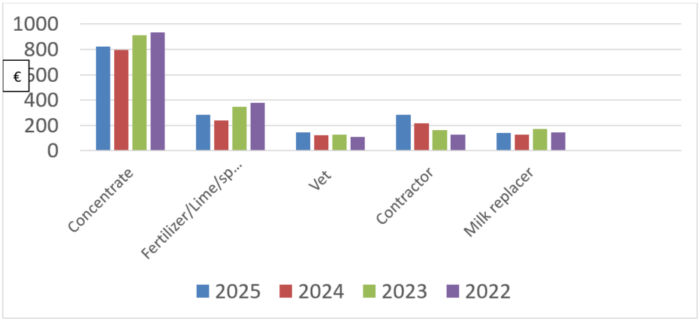
Feed and fertiliser costs fell from their peak when input prices were at their highest in 2022 and 2023. Despite this, the cost per hectare of these two big inputs did rise slightly despite the price per tonne dropping in 2025.
Dillon said: "This is somewhat explained by farmers taking advantage of the higher beef prices and feeding extra concentrates to drive cattle into bigger weights, while extra money was invested in phosphorous (P), potassium (K) and line in 2025 after a few years of curtailed investment due to the high cost of fertiliser.
"Contractor charges have been rising steadily over the past few years and, with labour being a scarce commodity on part-time farms, a higher proportion of machinery work is being carried out by agricultural contractors, and it is expected this cost will remain high in the future.
"Milk replacer and vet costs have experienced more modest rises over the years.
"However, with the price of calves rising in 2026, it is expected that more may be spent on pneumonia vaccination programmes this year to ensure no setbacks."
Threats for 2026 net margin for calf-to-beef producers
DairyBeef 500 programme manager Alan Dillon said that the threat of a beef price cut "is always something being floated to farmers" but noted that "there has definitely been less talk of it in the past 12 months than farmers are used to".
"The only real issue worrying calf to beef farmers currently is calf price. While it is very hard to gauge this year where calf prices will level off at, it is fairly certain they will be higher than they started off in January last year."
"Once beef prices remain north of €7/kg, most farmers will be in a fairly strong position come year-end, especially those that have their farm costs under control and remain focused on the main performance indicators of grass utilisation, herd health, and buying good genetics at value."