NDC Farmer Ambassador Series
NDC Farmer Ambassador Series: 'We take for granted that the public knows about farming'
Agriland Media Group is delighted to collaborate with the National Dairy Council (NDC) on a series of articles on the Farmer Ambassador programme, in which farmers actively work with the NDC to educate the general public about dairy farming, sustainable farming practices, nutrition, and the realities of farm life.
In this first instalment of the 'NDC Farmer Ambassador' series, we meet Co. Kilkenny-based dairy farmer Eamon Sheehan, who has said that the sector can "take for granted" that the general public knows about farming and food production.
Eamon is a dairy farmer in Cuffsgrange, Co. Kilkenny, where he farms a 210-cow dairy herd with his family.
"We’re similar to what 90% of Irish dairy farmers are doing, running a grass-based system to try and take advantage of our competitive edge," he said.
Eamon is also a farmer ambassador for the National Dairy Council (NDC).
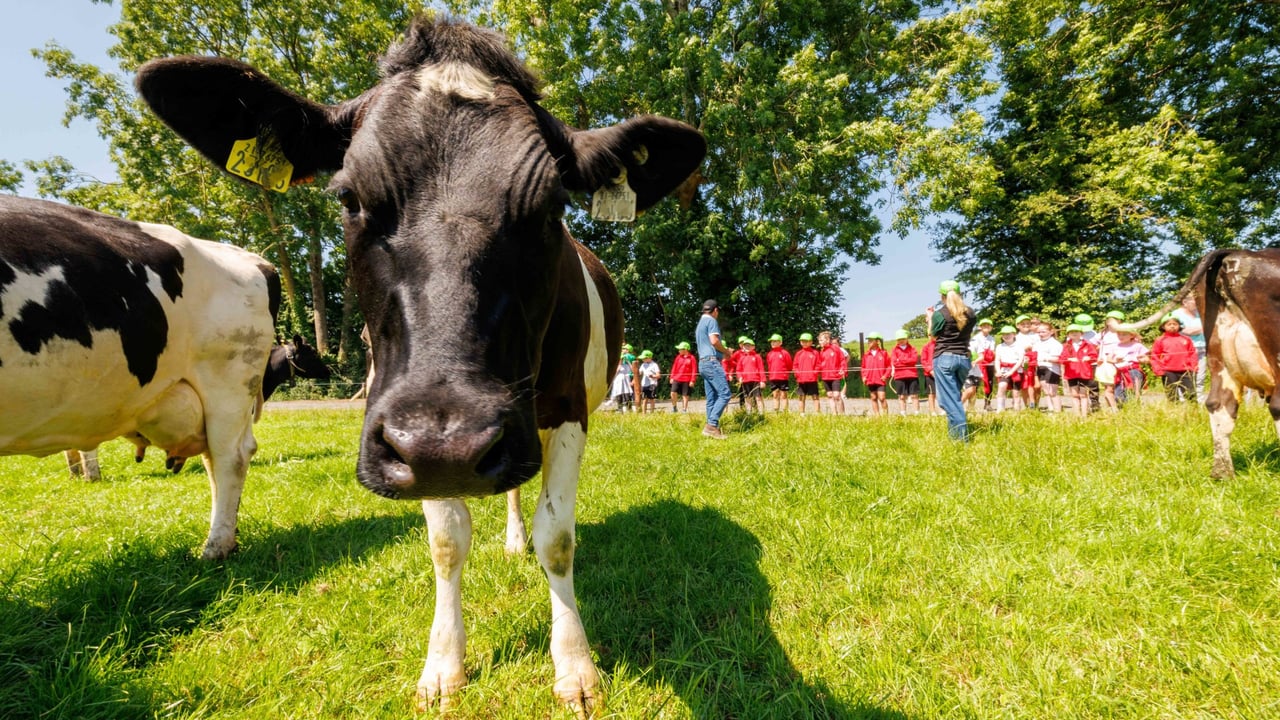
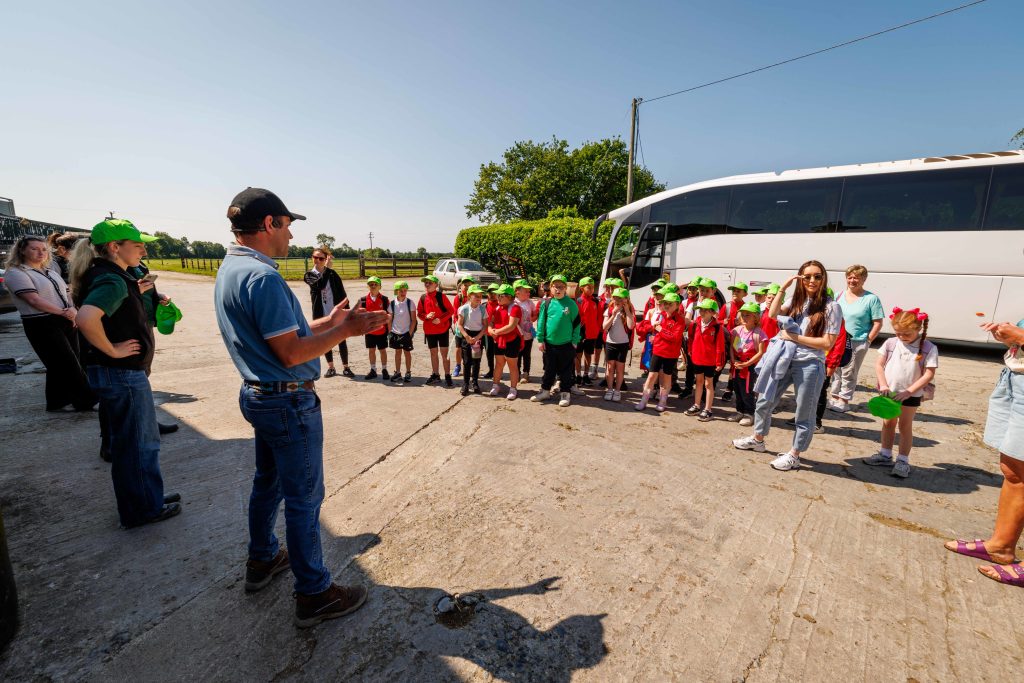
As part of that work, he has welcomed primary school children to his farm as part of an NDC initiative to educate young people about the life and work of an Irish dairy farmer.
Eamon explained to Agriland: "Over the last number of years when I got involved with the NDC, it's mainly to promote what we’re doing in agriculture from a farmer's perspective.
"A lot of the times we take for granted what people actually know about farming, what happens on farms, and the fact [is] I think generations have moved on from any connection to a farming family," he added.
"So you’re probably talking two or three generations where anyone is even related to somebody who has actually lived or worked on a farm.
Eamon noticed that in a lot of the conversations that he has had with people over the years, many "don’t actually know what’s going on in the background".
"Simple terminology, when we’re talking about drying off cows and little things like that, we expect people to understand what they’re doing and they don’t have any idea.," he explained.
"And then they’re too polite to even acknowledge that they don’t know what we’re talking about.
"They draw their own assumptions, whether that’s me off there with a towel and hand drying a cow or putting sealers into her to end the lactation. I think that’s one of the bigger issues that we have.
"I was always involved in the IFA [Irish Farmers' Association] and I was involved in Tirlán, and I just thought the NDC was a good opportunity to get our voice across and showcase our farms a little bit better," the dairy farmer told Agriland.
School farm visits
The process of bringing school children onto the farm under the NDC initiative began with an NDC representative coming out to the farm and putting a plan in place.
The school in question was a primary school in Waterford. There were just shy of 50 children, around second- or third-class age, with a number of teachers. They came to the farm in May this year.
Eamon said that none of the children were from a farming background, while only one of the six or seven teachers that were part of the farm visit had some family background in farming.
"For a school that was on the outskirts of Waterford city, I was very surprised at the fact that there was no connection," he said.
"The only farms they had been on were pet farms, so that was a bit frightening in one sense."
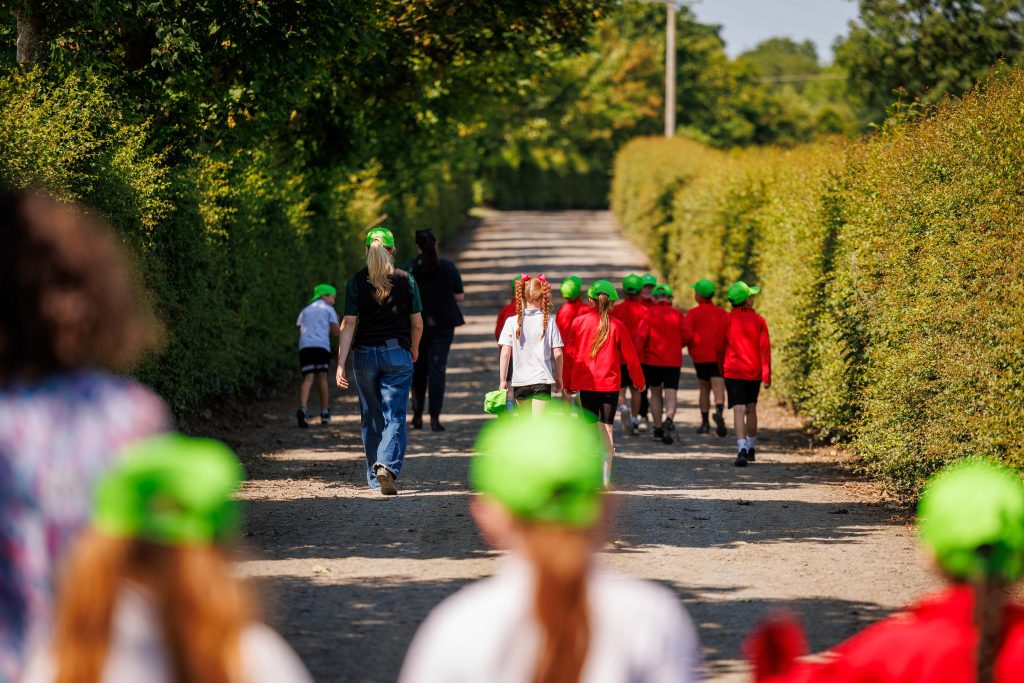
The school visit involved bringing the children through the milking process, showing the cattle coming into and going out of the parlour, and taking the group down along the cow roads to see the cows at grass.
"At that age, it needs to be pretty straightforward. For that age group, the benefits of nitrogen fixing clover doesn't really stick," he said.
However, the children could be educated using practical examples that they could visualise.
"We had a pile of grass there to show them how much a cow is capable of taking in. That’s 80kg of grass in that pile there," he said.
"When they see that pile of grass, four times the size of one of the kids, that puts it in perspective," he said.
A dietitian sent by the NDC visited the farm to help bring the 'Grass to Glass' story to life and show children how to include dairy in their diets.
To help children understand a cow’s daily contribution, the farmer demonstrated how much milk one cow can produce.
Using a standard 2L milk carton as a guide, Eamon explained that a single cow can fill 12 and a half cartons in a day.
"You can put those types of things into a context, a visualisation of what the cow is able to do," he said, giving children a real sense of the cow’s work.
Value
For Eamon, the value of these farm visits facilitated through the NDC is about familiarising children with how their food - in this case their milk and dairy products - is made, so that they can make informed decisions when they're older.
"We take in our local school at the end of February every year, so they see the cows calving, they see cows at grass, they see the calves are all content and happy in their pens. We’ll milk a cow, we’ll feed calves," he said.
"Whatever anyone wants to do in life let it be their decision, but let it be an informed decision, from a point of view of what they think happens on a farm.
"If we provide the facilities...and let somebody else see what we're doing, then its an awful lot easier to explain at a later stage to kids as they're growing."
Eamon noted that when he hosts these school trips on his farms, the teachers and parents very often have as many or more questions as the kids.
"To have those kids and the parents out, children observed farm life first-hand, cows out grazing grass and calves inside, content and happy, [and] they were able to see the amount of technology as well...That for me was a big thing," the NDC Farmer Ambassador added.
Future farmers
The visit of the Waterford students to Eamon's farm is part of an initiative run by NDC.
This includes the second‑annual Future Farmer 2025 competition, which invited students from across Ireland to submit a video, voice note, essay, or poster explaining why they want to be a 'Future Farmer'.
Four students won the competition and, as part of their prize, brought their schools on visits to working dairy farms.
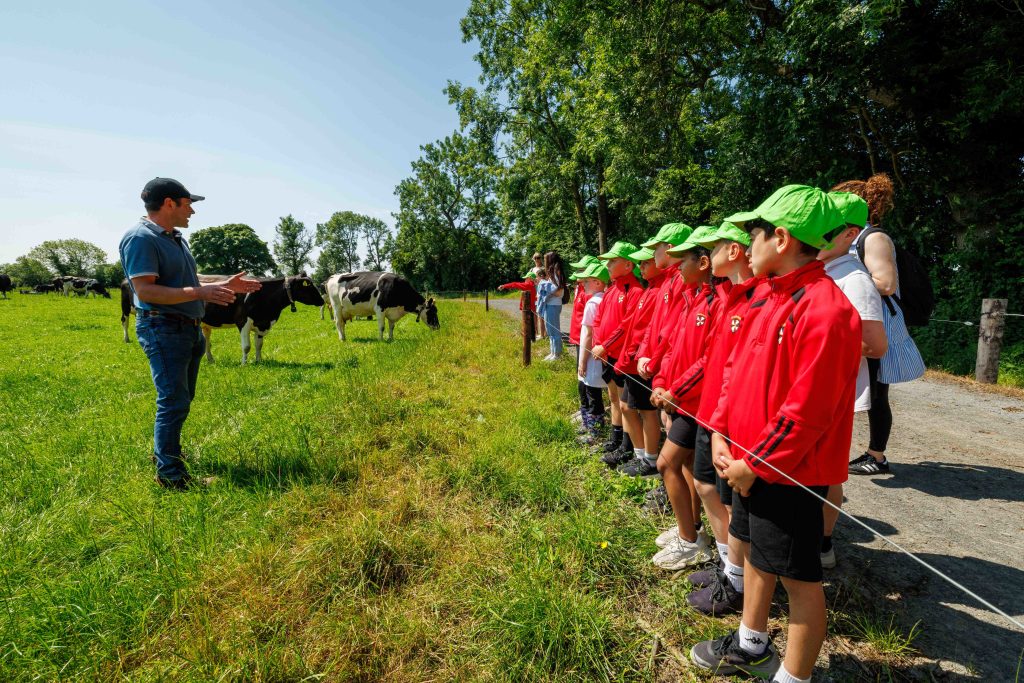
Eight additional schools participated in farm visits through a pilot programme for the EU school milk scheme.
That initiative is part of NDC’s broader Moo Crew schools programme, which educates children about dairy farming, nutrition, and sustainability.
These farm visits, alongside the EU School Milk Scheme, help children understand where milk comes from, see sustainable farming practices in action, and appreciate the role of dairy in a healthy diet.
To learn more about NDC’s work in 2025, click here.