Minister launches Improved Liveweight Performance Action Plan


The ‘Improved Liveweight Performance Action Plan’ has been launched by Minister for Agriculture, Food and the Marine, Martin Heydon.
The minister today (Thursday, February 26) launched the plan, as he chaired the 16th meeting of the Food Vision High-Level Implementation Committee.
The action plan is a "comprehensive framework that will enhance economic and environmental sustainability" across Ireland's beef sector, according to the department.

The plan sets out a structured approach to optimising liveweight performance through a number of integrated action areas, spanning farm infrastructure, genetics, nutrition, animal health and welfare and knowledge transfer.
The department said the action plan "responds to Ireland's legally binding 25% agricultural emissions reduction target by 2030".
Improving the liveweight performance of prime beef cattle is part of the strategy to meet this commitment.
Optimising
Minister Heydon remarked that the plan is "not about imposing change, it is about providing farmers with the tools, knowledge and support to optimise their own systems".
"I want to acknowledge all those who engaged with the consultation process," he added.
"This collaborative approach ensures we're working together across Teagasc, Bord Bia, the Irish Cattle Breeding Federation, Animal Health Ireland, industry and farm organisations to realise our ambition."
According to the department, the plan leverages existing support mechanisms including the Targeted Agriculture Modernisation Schemes (TAMS) funding, the Suckler Carbon Efficiency Programme and the Dairy Beef Welfare Scheme.
Each action in the plan identifies "clear lead organisations and supporting partners for implementation".
Action areas
Ireland’s Climate Action Plan identified reducing the average slaughter age of prime beef cattle as a core strategy to meetthe agricultural sector’s legally binding 25% emissions reductiontarget by 2030.
According to the report, "real progress" has been made, as between 2010 and 2022, average finishing age fell from 27.9 to 25.6 months.
"However, momentum has slowed in recent years, particularly following challenging weather conditions and shifts in herd composition," the report said.
"Accelerating progress towards the 2030 target requires a structured, collaborative approach supported by targeted action across genetics, nutrition, infrastructure, animal health, andknowledge transfer."
The new plan comprises action areas organised aroundfive strategic pillars:
- Improving farm infrastructure for grazing, handling and precision feeding;
- Establishing beef system planning tools and guidelines;
- Promoting preventative herd health and welfare protocols;
- Driving breeding programmes focused on performance and commercial beef value;
- Optimising nutrition management and dairy-beef integration.
The report said: "Additionally, the plan prioritises enhanced knowledge transfer through discussion groups, adviser training and demonstration farms, alongside performance monitoring and benchmarking."
Pillars
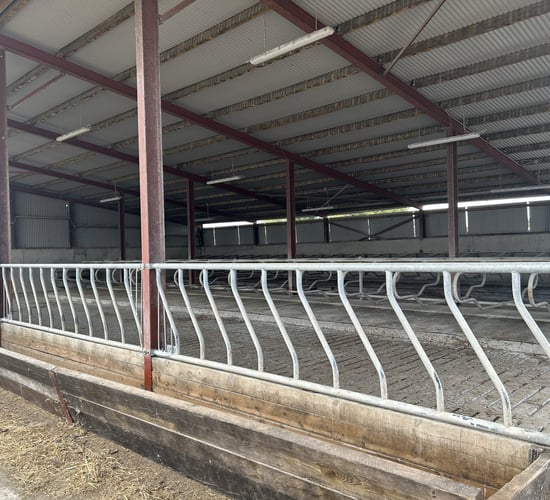
Under the pillar of farm infrastructure, actions include: improve grazing infrastructure on beef farms; and encourage the use of precision feeding and monitoring infrastructure.
Under the pillar of beef system planning, actions include: revise finishing systems guidelines; encourage more compact spring/autumn calving for suckler herds; and explore the impact of alternative management and breeding strategies on liveweight performance and finishing age.
Under the pillar of herd health and welfare protocols, actions include: promote timely and relevant vaccination programmes for all animals; encourage the development of farm-specific parasite control programmes; and promote appropriate biosecurity procedures for the safe purchase of animals.
Under the pillar of breeding programmes, actions include: promote the use of genetics that will produce high CBV animals; focus on breeding high index cows; and continue to promote the genotyping of calves.
Under the pillar of improved nutrition management, actions include: promote production of high-quality winter forage; encourage greater levels of reseeding and the establishment of clover-based swards; and promote optimised supplementation of forage-based diets.
Ahead of the publication of this plan, concerns were raised recently by farm organisations over a potential drop in carcass weights, and therefore a drop in prices received for cattle, if the age at slaughter decreases.