Mercosur: Taoiseach says govt 'will continue to advocate on this issue'

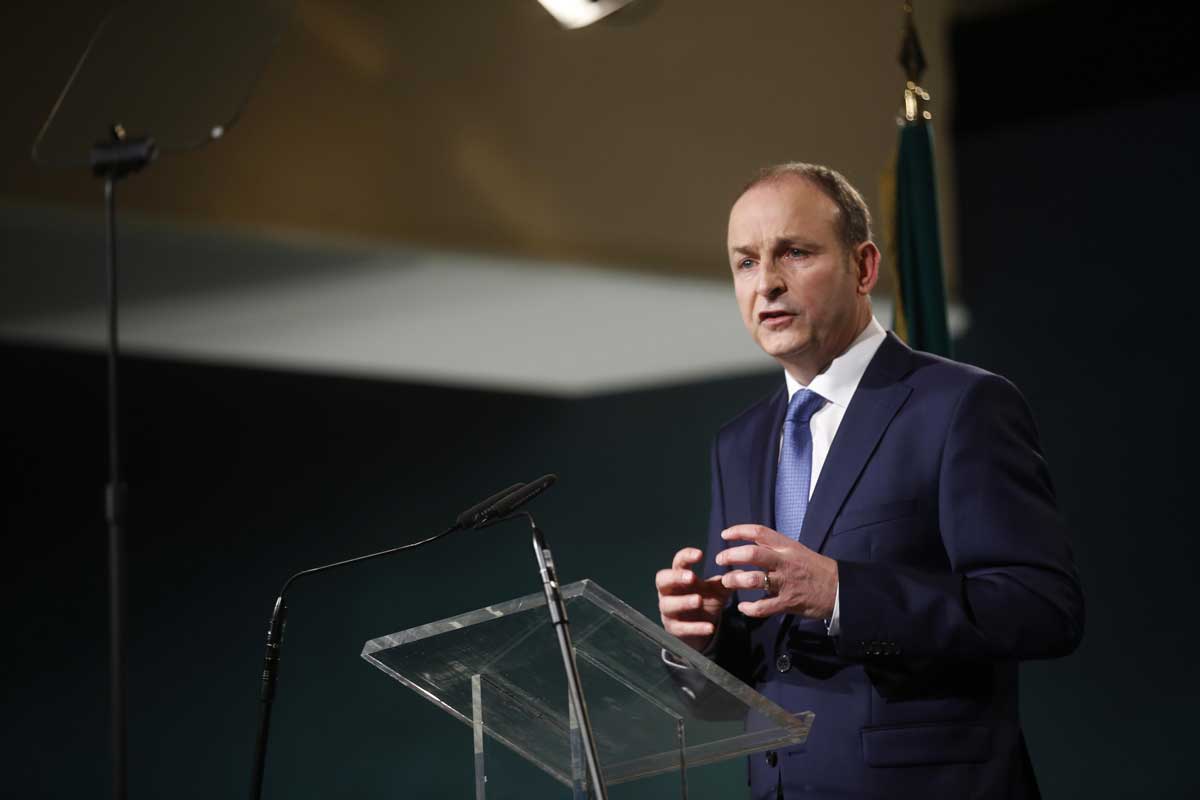
Taoiseach Micheál Martin has said that government has been "engaged intensively" at EU level to voice Ireland's concerns in relation to the EU-Mercosur Trade Agreement.
The Taoiseach said that while in recent weeks "we did secure improvements to the overall agreement, including through the proposed regulation on safeguards", there were concerns remaining.
Speaking at the Irish Farmers' Association's (IFA) AGM on Tuesday night (January 13), he said: "We continued to have significant concerns relating to certain agricultural standards under the agreement and the impact this could have on European farm incomes.
"Ultimately, we concluded that the new and additional commitments, while welcome, were not sufficient to satisfy the concerns of our farmers and our consumers, and so we took the decision to vote against the EU-Mercosur agreement.
"We will continue to advocate on this issue, and I as Taoiseach and we as a government remain committed to supporting agriculture and ensuring the long-term financial and environmental sustainability of the sector."
'Weakening' budget
The negotiations on the EU budget for 2028-2034, which includes the Common Agricultural Policy (CAP), are "critically important and have now commenced", the Taoiseach said.
"The proposed CAP allocation represents a reduction of approximately 20% compared with the current period, which is a very serious concern for Ireland," he told farmers.
"As such, our position in government is clear - we cannot support a weakening of the CAP budget.
"Farmers are already facing increased input costs, climate obligations and market pressures.
"The next CAP therefore must be adequately resourced to ensure a fair, stable income for producers and to maintain food security across Europe."
He said the government's priorities "remain unchanged" - a CAP that is "straightforward for farmers, flexible and responsive to national needs, and with a budget that matches its ambition".
"As Taoiseach and as a government, we are actively engaging with the commission, the European Parliament, and our EU counterparts to ensure that Ireland’s priorities are reflected - a strong, well-funded CAP that delivers for farmers, rural communities and the environment."
The Taoiseach said negotiations will be "very challenging and difficult".
"The aim is to bring them to a conclusion by the end of this year," he added.
Nitrates
He told farmers that the government has been "working proactively" to secure the continuation of Ireland's nitrates derogation for the next three years.
"We welcome the recent positive decision at EU level," the Taoiseach said.
"The government will continue to work towards finalising the formal elements of the derogation.
"We are obviously pleased with the progress made, but we also need to be clear-minded.
"Securing this derogation comes with additional conditionality and responsibilities, and there are undoubtedly challenges ahead."
Pressures on water quality
Minister for Agriculture, Food the Marine, Martin Heydon is working on rolling out the ecological assessment process at catchment level as part of the nitrates derogation.
The Taoiseach acknowledged that there has been "unprecedented engagement across the entire agri-food industry to drive the improvements that we require" in terms of water quality.
"To maintain the derogation, we need to step up our collective action to improve water quality," he added.
"For its part, the government has been working to oversee improvements in water quality through a Cabinet Committee on Water Quality, which I chair.
"We have been exploring all pressures on water quality, including impacts from agriculture and forestry, but also wastewater treatment and the investment programme of Uisce Éireann."