Machinery advice: Setting up and maintaining the fertiliser spreader
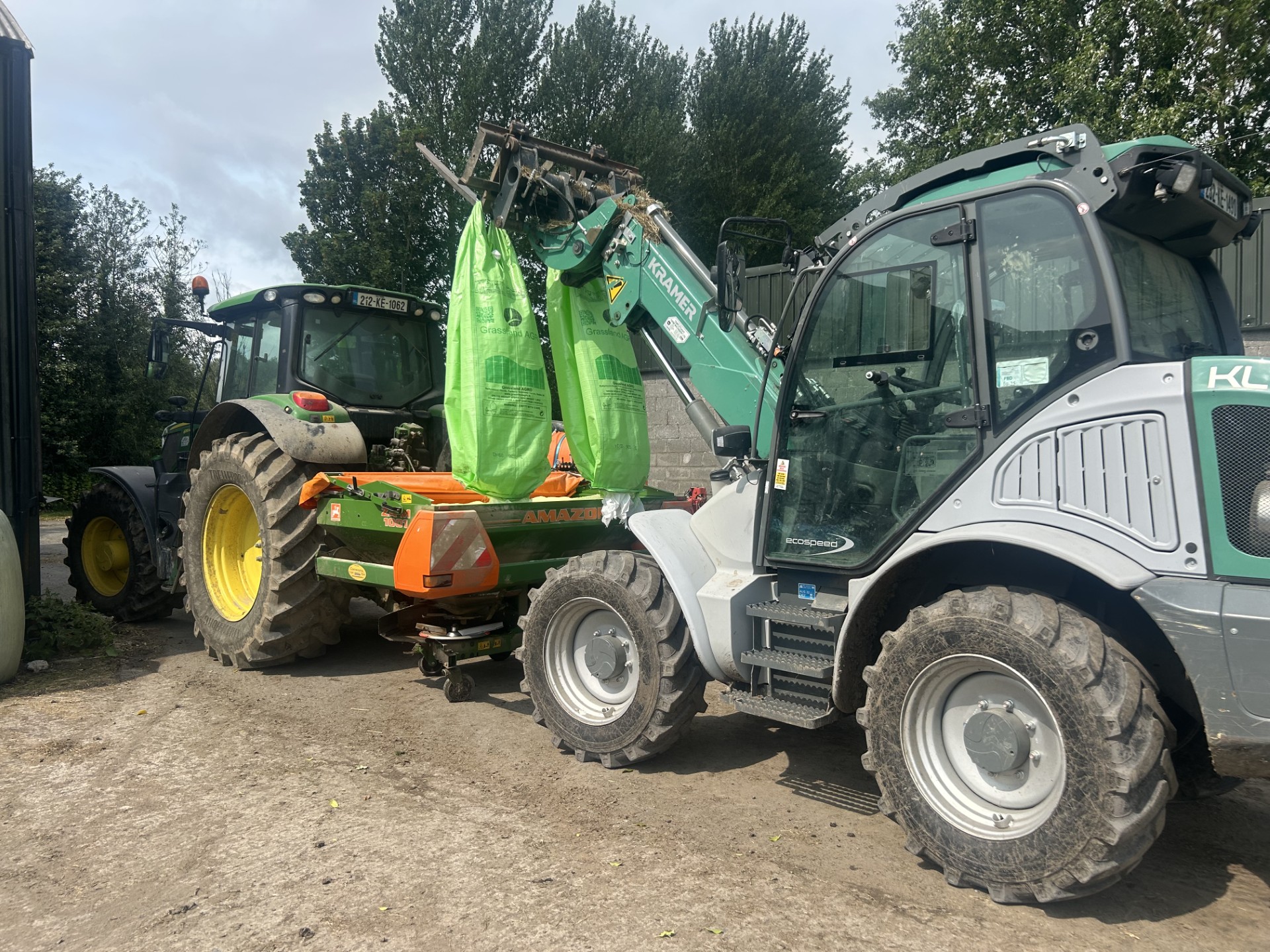
Although the weather is in no way suitable, many farmers on the east side of Ireland are permitted to apply fertiliser again, with the rest of the country to follow shortly.
That means farmers and contractors need to give the fertiliser spreader a service and ensure it is fully calibrated to minimise wastage of the 'white gold' that is fertiliser, especially as prices rise following the implementation of the EU's Carbon Border Adjustment Mechanism (CBAM).
Carrying out the following simple checks and calibrations will not take much time, but will save you money.
A poorly set up fertiliser spreader will end up over-spreading in some areas and under-spreading in other areas, meaning you are not getting your money's worth from a bag of fertiliser.
Inspection
The first thing any farmer should be doing each time before they go spreading is inspecting the machine for any faults.
Look for any possible structural damage or corrosion on the hopper or frame of the spreader, and make sure the power take-off (PTO) cover and chains are in place.
Inspect the discs by eye to ensure they are level on the machine, as well as rotating freely.
Give them a vertical rock to ensure there is no play in the bearings or gearbox, though manufacturers state minor play (up to 1mm of movement) is acceptable.
If there is more than 1mm play, the bearing may need changing. However, these are usually sealed within the gearbox so if you are changing one, change the other at the same time.
Make sure the shutters are opening and closing freely, the drop-guides are intact, and the vanes not damaged or worn.
The agitators also need to be checked. Ideally, this is a two-man job, where one person turns each disc while another looks inside the machine to ensure they are turning properly.

Finally, look for any wear in the regulator components such as the shutter linkages as well as damage to the headland control functions, such as bending in the fins or non-engagement/disengagement.
There should be no pitting, warping, or damage to either of the discs or any of their components.
Wagtail spreaders also need to be checked for damage, worn bearings, and broken diffusers.
Calibration
Every machine is calibrated slightly differently, so look at the owner manual or download an app for the calibration of your specific machine.
The fertiliser spreader may need to be calibrated several times during the year depending on the fertiliser you are using, as different compounds require different settings, e.g., straight urea will be different to calcium ammonium nitrate (CAN).
Typically, calibration involves removing a disc before turning on the machine, then opening the shutter for 30 seconds while the machine is running without the disc, and collecting all the fertiliser from the shutter in a bucket.
This is usually followed by a calculation such as:
weight of fertiliser collected (kg) x 4 = flow rate (kg/min).
If the flow rate calculated from the machine is not matching the flow rate you want, adjust the regulator and recalibrate.
Once calibrated, it is important to ensure the drop link is properly adjusted, the vane settings are correct, and the machine is at the right height and level (uneven tyres may throw it off).
Finally, grease all the necessary points and check the lights before taking to the road.
Ideally, the machine should be washed out after usage to prevent corrosion or blockages in the agitator.