New Holland's retro model echoes the birth of modern tractors

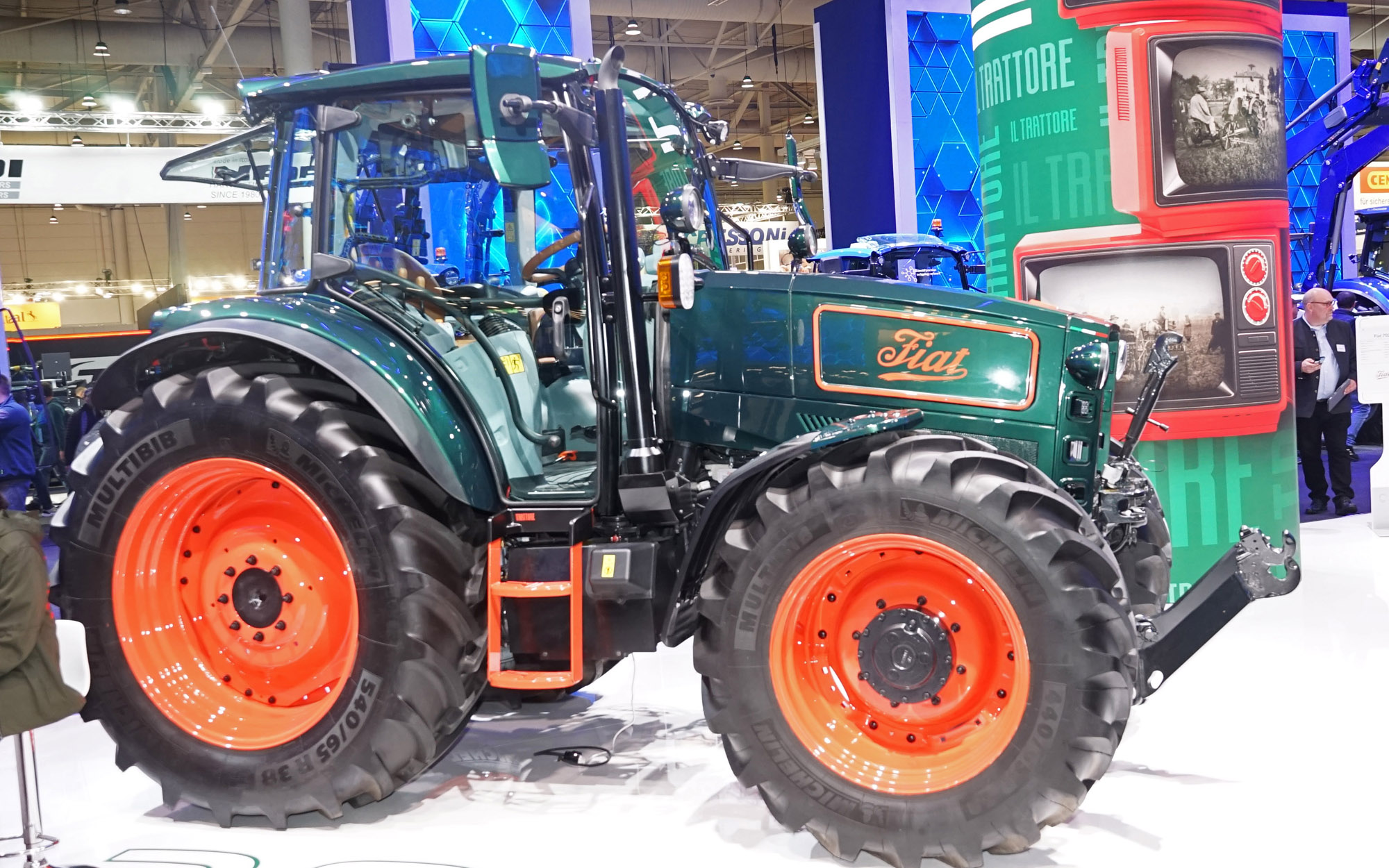
At this year's Agritechnica machinery trade show in Germany, New Holland had on its stand a concept tractor, named the Il Trattori, which stood out for its novelty and appeal.
Rather than look forward to some undefined future era where autonomous tractors rule the fields and the famer sits at the hub of a multitude of satellites implementing a theoretical plan of action based on a raft of data, the company styled a modern day machine in the form of a much earlier Fiat tractor.
Back to the start
Indeed, the styling clues suggest that the CNH designers stretched right back to 1917 and the launch of the Fiat 702, the first tractor produced by the company.
This model was manufactured alongside cars and trucks in Fiat's Turin factory, and it used for the time an advanced unit construction, with the engine being borrowed from Fiat's 3.5t trucks.
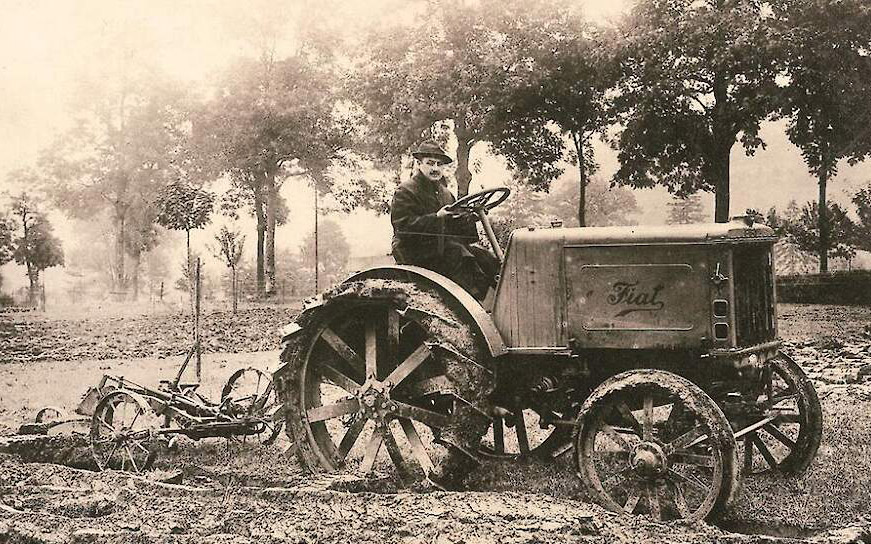
This motor was a four-cylinder 6.2L petrol engine producing 30hp, or 25hp if running on paraffin.
It was a big machine and cost five times the price of Fordson in Britain. Fast forward 108 years and a FPT diesel of 6.7L can offer more than 10 times as much power in an off-road application, as seen in both the latest JCB and Deutz Fahr models.
What lies underneath?
There was no indication on the accompanying spec sheet as to which model this concept had been built around, yet the explanation given was that it had 118hp and a 24X24 Dual Command powershift.
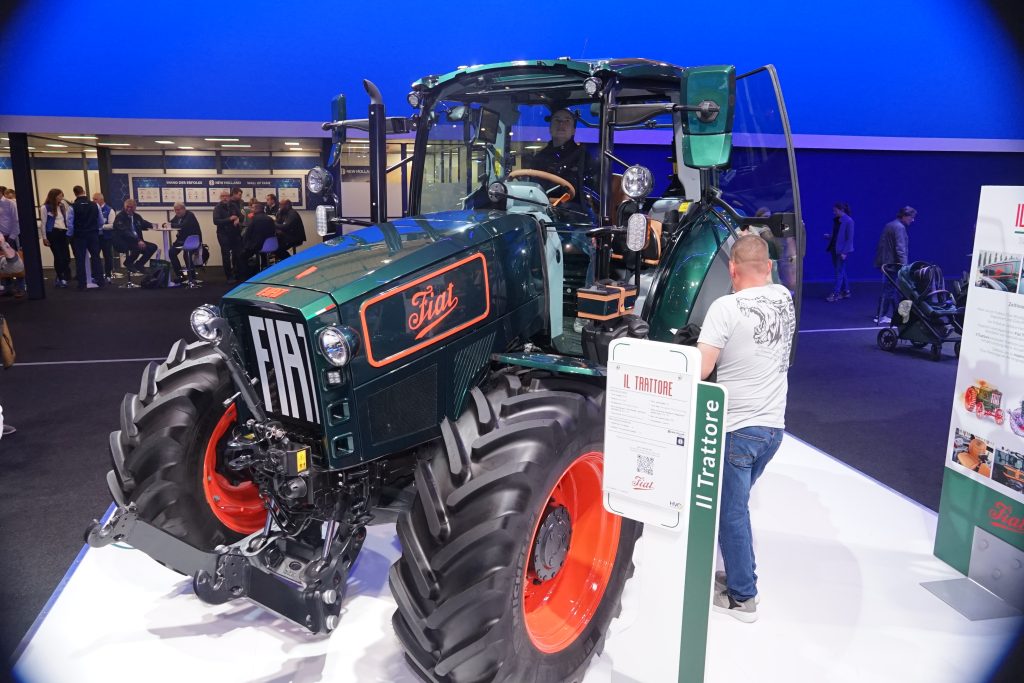
However, the company had previously noted that it was based on a T5.120, a strong seller in the range and one that serves a broad range of farmers, just as the original model was intended to.
Early days of tractor design
New Holland claim that the Il Trattori pays homage to the 702, which was developed to help ease the labour shortages created by World War I.
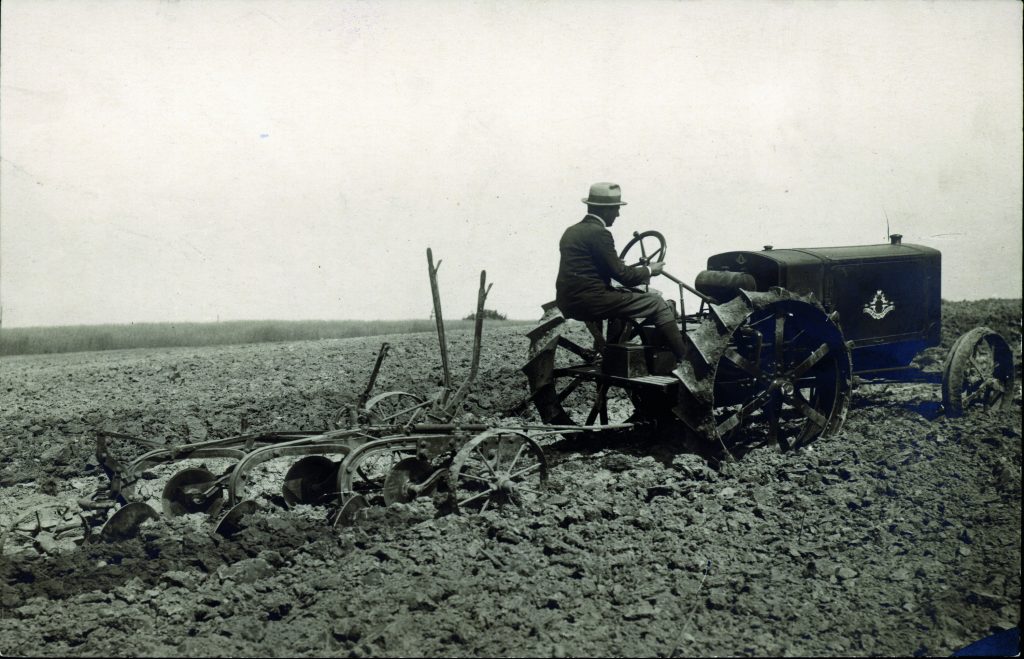
This is in contrast to Henry Ford, and later, Harry Ferguson who both saw the tractor as a means of increasing production through the purchase of oil derivatives for powering farming rather than growing hay for horses.
The 702 followed the then evolving pattern of tractor design which incorporated the gearbox and engine as load bearing components, rather than assemble the parts around a frame, as was the case with the popular Waterloo Boy of the time.