Irish govt keeping 'everything under review' as oil price falls back


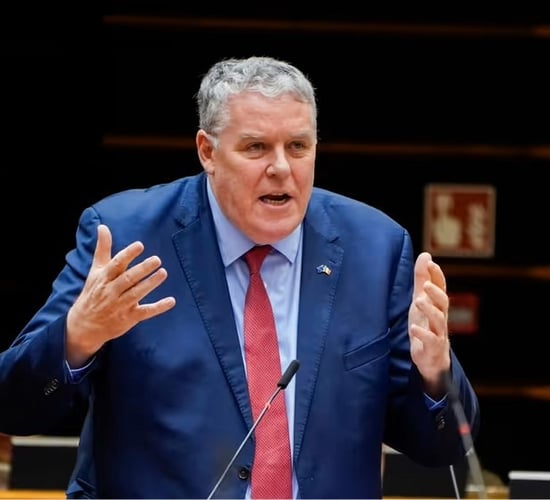
The Irish government is "keeping everything under review" according to the Tánaiste as oil prices fell back today (Tuesday, March 10).
Speaking ahead of an Economic and Financial Affairs Council meeting taking place today in Brussels Simon Harris said the "length and the depth" of the conflict in the Middle East would "have a very material impact on the economic effect of the crisis".
"We continue to monitor this very closely, very carefully and the Irish government keeps everything under review but the fact that oil prices have fallen so significantly this morning is a reminder of the volatility," the Tánaiste added.
Oil
Oil prices fell back today, but remained higher than they had been before the conflict began in the Middle East.
This followed remarks by the US president, Donald Trump, that the war in Iran could end very soon.
According to Dr. Rory Monaghan from University of Galway Ireland is "uniquely vulnerable" if there is a prolonged disruption in global fuel supplies.
"We've got one of the highest levels of energy import dependency in the EU.
"We have no oil reserves and we have one gas field, and when we import energy, we’re generally importing from a limited number of suppliers," the lecturer in mechanical engineering from the College of Engineering and Informatics at University of Galway said.
He said that the National Oil Reserves Agency (NORA) "is mandated to hold 90 days of oil supplies for Ireland".
"However, some of those reserves are held on contracts that mean Ireland is able to buy that oil at the market price at the time. So while it is our legal right to have that oil, it could be bought at a very expensive price," Dr. Monaghan added.
IBEC
Meanwhile IBEC, the group that represents Irish businesses, has warned that the surge in global oil prices since the Middle East conflict began highlights "the vulnerability of the Irish economy".
"This is not just a direct cost at the pump or for home heating; these increases will lead to significant indirect inflationary pressure across the wider economy, particularly in manufacturing sectors like food and engineering," Fergal O'Brien from IBEC said.