Improving sustainability a key driver within international dairy breeding programmes

International dairy breeding programmes are gathering momentum at an ever-increasing pace but with a changing focus.
And, while improving milk output remains the number one priority in this regard, improving the overall sustainability is fast moving up the pecking order of priorities.
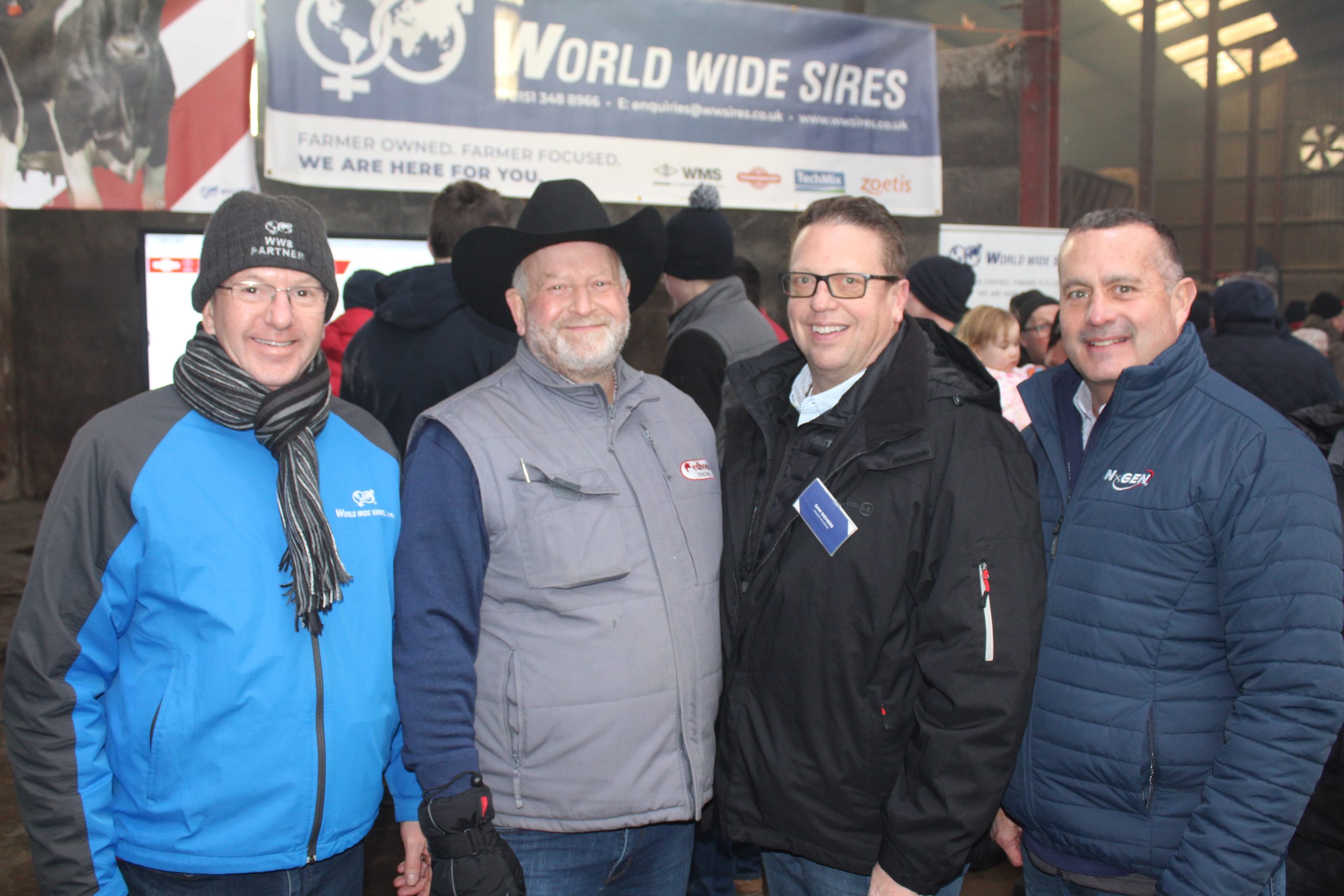
This is according to Worldwide Sires’ vice president of dairy cattle breeding, Jeff Ziegler.
He spoke at the recent Redhouse Holsteins open day, adding:
“The journey that we are on today is that of making genetics work at less cost.
“Sustainability is a word that those behind international breeding programmes truly believe in.
“And this principle is as relevant for cows managed on grass based systems as it is on those farms where herds are intensively fed.”
He further explained: “So it’s all about what a cow can achieve above and beyond her production capacity.”
The Worldwide Sires representative went on to point out that future dairy breeding programmes must act to deliver more money in farmers’ bank accounts on a continuing basis.
He said: “There are costs on every dairy farm linked to the likes of vaccination and treatment in the event of illness, not to mention the impact of dairy production systems on the environment
“The priority for the future is to breed cows that will allow these overheads to be reduced.
“And all of this can be achieved through the advances that continue to be made in the field of genomics.
“Individual cows will perform differently to all of these challenges. The objective is to find those animals that can perform more efficiently and effectively within these circumstances.”
Jeff Ziegler also confirmed that new science is allowing breeding specialists to more accurately predict what needs to be accomplished.
“In turn, this is allowing breeders to make selection decisions much more quickly.”
World dairy markets
Turning to the issue of world dairy markets and how they are performing at the present time, Ziegler said that there is a surplus of production kicking in.
He added: “But over time if we can reduce the cost of producing milk, this will significantly help the situation pertaining on-farm.
“It’s all about the margins generated on-farm.”
While quick to point to the variations in the genetic make-up of cows found in countries around the world, the Worldwide Sires’ representative fully recognises the key role of grass-based production in Ireland.
He concluded: “I travel the world looking at a wide range of production systems.
"It’s my job to work out how we can develop breeding programmes that reflect this diversity.”