How your milk cheque affects breeding decisions

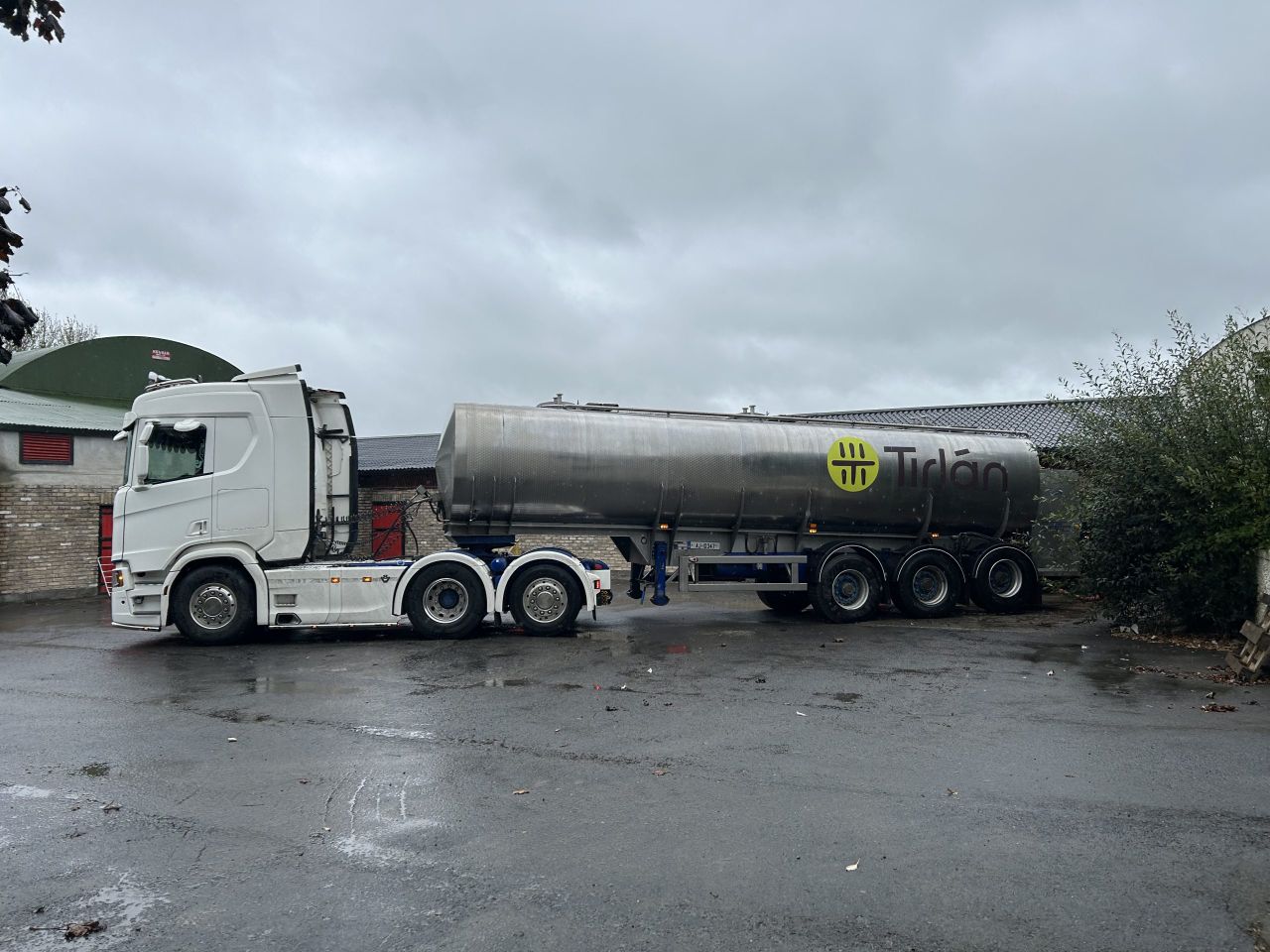
When selecting bulls this breeding season, it's worth looking at how you can use milk traits to drive farm profitability.
The vast majority of Irish dairy farmers are paid on A+B-C systems, which means that they are paid for kg of protein and fat, but deducted for volume.
Therefore, choosing bulls that will boost milk production in terms of solids rather than litres could be the route for you.
Obviously farms need to continue pumping litres, as without litres you cannot produce a satisfactory amount of solids.
But there is no point in pumping out 30/L a cow if her solids are on the floor, as it will not correlate to money in the bank.
Milk cheque
When you hear of a base price of 33.46c/L - excluding value-added tax (VAT) - that is actually determined by the price the co-op is paying for a kg of protein and fat.
| Protein | Fat | Volume adjustment | Price c/L | |
|---|---|---|---|---|
| Price/kg | 6.684 | 3.979 | ||
| Conversion factor | 1.0297 | 1.0297 | ||
| 6.883 | 4.097 | |||
| Protein and fat percentages | 3.3 | 3.6 | ||
| c/L | 22.7139 | 14.7492 | 4 | 33.46 |
The price for a kg of protein and fat are added together and then volume is deducted, leaving us with the A+B-C model.
This generates the base price or the price in c/L as long as all quality measures and hygiene measures are up to a certain standard.
Milk prices may be hard to look at currently considering how far they have dropped since this time last year, and a lot of farmers may be thinking what is the point in breeding for solids, feeling they are not being fairly paid for them.
However, the difference solids makes in the pay cheque can be seen when you look at the same sized herd pumping the same litres, but with different protein and fat percentages.
Take two farms, both with 100 cows producing 5,000L/cow/year which totals 500,000L or 514,850kg of milk, but both with different solid levels.
| Example one | Example two | |
|---|---|---|
| Milk supplied (L and kg) | 500,000L or 514,850kg | 500,000L or 514,850kg |
| Protein | ||
| Percentage | 3.6 | 3.3 |
| Kg | 18,535 | 16,990 |
| €6.684/kg of protein | €123,885 | €113,561 |
| Fat | ||
| Percentage | 4.5 | 3.6 |
| Kg | 23,168 | 18,535 |
| €3.979/kg of fat | €92,185 | €73,751 |
| Volume adjustment | €20,000 | €20,000 |
| A+B-C | €196,070 | €167,312 |
| Price in c/L | 39.21 | 33.46 |
The example above shows a difference in income of €28,758, or a difference of 5.75c/L, which is colossal for farm profitability.
Boosting milk solids may be a bit of a lengthy process, but it does not take much of a financial investment, and whatever it does take has a quick return on investment.
The two key areas that can help drive solids are grass management and breeding, with both relying on each other to prove successful.
If you have the genetics but not the grass, solids will remain low, and if you have the grass but not the genetics, it will be the same outcome.
Breeding
Before breeding kicks off, you should be analysing your milk recording reports to see how the herd's solids are looking.
Based off that data, you should be picking sires and dams that will improve your fat and protein levels, and ultimately boost the pay cheque.
Bulls with a milk solids kg of over 30kg, roughly 18kg fat and 12kg protein are often good for increasing genetic gain in terms of milk production.
A lot of farms looking to boost solids aim to select bulls with a fat percentage of about 0.30% fat and 0.20% protein, while trying to retain milk volume at its current level.
However, it is important not to overcorrect in one aspect and end up completely losing out on areas such as fertility or health.