Sponsored
How this Wexford farm reduced vet bills and improved conception rates


Sponsored by

The breeding season is often described as the most important period in the dairy calendar.
The decisions made over a few weeks can determine fertility performance, milk production, and the overall efficiency of the farm for the following years.
For Paddy Larkin of Larkin Farm Partnership, that pressure is real.
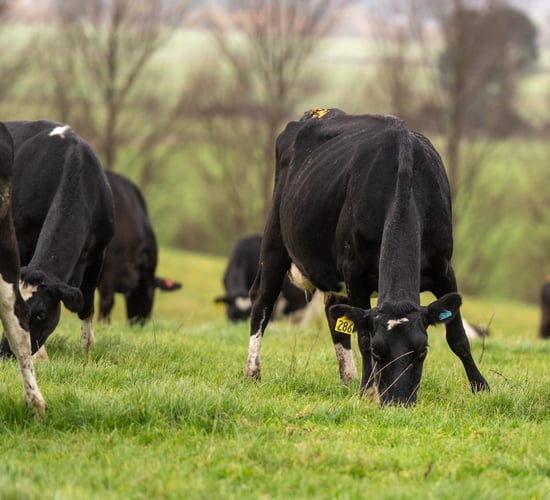
Paddy manages a 200-cow milking herd with around 550 head of cattle in total, alongside a 450ac mixed dairy and tillage enterprise.
In 2025, the herd produced 8,300L per cow and 610kg of milk solids, reflecting a system with a strong focus on genetics and herd performance.

But as the farm developed, one challenge kept returning each spring: finding the time to consistently monitor cows, especially during breeding season.
Like many farmers, Paddy relied on tail painting and visual observation to detect heats.
While effective, it required constant checking and maintenance.
With cows spread across paddocks and other work to manage across the farm, spending time walking fields twice a day to observe heats was becoming increasingly difficult.
At the same time, the breeding strategy remained ambitious. The goal was to continue operating a 100% artificial insemination programme while increasing pregnancy rates across the herd.
A shift towards behavioural monitoring
To support breeding management, Paddy introduced CowManager behavioural monitoring ear tags across the herd.
The system continuously tracks cow behaviour such as activity levels, rumination, eating patterns, and - most importantly - ear temperature.
Changes in these parameters can indicate heat activity or early signs of illness.
When unusual behaviour is detected, an alert is sent directly to a smartphone app, allowing cows to be checked quickly.
“Rather than spending hours looking for heats, you can start the day by checking the alerts and seeing exactly which cows need attention,” Paddy explained.
Installing the system itself was straightforward. Cows were tagged and the monitoring equipment was installed within a few hours.
Like most new technologies, there was a short learning period while interpreting the data and understanding the alerts.
“After about two to four weeks, it became part of the daily routine,” he said.
Earlier detection improving herd health
Although heat detection was the main motivation initially, the health monitoring aspect quickly proved valuable.
Changes in behaviour often highlight potential issues before visible symptoms appear, allowing cows to be checked earlier and treated sooner.
“We’re picking things up earlier now. Often you can intervene before it becomes a bigger issue,” Paddy said.
This shift toward early intervention has had measurable results.
Antibiotic use on the farm has fallen by roughly 30%, while the number of health alerts across the herd has also reduced significantly.
With fewer severe illness cases developing, there are also fewer veterinary visits and less time spent managing sick cows later.
Smoother transitions after calving
One of the biggest improvements has come during the dry and transition period.
Using insights from the transition module alongside management adjustments, Paddy has refined how cows are managed before and after calving.
The difference has been noticeable.
Previously, cows took around 17 days to recover fully after calving. Today, 75% of the herd recovers within seven days.

Health alerts across the herd have also reduced by around 33%, indicating fewer issues during early lactation.
In practical terms, cows are calving down more smoothly, settling quicker after calving, and returning to normal behaviour sooner.
“That smoother transition means cows are coming back cycling earlier as well,” Paddy explains.
Better breeding performance and lower costs
Improved transition management has supported fertility performance during breeding season.
With cows recovering faster after calving and returning to heat sooner, inseminations can be timed more accurately.
Accurate heat detection by CowManager has also reduced the number of inseminations required per pregnancy, helping streamline the breeding programme.
More cows are now returning in calf earlier, maintaining a compact calving pattern and improving overall herd efficiency.
Paddy also noticed the financial impact when reviewing the annual accounts.
“My accountant actually asked if the vet bills were correct. He couldn’t believe how low they were compared to previous years and wanted to double-check the numbers.
"That really showed how much early detection and fewer severe health cases can reduce costs on the farm," he said.
At the same time, milk production continues to increase year-on-year as genetic progress and improved herd monitoring work together.
“It allows you to focus your time where it actually matters,” he says.
Confidence moving forward
Continuous behavioural data has strengthened Paddy’s confidence when making breeding decisions.
With clearer insights into cow health, fertility, transition and nutrition, he can continue pushing genetic progress while maintaining strong herd performance.
By tracking eating and rumination behaviour, Paddy can also quickly identify cows that are not consuming feed as expected.
This allows earlier intervention and feeding adjustments, helping prevent small nutritional issues from developing into larger health or production problems while supporting stable feed intake and consistent milk production.
“The data gives you confidence in the decisions you’re making,” he says.
For Paddy, the biggest benefit is knowing the cows are monitored continuously, even during the busiest periods.
“It’s like having another person watching your cows all day, every day.”
Sponsored by