Sponsored
Guarding livestock: The urgent case for bluetongue vaccination this season

Sponsored by

As the livestock sector across the UK and Ireland navigates the 2026 season, bluetongue virus serotype 3 (BTV-3) continues to present a critical and evolving threat to farm productivity and animal welfare.
Following over 300 confirmed cases in Great Britain during the 2025/2026 season, the virus has demonstrated significant overwintering capabilities, proving that the danger does not simply disappear when temperatures briefly drop.
Now, with midges fully active and high summer temperatures providing the perfect conditions for BTV-3 to replicate and transmit, the risk of infection spreading through windblown midges across the Channel and the Irish Sea is a pressing reality.
For farmers, facing an outbreak requires more than just reactive measures; it demands a proactive, robust vaccination strategy.
The true cost of a BTV-3 outbreak
The financial and physical toll of a BTV-3 outbreak is devastating. The virus causes severe endothelial damage in infected animals, leading to drastic consequences.
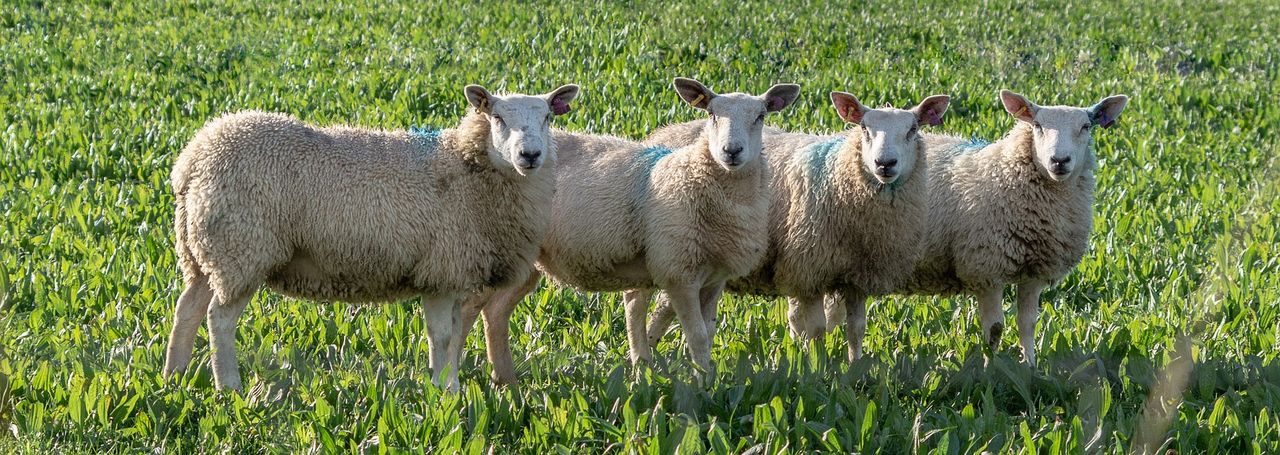
In sheep, clinical signs include extreme lameness, facial swelling, drooling, high fever, and rapid loss of body condition.
The mortality rates are staggering; data from the Netherlands showed that affected sheep flocks experienced mortality rates 15 times higher than unaffected flocks,1 with a case fatality rate of approximately 75%.2
For cattle, the impact on production and fertility is equally alarming.
Infected dairy cows have been shown to suffer an average milk drop of 1kg per cow for nine consecutive weeks.3
They may also exhibit crusting of the muzzle, reddened and swollen eyes, and painful reddening of the teats.
Furthermore, BTV-3 transplacental infections are causing tragic losses during calving.
A recent UK report conducted on three suckler farms found 5-17% of calves are born with severe congenital brain lesions,4 often presenting as blindness, an inability to stand, or other severe neurological signs like "star gazing".
On one affected farm, the virus left 20% of the breeding stock entirely barren.5
Beyond the immediate loss of livestock and production, the strict movement restrictions and required testing costs can completely disrupt market access, dealing a heavy blow to a farm's bottom line.
Practical, efficient protection with Syvazul BTV 3
Vaccination is our best available insurance policy against the devastation of BTV-3.
Statistical modelling indicates that vaccinating 60-70% of livestock is critical for effective disease control across the region.6
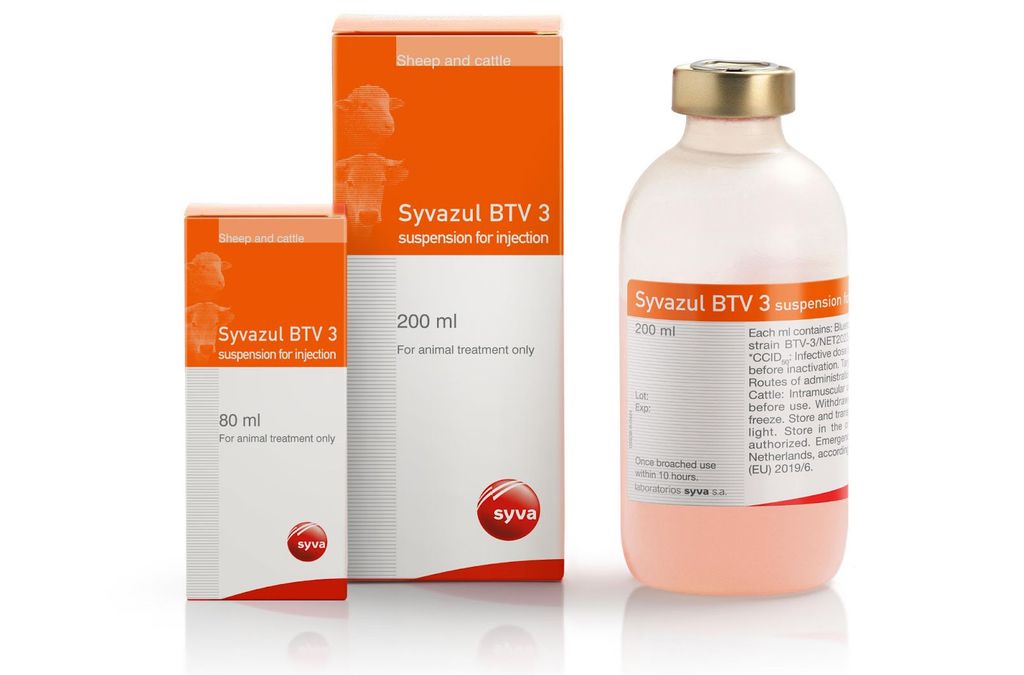
Syvazul BTV 3, an inactivated vaccine, is specifically formulated to provide targeted, robust protection against the BTV-3 strain.
It is designed to fit seamlessly into standard farm handling routines:
- For sheep: A single 2ml dose, administered subcutaneously. It provides active immunisation to reduce viraemia, clinical signs, lesions, and mortality, with immunity established just four weeks after the dose6.
- For cattle: A two-dose protocol of 2ml per dose, administered intramuscularly three weeks apart. It reduces viraemia, offering protection three weeks after the primary course is completed.7
Crucially for commercial dairy and meat operations, Syvazul BTV 3 comes with a zero-day withdrawal period, meaning you will face absolutely no disruption to your production and sales schedules.
Safety data also confirms that it can be administered to both sheep and cattle during pregnancy and lactation, ensuring that you can protect your vulnerable ewes and cows without risking their current reproductive cycles.
Take action today
The threat of BTV-3 is no longer a distant possibility; it is an active and spreading challenge in the UK and Ireland.
Waiting for clinical signs to appear in your herd or flock is too late.
Because vaccine-induced antibodies take several weeks to fully develop, establishing immunity ahead of peak disease challenge is the most effective way to safeguard your animals' welfare and your farm's financial stability.
Do not leave your livelihood to chance or changing winds.
Speak to your veterinary surgeon today about incorporating Syvazul BTV 3 into your immediate health plan, and take the necessary steps to secure your farm's future.
- Santman-Berends et al. Prev Vet Med. 2024;4(289):167-5877 ↩︎
- Van den Brink et al. Vet Rec. 2024;195(4): 4533 ↩︎
- Royal GD. https://issuu.com/gezondheidsdienstvoordieren/docs/gd3022_veekijkernieuws_rund_april_2024_eng_print ↩︎
- Swinson et al. Vet Rec. 2025;196(5):192-193 ↩︎
- Swinson et al. Vet Rec. 2025;196(5):192-193 ↩︎
- Szmaragd et al. PLoS One. 2010;5(2):9353 ↩︎
- Syvazul BTV 3 SPC ↩︎
Syvazul BTV 3 suspension for injection for sheep and cattle contains inactivated antigen bluetongue virus, serotype 3 (BTV-3), strain BTV-3/NET2023 POMPrescription decisions are for the person issuing the prescription alone.Further information is available on the SPC from: Virbac (Ireland) Ltd, Bell House, Unit 58 Baldoyle Industrial Estate, Dublin, D13 E0W6Telephone: +44(0)1359 243243 Email: enquiries@virbac.co.uk Website: www.virbac.ieUse medicines responsibly www.apha.ie
Sponsored by