Sponsored
Giving calves the essential edge: A strategy for superior health and growth


Sponsored by

Rearing calves to the point of production or finishing represents a considerable investment for any farm business.
In Ireland, where production systems rely heavily on grass and grass-based forages, ensuring your youngstock receive the right nutrition can be a significant challenge.
A 2000 report by Rogers and Murphy1 highlighted that Irish grass silages are frequently deficient in vital trace minerals, with 63% testing low in copper, 69% very low in selenium, and 29% low in zinc.
This creates a dangerous "trace mineral gap" that can leave calves highly vulnerable to disease.
The challenge of oral supplementation
During periods of high demand and stress - such as weaning, housing, transportation, castration, or disbudding - calves naturally experience a dip in appetite and feed intake.
Relying solely on oral supplementation, such as feed additions, licks, or boluses, during these critical windows can be risky.
Not only is oral intake reduced, but vital minerals can also be blocked by antagonists like iron, sulphur, and molybdenum naturally present in the rumen, leading to poor absorption.
The injectable solution
To combat these limitations, a growing number of farmers are turning to injectable trace minerals (ITMs) containing zinc, copper, manganese, and selenium.
Each of these elements plays a crucial role: copper is vital for energy generation; selenium and zinc protect cellular health and support the immune system; while manganese is required for energy production.

By administering these essential minerals via a targeted subcutaneous injection, the formulation completely bypasses the rumen, avoiding any antagonist interference.
It is also incredibly fast-acting. The trace minerals enter the animal's bloodstream within 8-10 hours and are stored in the liver within 24 hours,2 rapidly resupplying functional enzymes exactly when the calf needs them most.
Reducing disease rates
The pre-weaning phase is a battleground for calf health, with scours and respiratory disease often acting as the primary barriers to growth.
In a key study involving dairy calves, those supplemented with ITMs at 3 days-of-age and 30 days-of-age demonstrated a significant reduction in common calfhood diseases compared to controls.3
The study recorded 8% fewer cases of diarrhoea and 7.5% fewer cases of pneumonia and otitis.
Furthermore, a study has shown that when calves are administered ITMs in the first 24 hours after birth, mortality and morbidity rates in the groups that received ITMs was half that of the control group.4

If disease does strike the herd, boosting mineral levels can still offer significant support.
For herds battling bovine respiratory disease (BRD), recent research has shown that when ITMs are administered alongside or ahead of antibiotic treatment for Mannheimia haemolytica, calves achieved better clinical outcomes than those receiving treatment alone.5
This suggests that "topping up" trace minerals helps the immune system fight back more effectively during active infection.
Supercharging your vaccine investment
Vaccination is a standard protocol on modern units, representing a significant financial and labour investment.
However, a vaccine is only as effective as the immune system’s ability to respond to it.
Research demonstrates that calves administered injectable trace minerals alongside vaccination produced antibodies at a faster rate6 and maintained higher antibody levels7 than those administered the vaccine alone.
Essentially, ITMs ensure your calves are "vaccine ready," helping to maximise the protection provided by your vaccination protocols and ensuring that your investment in herd health pays off.
Driving growth and performance
Beyond fighting disease, adequate trace mineral status is essential for growth.
The "trace mineral gap" often occurs during periods of stress, such as weaning or housing, when oral intake drops just as the body’s demand for minerals spikes.
Bridging this gap with ITMs has been shown to improve average daily gain (ADG),8 helping farmers meet critical weight targets for breeding and calving down at 24 months.
Strategic timing for maximum impact
To see these benefits, ITMs are best used strategically at specific "pinch points" in the calf’s life:
- At Birth: While colostrum is the first line of defence, supplementing the dam pre-calving can boost the mineral status of the calf. For the calf itself, an injection at birth or early life helps bridge the immunity gap;
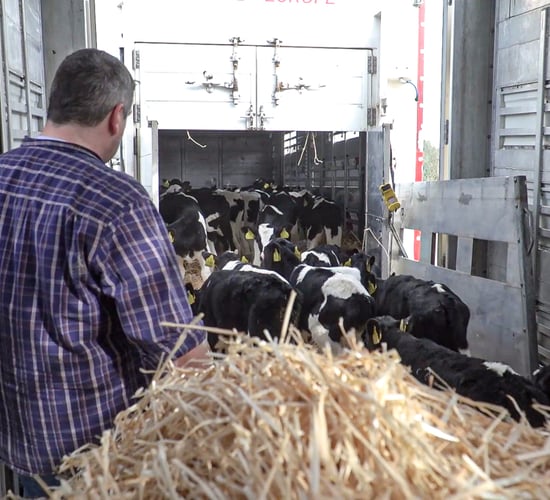
- Weaning, Housing and Transportation: These are classic stress periods where immunity dips. Supplementing at weaning or upon arrival at a rearing unit helps youngstock cope with the transition and maintain growth rates;
- At Vaccination: Maximise investment in vaccination to support immunity and reduce disease in the herd.
Conclusion
Reducing disease rates by even a few percent and ensuring vaccines work harder can lead to significant marginal gains across a herd.
By integrating ITMs into your calf rearing protocol, specifically at birth, vaccination, and weaning, you can provide your youngstock with the essential edge they need to thrive, securing the productivity of your future herd.
- Rogers, P.A.M and Murphy, R. (2000). Levels of Dry Matter, Major Elements (calcium, magnesium, nitrogen, phosphorus, potassium, sodium and sulphur) and Trace Elements (cobalt, copper, iodine, manganese, molybdenum, selenium and zinc) in Irish Grass, Silage and Hay. http://homepage.eircom.net/~progers/0forage.htm ↩︎
- Pogge et al. 2012. “Mineral concentrations of plasma and liver following injection with a trace mineral complex differ among Angus and Simmental cattle”. J. Anim. Sci. 90, 2692–2698. ↩︎
- Teixeira AG et al. 2014. “Effect of an injectable trace mineral supplement containing selenium, copper, zinc, and manganese on immunity, health, and growth of dairy calves”. J Dairy Sci. Jul;97(7):4216-26. doi: 10.3168/jds.2013-7625. ↩︎
- Bates et al. 2019. “Reduction in morbidity and mortality of dairy calves from an injectable trace mineral supplement”. Vet Rec;184(22):680 ↩︎
- Hong S. et al., 2024. “Impact of an Injectable Trace Mineral Supplement on the Immune Response and Outcome of Mannheimia haemolytica Infection in Feedlot Cattle” Biological Trace Element Research. https://doi.org/10.1007/s12011-024-04251-z ↩︎
- Roberts SL et al. 2016. “Effect of injectable trace mineral administration on health, performance and vaccine response of newly vaccinated feedlot cattle”. Prof Anim Sci.;32(6):842-8 ↩︎
- Arthington J, Havenga L. 2012. “Effect of injectable trace minerals on the humoral immune response to multivalent vaccine administration in beef calves”. Journal of Animal Science 90, 1966-1971 ↩︎
- Bittar JHJ et al. 2018. “Effects of injectable trace minerals on the immune response to Mannheimia haemolytica and Pasteurella multocida following vaccination of dairy calves with a commercial attenuated-live bacterin vaccine”. Prof Anim Sci. 1;34(1):59–66. ↩︎
Sponsored by