Farmers’ surplus solar energy can lead to ‘remuneration’ – Heydon

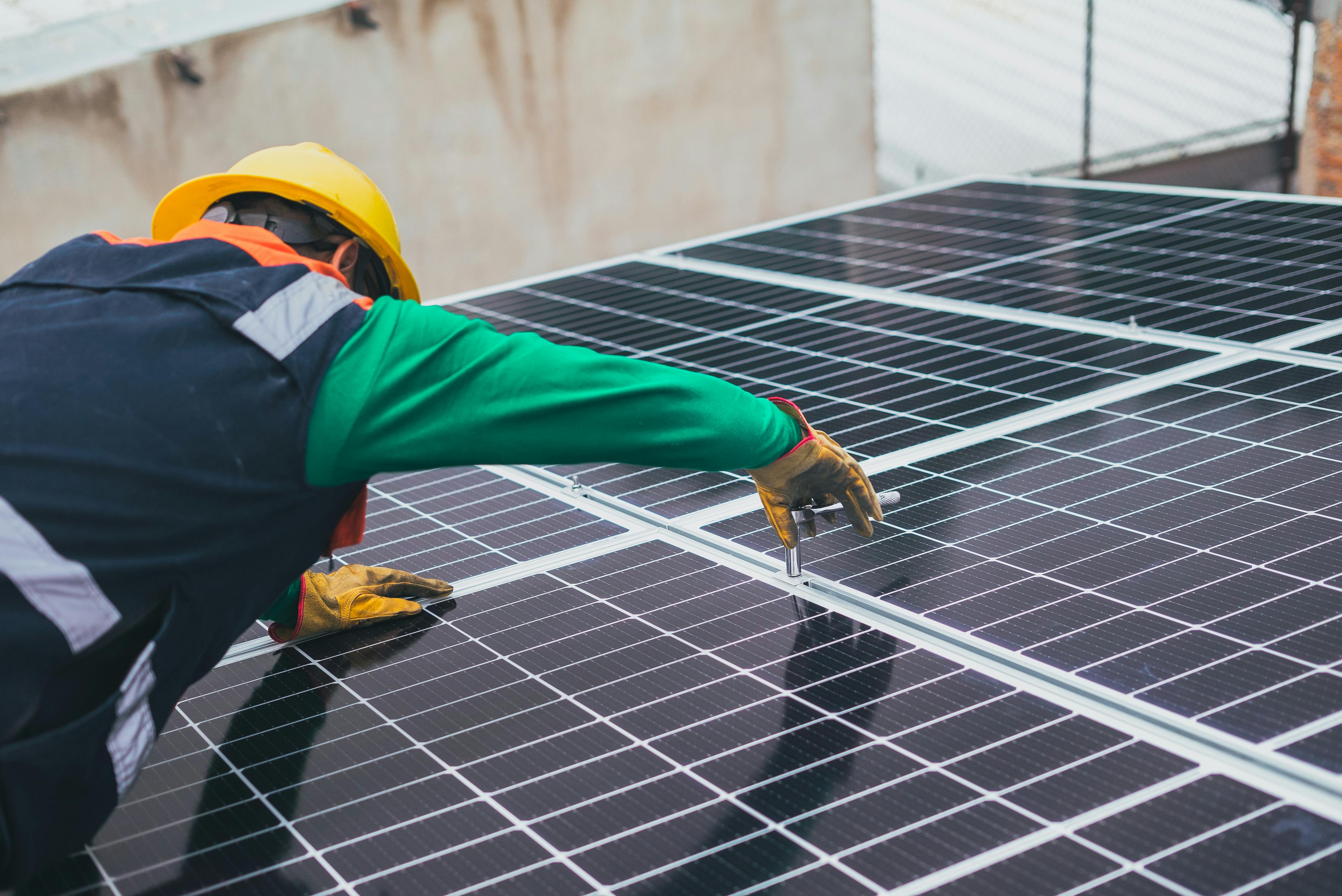
Farmers who receive Targeted Agriculture Modernisation Scheme (TAMS) grants could benefit financially from a "spillover" of renewable energy back to the national grid if they have surplus.
That's according to Minister for Agriculture, Food and Marine Martin Heydon in response to a parliamentary question.
Recently, Deputy Michael Cahill asked the minister his plans to promote grants for installing solar panels on farm buildings in rural areas; if he will consider allowing all grant recipients to sell surplus electricity back to the grid.
“The Targeted Agriculture Modernisation Scheme (TAMS 3), which is EU co-funded, provides grants to farmers to build and/or improve a specified range of farm buildings and equipment on their holdings,” Heydon said.
“The Solar Capital Investment scheme is one of the measures in TAMS, which provides support to farmers wishing to invest in renewable energy, thereby reducing their dependence on fossil fuels.”
Heydon said that the objective of the scheme is to enable farmers “to consume solar PV-generated electricity onsite to meet their farm electricity demand, including the dwelling house”.
He continued: “In order to encourage the purchase of solar investments, the solar scheme is ring-fenced with its own investment ceiling of €90,000, and grant-aided at the enhanced rate of 60%.”
Surplus
Under the current EU regulations and under the Common Agricultural Policy (CAP) Strategic Plan, it is required that the electricity generated annually from the installed solar PV system does not exceed the annual electricity demand of the farmyard, including the dwelling house.
Heydon said: “There may be occasions, however, over a 12-month period when the electricity generated will surpass the farmyard/dwelling house demand.
“In these cases, the surplus electricity is spilled over to the grid and it is permissible for the farmer to receive remuneration for the quantity that spills over.
“This spillover of generated electricity is paid for under the Clean Export Guarantee (CEG), which is available to all renewable generators, including farmers.
"The price for the spillover electricity is set by the energy provider under the Clean Export Guarantee.”
Heydon also said that, as part of the TAMS application, an ‘On Farm Solar PV Survey’ must be completed and submitted with the application to quantify the holding's annual electricity demand and the planned electricity supply from the proposed development.
He added: “An application may be rejected or amended if the applicant cannot demonstrate that the electricity produced annually from the solar panels is not in excess of the annual electricity demand of the applicant’s agricultural holding."
Albeit, the minister acknowledged that in some instances over a 12-month period, there may be spillover, through no deliberate actions of the farmers and this spillover may lead to remuneration.
"The maximum size of panel eligible for grant aid currently is 62kW. An applicant can install additional panels but at their own cost," Minister Heydon said.