Explainer: How do vet prescription rules affect you?


Farmers whose animals need antiparasitic medicines like wormers and flukicides are this year dealing with significant changes in how these drugs are dispensed
While previously farmers could purchase these medicines ‘over the counter’, now a national veterinary prescription system (NVPS) records and tracks the use of these products.
This system, which came into effect in December 2025, was developed by the Department of Agriculture, Food and the Marine (DAFM).
Michael Gottstein, head of sheep knowledge transfer at Teagasc, has shared advice on how to navigate the new rules regarding antiparasitic drugs.
Gottstein said: “Each prescription will have a 16 digit code and each product on the prescription will have a 16 digit Line number.
“When the prescription is issued by the vet, the farmer will receive a text message containing the 16 digit code.
“If the farmer prefers, a copy of the prescription can be printed.”
Gottstein clarified that the farmer is “free to purchase their antiparasitic medicines from a retailer of their choice”.
“They can shop around for the best prices and can purchase different components from different retailers.”
This means that a farmer could purchase, for example, oral worm drench from Retailer A and pour on from Retailer B.
“Despite both products being on the same prescription they will each have their own sperate line number with a different 16 digit code," the Teagasc representative explained.
“Once a product is dispensed by a retailer they will update the NVPS.
“The farmer will receive an email showing that the product has been dispensed.”
Change
The big change, arguably, is in planning.
Gottstein said: “Farmers can no longer spontaneously go to the retailer to purchase the product over-the-counter and go and treat their animals.
“There’s some planning required in so far as that the farmer will need to have acquired a veterinary prescription with that 16 digit code before they can purchase the medicine.
“So the farmer must contact their vet to get the products prescribed.”
A second option, according to Gottstein, is to fill out a 'Proper Assessment Protocol' which the retailer will forward to a linked veterinary surgeon who will issue a prescription.
“This assessment protocol will require details of the holding, animal types, and history of treatment/faecal egg counts, etc," he said.
“The veterinarian preparing the prescription will be able to make contact with the farmer to clarify any issues if required.
“Once the prescription is issued, the farmer will receive a text message with the 16-digit code associated with the prescription and can then go back to the retailer to get the products dispensed.”
Prescription end dates
A prescription for anti-parasitic medicines is valid for up to six months.
“This means there is time for the farmer to have a detailed conversation with their veterinary prescriber around the proper health planning and treatment of internal and external parasites of the herd/flock," Gottstein said.
“The aim here should be to draw up a plan as to what treatments, and what testing, should be considered for the various stock types on the farm over the following six to 12 months.
“Once the prescription is issued, it is valid for six months and the farmer needs to ensure that the products that are on the prescription are dispensed within that six-month period.”
Gottstein clarified that the farmer does not have to use all of the product within the six months “but they do need to have purchased (product dispensed) within the six-month period”.
He added that it is also possible for farmers to have their prescription “partially dispensed”.
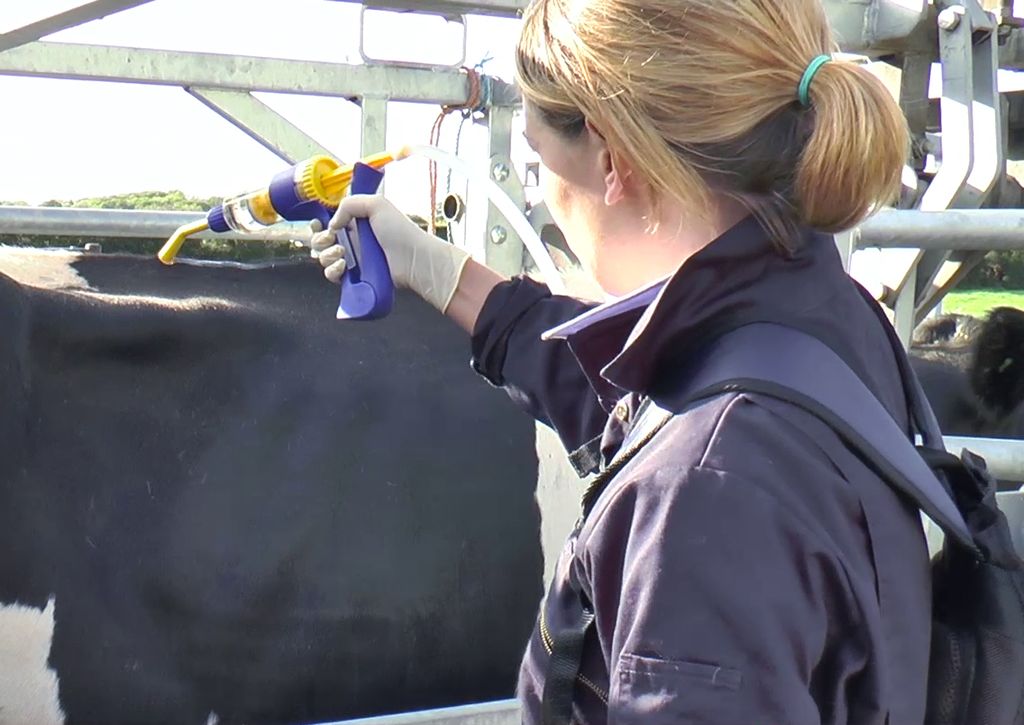
For example, a 10L prescription does not have to be used all at once; the farmer can purchase 5L, and the retailer can update the NVPS with the information that only 5L have been dispensed.
Additionally, if the retailer does not have the product listed in the prescription, they can access a list of comparable products on the NVPS.
One of these replacement products can be sold in place of the product named on the prescription.
NVPS records
Gottstein said: “All veterinary medicines prescribed and dispensed are listed on the NVPS.
“This is a major advantage for farmers who can access the NVPS through the NVPS portal on AgFood and therefore have one location where all health-related treatments are recorded.
“In order for this to work smoothly, farmers should ensure that the name and herd number on each prescription exactly matches the name and herd number associated with their AgFood account.”
He clarified that this is “a requirement from a GDPR point of view”.
“The option to simply purchase antiparasitic drugs without a prescription is gone," Gottstein added.
“From a farmer perspective, a little more planning is required.
“The route of supply will not change significantly as most licensed merchants will continue to stock and dispense these products subject to the farmer having a prescription.”
While there is more planning involved, Gottstein said that there are upsides for farmers.
“One clear advantage is that the 16-digit code sent as a text message on the farmer’s phone will eliminate the need to carry physical copies of the prescription and the need to mind those where all the items on the prescription were not dispensed at once," he explained.
“Once bedded-in, the new system will become second nature to farmers.”
Gottstein also said that there is “usefulness of a discussion with your vet around sustainable parasite control”.
He added: “In the past some farmers were unnecessarily treating, or using inappropriate products, when treating livestock for parasites.
“The new system should lead to better treatment decisions.
“This should lead to better value for money for the farmer; better animal performance; and reduced risk of resistance developing to disease control products.”