EU Parliament votes to refer Mercosur deal to courts

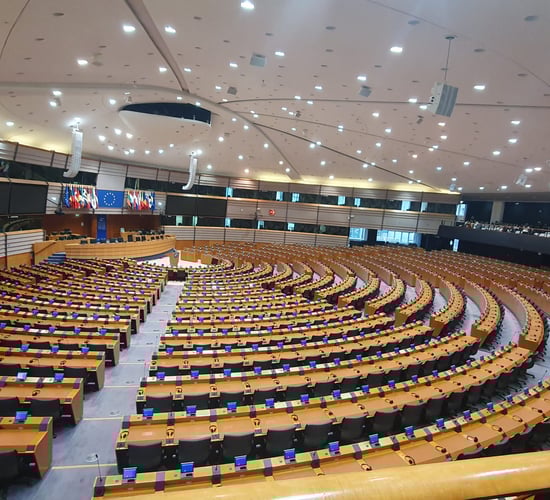
MEPs at the European Parliament in Strasbourg have just voted (Wednesday, January 21) to refer the EU Mercosur Partnership Agreement (EMPA) and its Interim Trade Agreement (ITA) to the European Courts of Justice (CJEU).
In the past few minutes the motion to refer the deal for legal advice on whether both elements comply with the Treaties of the EU was vote on by parliamentarians after more than 100 MEPs requested the motion.
EU Parliament president Roberta Metsola put the motion by MEPs to the plenary session of the parliament and the majority of MEPs voted to seek legal advice on the deal, by a tight margin of 334 in favour to 324 against. There were 11 abstentions.
It gives momentum to the campaign by those who oppose the deal between the EU and the four South American countries that make up the Mercosur trading bloc.
Ireland, France, Hungary, Austria and Poland are the member states opposed to the trade deal.
Among those leading Ireland's opposition to the deal has been Midlands North West MEP, Ciaran Mullooly of Independent Ireland, who described today's vote as "a good day for democracy".
We won!!!! The Mercosur Trade deal will go to the European courts !!
— Ciaran Mullooly MEP (@ciaranmullooly) January 21, 2026
It’s a good day for democracy and the protection of YOUR rights
This is NOT a vote on the overall trade deal .
That will come in the future pic.twitter.com/DzJOxANonX
The trade deal element of the partnership agreement would see 99,000t of beef, mostly from Brazil, arrive into the EU on a reduced tariff of 7.5%.
In exchange, the EU will be able to export goods to the Mercosur countries at much more favourable tariffs, such as machinery and cars, but also agri-food produce such as olive oil and dairy.
Mercosur deal challenge
The MEPs stated that they are concerned that the negotiation guidelines issued by the European Council may not be respected and that this may affect the voting rules in the Council and prevent national parliaments from having their legitimate say on the agreement.
The parliamentarians are also concerned that the rebalancing mechanism provided for in the EU Mercosur agreement could, at least, be incompatible with the Treaty and may threaten the EU’s ability to maintain the autonomy of the EU legal order.
They further stressed that they are concerned that the EMPA and the ITA may compromise the application of the precautionary principle, which could result in incompatibility with the Treaties.
Other MEPs wanted to check if the agreements agreements comply with the EU’s environmental objectives, however this resolution was not passed.
It could take from 18-24 months for the relevant legal advice to be provided and the European Parliament has stated: "The European Parliament will continue its examination of the texts, while awaiting the opinion of the EU Court.
"Only then, parliament will be able to vote to grant consent (or not) to the agreement."
The text to refer to the courts, initiated by Saskia Bricmont, was supported by MEPs from different democratic political groups.
"This vote sends a clear message to the [European] Commission and the Council: Europe cannot continue to sacrifice its agriculture, its health and its climate on the altar of free trade," Saskia Bricmont said
"It's also an important vote for the climate, biodiversity, and the rights of workers, women, indigenous peoples... It is a victory for all those who fight for a Europe that protects."
Fianna Fáil MEP Billy Kelleher has said the right result was obtained: “Today, I voted with a majority of the parliament to refer the deal to the court. It’s clear that there are issues, on many fronts, with regards to this trade deal.
“The issues of sub-optimal beef entering the European Union; supporting possible deforestation of the Amazon, and the potential removal from the land of indigenous communities mean that the deal is not acceptable.
“We can and should have been able to sign a Mercosur deal that found solutions to these problems, especially the principle of mirroring of standards whereby farmers in Mercosur countries should match the standards EU farmers have to adhere to.
“The European Commission must reflect on its own actions, respect the democratic will of the Parliament and await the outcome from the European Court of Justice deliberations.
“To do otherwise would be to completely undermine EU democracy, the co-legislator role of the European Parliament and to embolden anti-EU sentiment across the continent,” Kelleher added.