EU Parliament to vote on a legal challenge to Mercosur trade deal

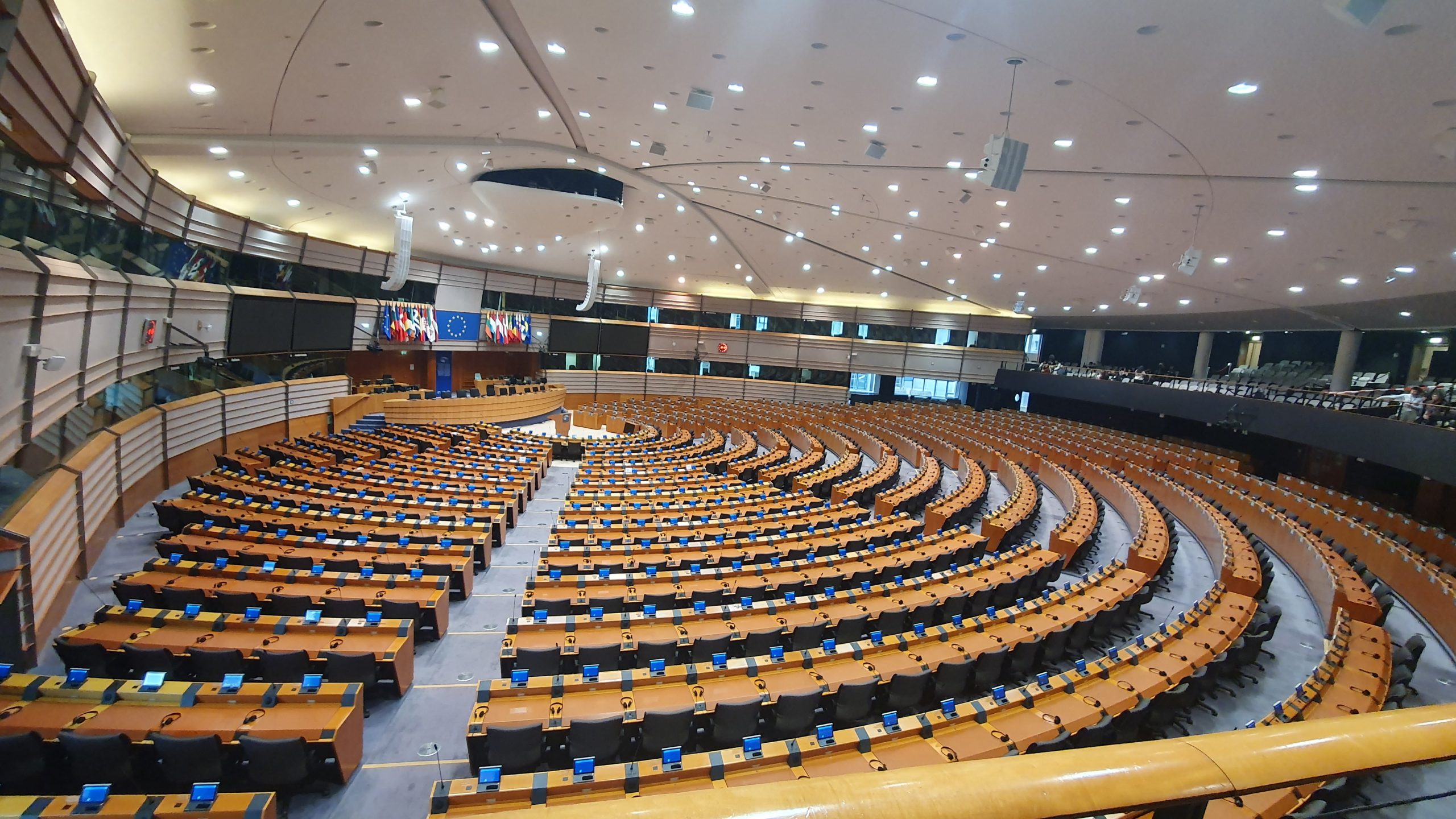
The European Parliament in Strasbourg will this morning (Wednesday, January 21) vote on whether to seek the legal advice of the European Court of Justice (CJEU) in relation to the EU Mercosur Partnership Agreement (EMPA) and Interim Trade Agreement (ITA).
The agreement between the EU and the Mercosur states of Brazil, Paraguay, Argentina and Uruguay is split into two parts i.e., the EMPA and the ITA.
The EMPA element covers cooperation on a political and policy level, sharing knowledge and research, climate change information etc., while the ITA element covers imports and exports and reduced tariffs for products such as machinery, cars and beef.
Over 100 MEPs, including Irish MEPS Ciaran Mullooly, Lynn Boylan, Luke 'Ming' Flanagan, Michael McNamara and Kathleen Funchion, have requested the European Parliament to seek legal advice on the two elements.
They are concerned that splitting of the EU Mercosur agreement into the EMPA and the ITA may be incompatible with the TFEU - Treaty on the Functioning of the European Union - a foundational treaty establishing the EU's legal framework.
The Treaty governs its institutions, policies (like the Four Freedoms: goods, services, capital, people), and decision-making processes, evolving from the original Rome Treaty to create a unified internal market.
It's a key pillar alongside the Treaty on European Union (TEU) (Maastricht Treaty).
Mercosur deal concerns
The MEPs have stated that they are concerned that the negotiation guidelines issued by the European Council may not be respected and that this may affect the voting rules in the Council and prevent national parliaments from having their legitimate say on the agreement.
The parliamentarians are also concerned that the rebalancing mechanism provided for in the EU Mercosur agreement may, at least, be incompatible with the Treaty and may threaten the EU’s ability to maintain the autonomy of the EU legal order.
They have further stressed that they are concerned that the EMPA and the ITA may compromise the application of the precautionary principle, which could result in incompatibility with the Treaties.
Other MEPs want to check if the agreements agreements comply with the EU’s environmental objectives.
The MEPs have instructed the European Parliament president, Maltese politician Roberta Metsola to quickly take the necessary measures to obtain such an opinion from the Court of Justice and to forward the resolution to the Council and the European Commission.
The challenge will be debated at European Parliament level in the next hour or so where a decision will be made to refer the deal for legal opinion or not.
If the deal is referred to the CJEU, it could take 18-24 months to receive the legal opinion back. However, in the meantime, there is a legal framework for the European Commission to provisionally apply the terms of the Interim Trade Agreement.
However, when Agriland questioned the commission in recent days on whether it would choose apply the terms of the trade deal, should the deal be referred to the CJEU, a commission spokesperson said such a decision has not been made yet.
Opposition to the legal challenge
Meanwhile, Ireland South MEP Sean Kelly has expressed his opposition to launching such a legal challenge stressing that it would set a "worrying precedent".
He stated: "I, personally, do not see any genuine legal reasons for such a referral. MEPs are elected by their constituents to take decisions, and the European Parliament has the power to consent to trade deals or not.
"I will vote against referring these questions to the ECJ as it would set a worrying precedent for future trade agreements."
The MEP explained that the splitting of trade agreements, such as the Mercosur agreement, is not unprecedented – it was the case with the Chile agreement, endorsed by the European Parliament less than two years ago.
"In the current geopolitical context, it is crucial that we value and uphold the democratic decision-making ability and procedures of our EU institutions - not seek to undermine and weaken them for short-term political gain," MEP Kelly warned.