Early milk recording key to herd success

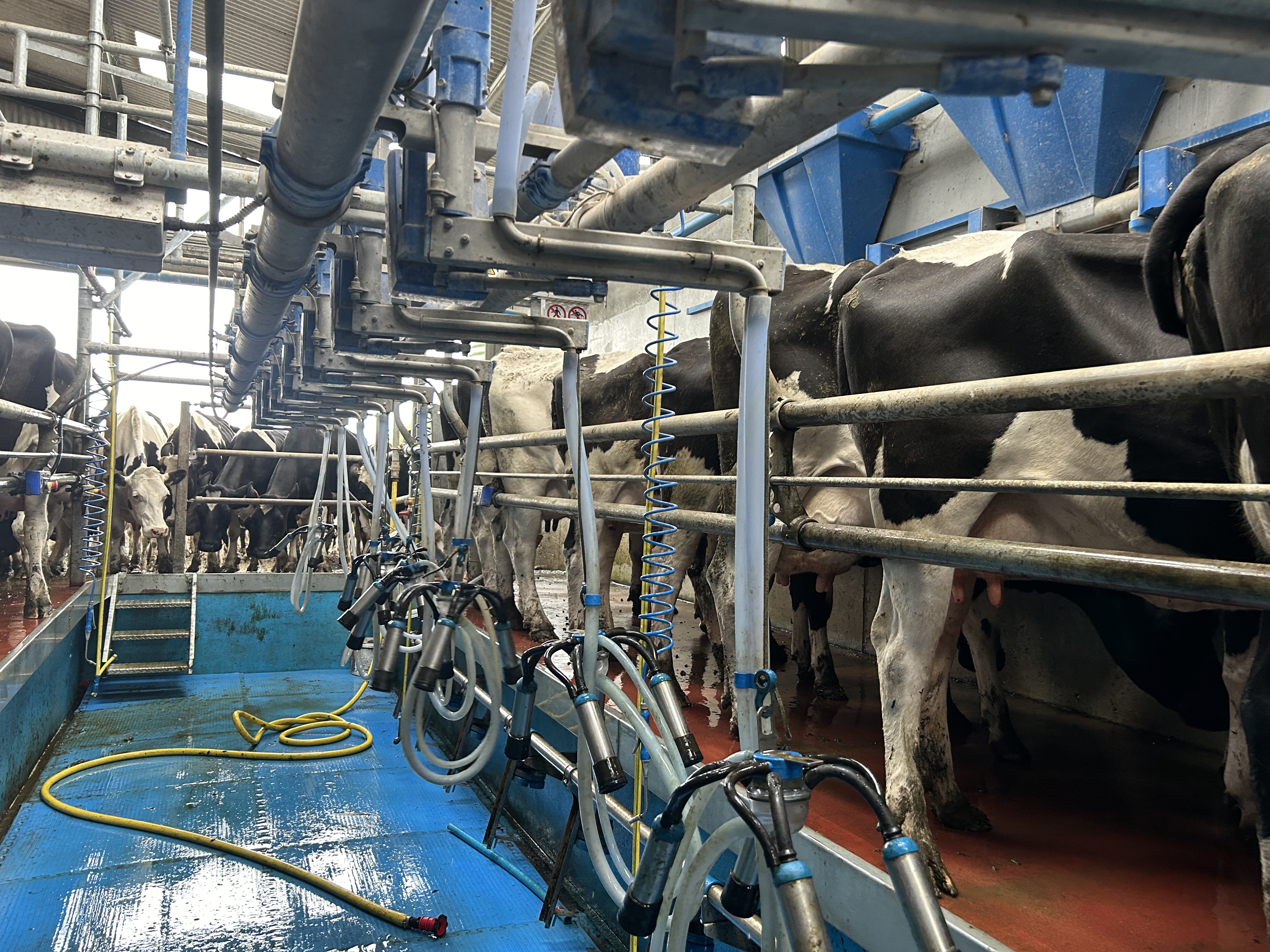
Although many herds have yet to start calving, farmers should already be considering when to book in their first milk recording.
Despite being an extremely busy time of the year for spring calving herds, the first milk recording of the season should take place roughly 60 days after the first cow has calved.
Farmers should not wait until every cow on the farm has calved before carrying out their first recording, as the early data is crucial in understanding how the dry period went as well as the herd's health and performance.
Cure rates and new infections will also be captured in the milk recording in the first 60 days after calving, along with information on transition cow management.
All of this data is fundamental when it comes to breeding decisions, culling decisions, antibiotic usage, and general health and welfare indicators.
It is often said "you can't improve what you don't measure", a saying which strongly applies to milk recording too.
Milk recording
Consistent and early recordings will boost a farm's profit margins through improved milk solids, lowered somatic cell counts (SCC), and better fertility.
Despite this, many farms are still slow to adopt the process due to cost. However it only costs an average of €12/cow, a small price relative to the benefits.
Animal Health Ireland (AHI) advises farmers to undergo six milk recording, two of which would be used to evaluate the dry cow management, two more to improve milk quality, and the final two to improve dry-off.
This regular recording will allow for constant tracking of SCC of each cow, and will also identify repeat offenders and could decrease the herd's SCC, therefore improving the herd's overall milk cheque.
The farm summary after each recording highlights the areas of excellence in terms of mastitis control and the areas that can be improved.
It also adds up the daily loss occurring due to these high SCC cows, giving a clear indication of what can be gained financially from preventing infection.
However, it is crucial farms are not milk recording for the sake of it; taking action on the information you get is key to the herd's success.
Cows that have had cell count issues during the last lactation and that remain high during this lactation need to be culled.
You need to protect the uninfected cows within the herd and prevent the spread of infection.