DAFM update on livestock movements in light of bluetongue

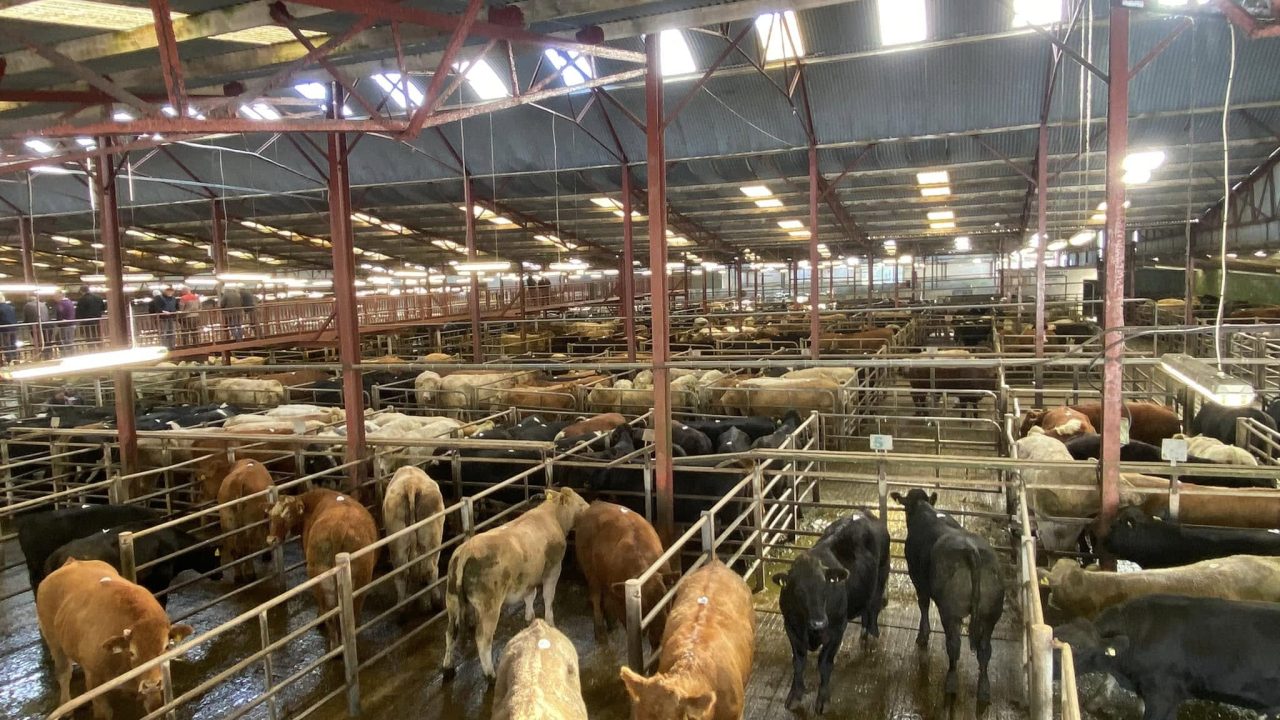
Movement of cattle throughout the Republic of Ireland has not been impacted by the confirmation of bluetongue in Co. Wexford.
Despite this, the movement of cattle to and from Northern Ireland has been impacted.
Therefore, Agriland asked the Department of Agriculture, Food and the Marine (DAFM) for an update on the current situation.
A DAFM spokesperson said that moves of livestock within Ireland from farm to farm and from farm to slaughter, including those through marts, can continue.
"This includes moves within and from Co. Wexford," the spokesperson added.
According to DAFM: "The current seasonal cold temperatures prevent the bluetongue virus from replicating within midges.
"While animal movement controls may be required if the circumstances indicate it, right now the veterinary epidemiological risk assessment is such that animal movement controls are not required in Co. Wexford."
In relation to the movement of livestock to and from Northern Ireland for further feeding or breeding, the department spokesperson outlined what is currently happening at policy level in relation to this.
Cross-border livestock movement
DAFM explained that currently it is only possible to move animals between Northern Ireland and Ireland direct for slaughter and this applies whether the animals are travelling north or south.
"Store cattle and cattle for further breeding cannot currently meet the certification requirements, set out under European legislation, to move from Northern Ireland to Ireland or vice versa," the DAFM spokesperson said.
Infection with bluetongue virus (BTV) is regulated by Regulation (EU) 2016/429 and Delegated Regulation (EU) 2020/689, DAFM pointed out.
However, the DAFM spokesperson said: "This is an evolving situation requiring bluetongue response, including movement restrictions, to remain under continual review.
"Officials from DAFM and the Department of Agriculture, Environment and Rural Affairs of Northern Ireland (DAERA) are continue to meet and collaborate on an ongoing, regular basis."