Crowd gathers for 'Calf Care' event on Wicklow farm


Animal Health Ireland (AHI) is currently running a series of 'CalfCare' events on 16 different farms across the country.
Agriland visited the farm of Derek Beattie in Tinahely, Co. Wicklow to attend one of the five calf care events taking place this week alone.
Derek and his family are operating a dairy calf-to-beef system, buying in calves in late January to early February.

The farm buys in between 100 and 120 Angus X Friesians, before selling them on as either yearlings or stores.
The Beatties also calve down 45-50 Limousin/Simmentals in the spring, again selling the animals live as weanlings or in the store trade depending on the market.
Calf Care
AHI, Teagasc, and Kepak spoke to the large crowd on the Beattie's farm about the essentials when it comes to calf care throughout the calves life.
That starts at the very beginning with colostrum. Feeding the calves' colostrum correctly is essential in ensuring they get adequate antibodies to protect them from foreign invaders such as bacteria, viruses, and toxins.
Attendees were reminded to test colostrum with a Brix refractometer before feeding it to calves, ensuring results are 22% or higher.
Farmers must then follow the '1-2-3 rule' for the most effective results;
- Feed colostrum from the first milking (highest antibodies);
- Feed within two hours of birth (absorption decreases rapidly after six hours)
- Feed at least 3L (ensure sufficient antibodies taken in).
Farmers with bigger beef calves or Holsteins were reminded to feed 10% of the calves' bodyweight, as they may require 4L rather than 3L.

Dairy farmers were also reminded that calves who have not been fed colostrum correctly can easily be picked out in the mart when up for sale, as they will never grow to the full extent, and in the end costing more than it saves.
The same goes for transition milk (second to sixth milking), with each calf needing four feedings of transition milk to continue building antibodies.
The advisers recommended beef and dairy farmers to form good relations with suppliers to know you are buying/selling good quality calves that have received proper colostrum management.
Gut development
This colostrum then led the event on to its second topic, as colostrum is key to proper gut development and performance.
Calves that do not get the right plain of nutrition at birth and over the next six weeks often end up having gut issues such as scour and bloat.
Abomasal bloat usually affects calves within the first three to four weeks of their lives, which more often than not leads to death as the syndrome rapidly develops.
Therefore, prevention is typically the best cure in the case.
Managing the consistency, volume, temperature, and hygiene of colostrum is essential to ensure the abomasum is in proper condition.
If calves are fed to much much milk, it will take too long to go through the system, and bacteria may build up leading to over fermentation and ultimately abomasal bloat.
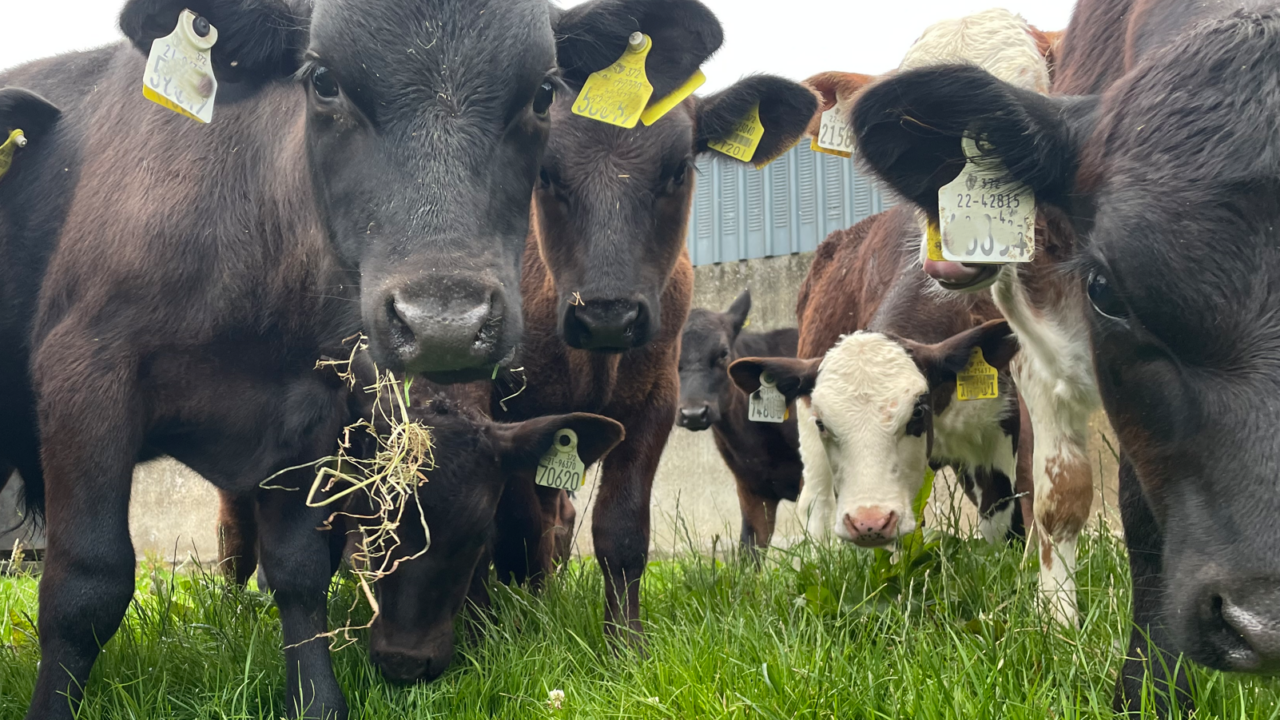
The other issue calves can experience from poor gut development is summer scour syndrome, which causes scour and rapid weight loss.
Calves typically experience this within one month of turnout to grass and up to 12 months-of-age.
Farmers were advised to ensure concentrates and water are offered to calves from birth to promote adequate rumen development.
They were also reminded to regularly check water for pH, nitrate, nitrites, and total bacteria levels.
Further advice
Farmers were also advised on the steps to ensure calves and young stock have clean, fresh air, with minimal draughts to prevent pneumonia.
There should be a good air flow through the shed, allowing warm, stale air escape through the top and fresh air enter through the likes of vented sheeting.
This can sometime be hard to manage with young calves, therefore farmers were advised to consider calf jackets.
However, they were reminded to leave them on until the calf no longer needs it rather than constantly taking them on and off. To see if the calf needs it, check under the jacket to see if the calf is sweating.
Farmers were also reminded that calves should have deep, clean, and dry bedding, and a effective vaccination protocol should be in place.
Finally, farmers were talked through the Commercial Beef Value (CBV) and the Dairy Beef Index (DBI) ahead of breeding and buying stock in marts.