Call for more local ACRES clinics as farmers find it hard to 'get answers'


The Irish Natura and Hill Farmers' Association (INHFA) is calling for "immediate and meaningful" reforms to the Agri-Climate Rural Environment Scheme (ACRES).
It follows what it has described as widespread concern raised by farmers across the country.
The INHFA recently met with the Department of Agriculture, Food and the Marine (DAFM) to outline concerns with the ACRES scheme and to seek improvements for farmers on the ground.
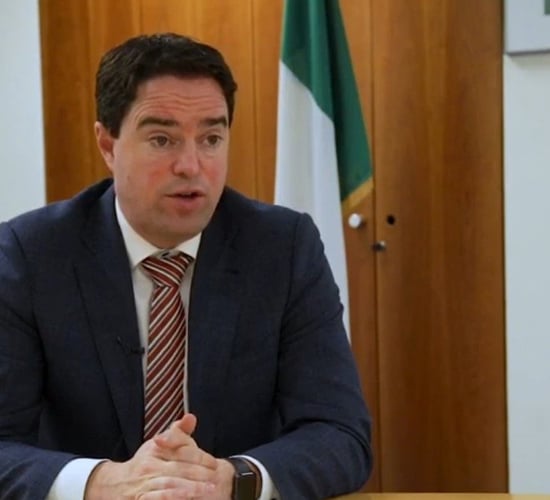
According to chair of the INHFA, Micheál McDonnell, who led the delegation, farmers are experiencing serious challenges that "undermine both the effectiveness and the fairness of the programme".
McDonnell highlighted significant problems with farmer engagement under ACRES.
"Access to CP teams is extremely limited. Farmers are finding it nearly impossible to get answers, advice, or even clarity on their scores," he said.
The INHFA is calling for more local clinics where farmers can directly engage with advisers, query their results, and receive guidance on landscape actions and NPIs (non-productive investments).
He claimed that scorecards are often delayed and, when they do arrive, they lack essential information.
"Farmers must receive scorecards promptly, with clear explanations for low scores and practical advice on how to improve. A holistic, transparent approach is needed," the INHFA chair said.
Imbalance in ACRES?
While acknowledging the environmental goals of ACRES, the INHFA chair expressed serious concern over what he described as an imbalance in the system.
"There is an overwhelming emphasis on ecological criteria, with very little consideration for agricultural realities," he said.
"Farmers are custodians of these lands, and their management experience must be respected.
"We cannot have a bias against agricultural activity on lands that depend on it."
The INHFA has also raised concern about delays in issuing controlled burning permits.
"We have cases where ecologists approve burns, yet the NPWS [National Parks and Wildlife Service] still fails to issue permits.
"This is creating unmanageable land conditions and increasing the risk of wildfire. Farmers are being left powerless," McDonnell said.
He added that common issues such as quad bike tracks - essential for an aging farming population to manage stock - should not be treated as "major negative scoring" factors.
The INHFA is also seeking solutions for situations where illegal dumping occurs through no fault of the farmer.
"It is unacceptable that farmers are penalised financially for actions they did not cause. A proactive and fair system must be put in place immediately," McDonnell urged.
The INHFA chair also highlighted the low uptake of NPIs and landscape actions across CP areas, citing poor payment rates and rising material costs.
"NPIs should be paid for a minimum of two years, or the payment rates must be increased. Costs rise every year, yet the scheme hasn’t kept pace," he said.
He outlined what he believes to be the principle behind the ACRES Results‑Based Payment System (RBPS): "Lands that negatively impact environmental outcomes may justify a reduced payment, but high‑scoring lands must deliver increased payments.
"Farmers were told that high‑value, high‑scoring land would be properly rewarded through a bonus payment once NPIs and landscape actions were in place.
"We expect that commitment to be honoured," he added.