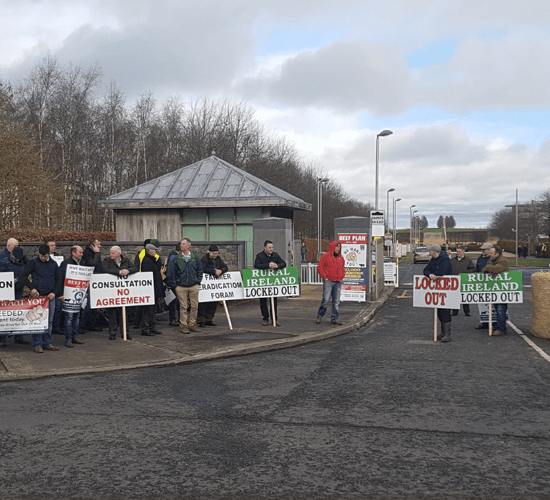
Brexit: Tariffs could force Irish beef farmers out of the British market


He continued: “The UK will have to manage market price – as a country it is more concerned with the consumer than it is with the producer, but at the same time it needs its beef imports. The one advantage that Ireland has is that it will be starting off in the process as one of the biggest suppliers of beef into the UK and that is very significant indeed.”
British standards
Hanrahan said that tariffs, in any case, were paid by the importer and if it became a reality that Irish beef was no longer going into the UK, new markets for that beef would have to be established. He also pointed to the standards around meat that the UK might or might not introduce.
We know, for example, that Uruguay is already shipping fresh and frozen beef into the EU.
He continued: “We don’t know yet what standards the UK will require when it comes to meat – will they accept beef, for example, from the US that has been washed with chlorine prior to slaughter? Is it going to accept meat, perhaps, that has been treated with growth hormones?
“Regardless of what happens though, one thing we are certain of, is that Ireland will be facing additional competition in the beef market within the UK by countries outside of the EU and prices will be lower than what farmers are even getting now for their produce.
“Brexit is not the fault of anybody in Ireland; this has happened because the British decided to do it and we are now looking at a structural change to our relationship with the UK as a result of this.”
National Farmers’ Union
Meanwhile, the NFU – on its website – has described a no-deal Brexit as “catastrophic”.
Its president Minette Batters said that, with less that two months to go now until the UK leaves the EU, union members were “hugely concerned” of the likelihood of a no-deal Brexit.
The NFU has been absolutely clear that this would be catastrophic for food production in Britain.
She continued: “Leaving the EU without a deal could well mean a trade embargo is imposed on animals and animal products going to the EU which, along with punitive tariffs on all goods going into the EU, would severely restrict livestock farmers’ export markets.
“Meanwhile, the potential for Government to unilaterally lower import tariffs on food could lead to British farmers being undercut by food coming into the country which may have been produced to lower standards than is legally required of UK farmers.”