Boosting milk protein as production starts to peak

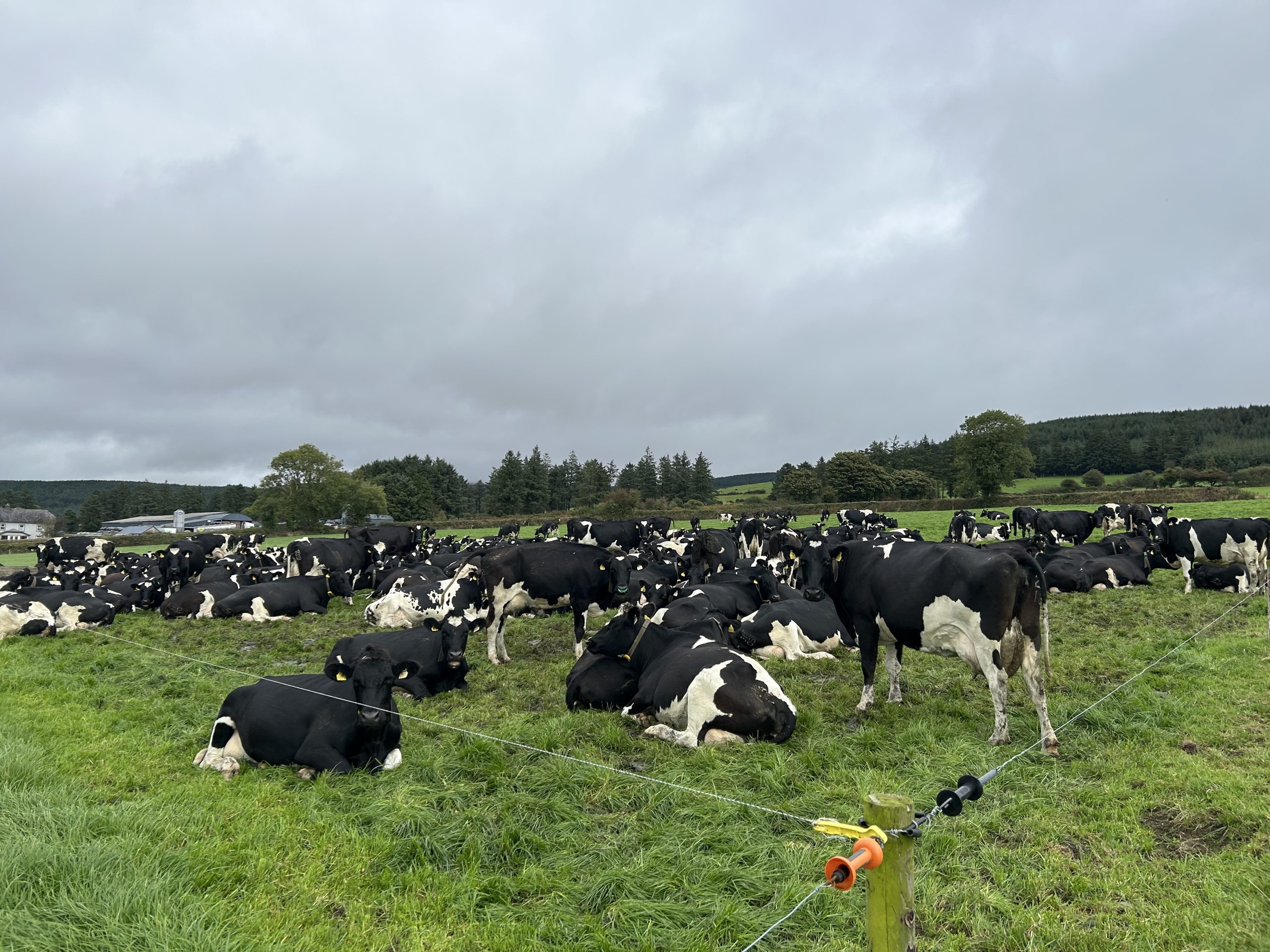
Cows are trundling towards peak milk production, but with the current unfavourable weather, what is milk protein looking like?
With the way milk prices are this spring, farmers will be looking to drive milk solids on to get somewhat of a healthy milk cheque.
However, milk protein is often at its lowest during this stage of the lactation, especially with the start to spring grazing that we have got.
That is why farmers need to be making the most of every opportunity in terms of getting cows to grass, so they can maximise dry matter intake and boost solids.
Peak production usually occurs around six to eight weeks post-calving, meaning early calvers will be peaking this week.
And considering pasture digestibility has a 30% of variability on milk protein concentrations, there must be a huge emphasis put on getting cows to grass, to boost the milk cheque for the month.
Genetics also has a very strong influence on milk protein concentrations, with approximately 70% of the variation between individual cows and herds being attributed to genetics or the predicted transmitting ability (PTA) from milk protein percentage.
Milk protein
We have seen milk protein concentrations struggle to get above 3.2% in recent years when the season started off wet.
However, this year, average milk protein is sitting at 3.43% for the first week of March, according to the national milk recording results published by the Irish Cattle Breeding Federation (ICBF).
This figure is quite impressive considering milk protein percentages usually drop by 0.3-0.4% from the annual average at this stage of the lactation.
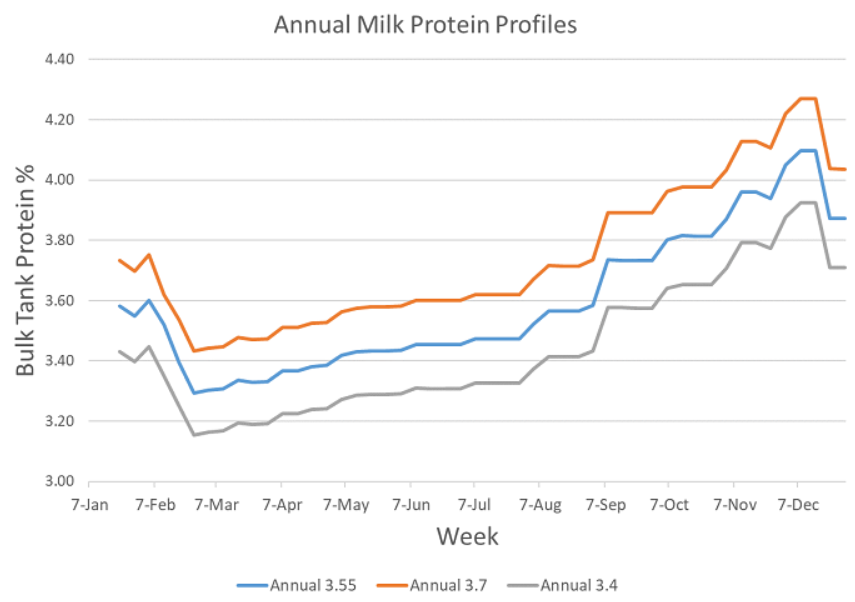
Farms that experience a severe drop in milk protein concentration, may have an issue with fermentable energy in the diet.
This often happens when cows are out grazing and the weather turns causing them to be rehoused and eating poorer quality forage.
The energy density of the diet and the digestibility of the forage is lower than grazed grass.
Grazed grass at this time of the year has an energy value of 1.0-1.1 UFL/kg of dry matter (DM), whereas 70% DMD silage has a value of 0.8UFL/kg DM.
If the genetics of the herd are poor in terms of milk solids, a dietary change may be an effective short-term solution, but in the long-run it can be hard to make a real difference in the bulk tank.
Farmers who are struggling with solids as a result of genetics should consider changing their breeding targets for the upcoming season.
They should also analyse their current PTA for fat and protein percentage.