Blackwater fish kill likely caused by ‘specific pollution event’ – report

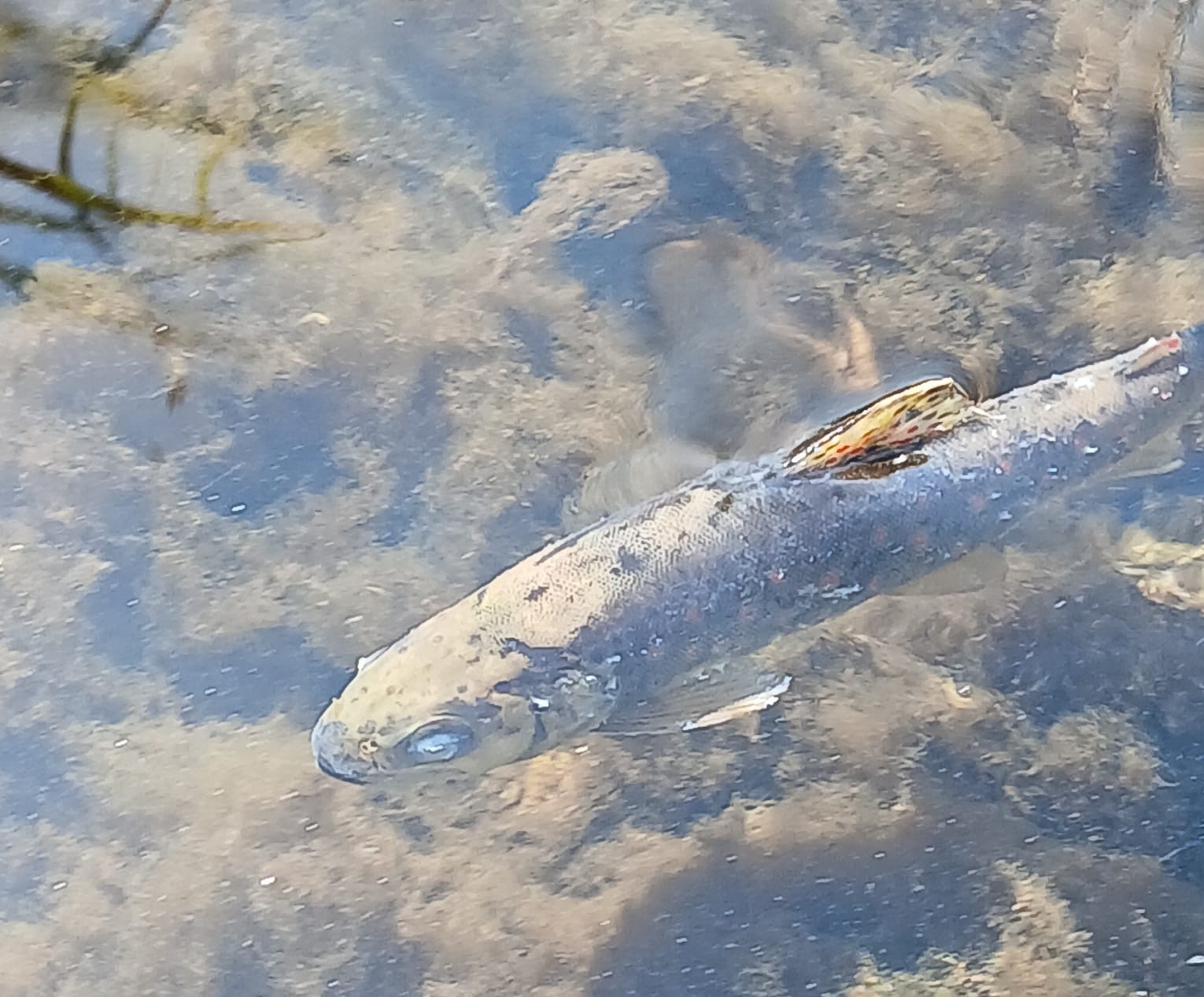
A new report on the 2025 major fish kill on the Munster Blackwater has found that the "suspected cause and source of the pollution remains undetermined".
The report, carried out by the European Commission’s Joint Research Centre (JRC), was commissioned following the largest recorded fish kill incident in Ireland, which took place last August.
It is estimated that up to 42,000 fish were killed.
While a fungal agent was initially suspected by Inland Fisheries Ireland (IFI) fish pathology results carried out later by the Marine Institute shifted focus from pathogenic agents to a water-borne irritant.
The European Commission report detailed that the fish kill was "likely to have been caused by a specific pollution event"
It has now recommended that there should be continuous monitoring on major Irish rivers.
It also set out in the report that a multi-agency plan for major fish kills should be prepared and agreed and this should include comprehensive sampling of the river as well as discharging facilities in the catchment
According to the report there are also opportunities where coordination and communication could have been improved, while also acknowledging a “detection gap” exists, where a short-lived pollution event occurs and dissipates before it is detected, limiting the investigation and enforcement.
Minister of State at the Department of Climate, Energy and the Environment, Timmy Dooley, said today (Friday, February 13) that a "key objective of this review was to ensure that we learned from this incident".
He added: "The practical, forward looking recommendations set out in the report provides a clear roadmap for action and improvement.
“Some recommendations can and are being progressed immediately, while others will require more detailed consideration and planning to ensure they are implemented in an effective and evidence-based way.”
The Minister said that many of the recommendations made in the report will be “progressed in the short term”, including those aimed at strengthening how state agencies work together.
Protocol
An inter-agency protocol group has been established by IFI to coordinate this collaborative work and is expected to be completed before the end of Q1 2026.
This sets out that all agencies involved should ensure that the relevant expertise, resources and information are brought together quickly, to ensure consistency in how incidents are handled and communicated in the future.
The report also sets out a range of longer-term recommendations.
This includes preventative measures such as research to predict high risk locations for fish kills, in conjunction with improving catchment resilience by reducing pressures, improving habitat quality and flows and enhanced approaches to detection such as continuous real-time monitoring on major rivers.
The minister also “welcomed the JRC’s engagement” with local stakeholders and the “important role they played in raising the initial alarm”.
He said: “This was a very distressing event for the local community.
"I particularly value the JRC’s engagement with local stakeholders and the objective way their perspectives are reflected in the report.
"It also highlights the important role that citizen science and public observation play in the protection of our environment.”