Bird flu - ‘the biggest risk is the guy who thinks his flock is immune’
Bird flu, or avian influenza, is in the headlines again, as a number of cases have been detected in Irish farms.
This impacts not just the poultry industry, but the Irish agricultural and rural community as a whole.
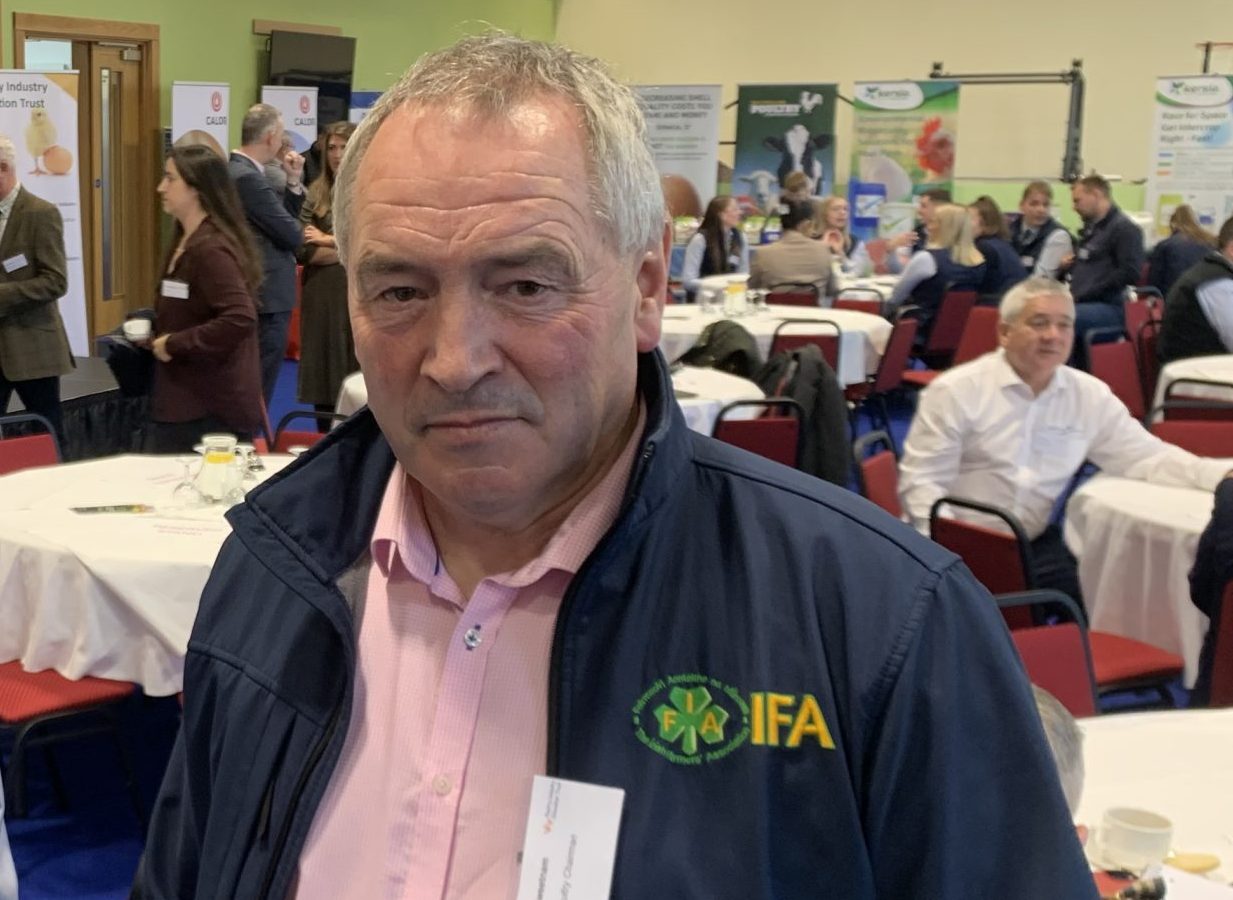
Agriland has been speaking to Nigel Sweetnam, Irish Farmer's Association (IFA) poultry chair, about the efficacy of housing, ongoing vigilance, and the Christmas turkey prices.
Housing
A poultry housing order has been in effect since November 10 across Ireland (the UK, including Northern Ireland, have such an order in effect since November 7).
On the subject of housing, Sweetnam said that he’s seeing “encouraging” signs.
“I’m seeing posts online,” he said, “[including] a guy who has a gardening blog about his eight hens. He’s brought them into his polytunnel.
“It’s encouraging to see that. They’re going to enrich the soil and he’s keeping them away from wild birds.”
Wild birds
While hobby farms and pets should be housed, Sweetnam added that they do not pose the greatest risk.
“It’s not the four of five hens [that are the greatest cause of concern], but the free range,” he said. “The biggest risk is the guy who thinks his flock is immune.
“90% of infection is from contact with wild birds. If you take that contact out of the equation you increase your chance of avoiding infection.
“The other thing to say is that every year it mutates,” he added. “And this year it finds a carrier host in a new mutation. Game birds and water fowl are susceptible, [such as] pheasants, wild duck, and geese.
“The UK is at risk because their pheasant population is roughly ten-times ours.”
The IFA chair said that Ireland has been relatively unscathed compared to some other territories.
While water fowl have been known to carry bird flu, another issue is when it emerges in much more common birds.
“The other big concern is the fact that crows might be susceptible. Up this point, they hadn’t been," Sweetnam continued.
“There’s evidence that crows might be susceptible to contracting it, but not dying, which is a worry. If they don’t die they become vectors.”
Christmas
Sweetnam maintained that he’s “hopeful” about the situation at the moment.
“There were concerns about the turkey market,” he admitted. “At the scale it’s at, it’s not a major impact on availability.”
On the question of Christmas, he recalled going to livestock marts when he was young “and the butcher went there to buy the on the open market”.
Now, however, there’s a vast difference in scale, and orders being placed in advance. “The whole issue of price rising won’t occur unless supermarkets gouge people,” he said.
Why did the chickens cross the road?
Sweetnam said that “the three flocks that went down were grazing in fields vindicates the housing order”.
“To be fair,” he added, “the media brought everyone with us on housing. On a commercial scale there’s no problem.
"The messaging has been strong from ourselves not to feed wild birds if you have domestic foul.”
Sweetnam also added that farmers themselves are keen for others to follow the guidelines and rules: “Commercial growers will get irate if they see people breaching.
“The only rogue report was a photograph from west Cork of three hens crossing the road!”