Biosecurity and vaccination 'best defence' against Newcastle disease

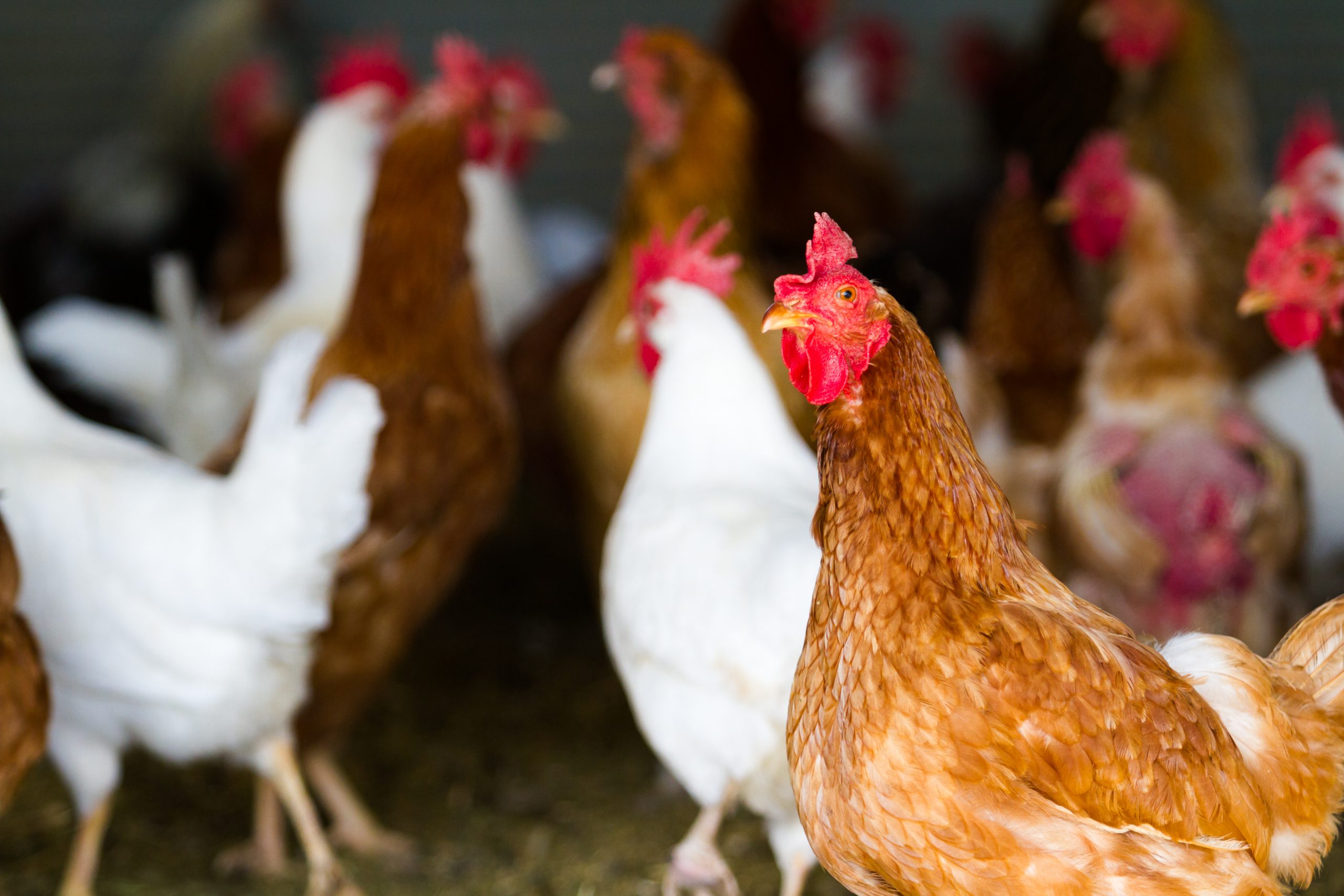
Farmers are being advised that biosecurity and vaccination are the "best defence" against a potential Newcastle disease incursion in Ireland.
Newcastle disease (ND) is an infection of poultry caused by the Newcastle disease virus (NDV), however it may affect other captive birds including pet, zoo and wild birds.
In an update issued by the Department of Agriculture, Food and the Marine's National Disease Control Centre (NDCC), it said that the disease has a "rapid onset and is very contagious with up to 100% morbidity if a susceptible flock is infected".
"Ireland is currently free from ND, with the last known case seen in 1997," the NDCC said.
"Strict rules are in place to prevent the entry of ND into Ireland.
"However, as with avian influenza, the virus can be brought in by wild birds, which we cannot control.
"Stringent measures are activated in the event of an outbreak. Control measures are underpinned by European legislation."
Outbreaks in Europe
The NDCC said that the Spanish authorities confirmed an outbreak of Newcastle disease on March 9, 2026.
"The outbreak occurred a flock of laying hens in the municipality of Terrateig, in the province of Valencia," it said.
"This is the sixth outbreak of ND to be confirmed in Spain during this season.
"The farm is located within the 10km radius of previously notified outbreaks in December 2025, for which all measures had been lifted in February 2026."
The NDCC added that Spanish authorities are applying strict control measures.
"The farm in question had been properly vaccinated against the disease, with four doses of vaccine having been correctly applied to the birds, which did not prevent the introduction of the virus toone of the sheds," it said.
"The origin of the infection is currently being investigated."
There have been a "large number of poultry outbreaks" in Poland and into Germany in addition to the outbreak in Spain.
Clinical signs
Clinical signs depend on the virulence of the strain, with highly virulent strains leading to severe respiratory, gastrointestinal and neurological clinical signs, the NDCC said.
"Egg drop is also seen and mortality can reach 100% on extreme cases," it said.
"Milder strains can be asymptomatic or cause milder signs.
"However, the strains have the ability to evolve into highly virulent strains."
The clinical picture for ND is similar for that of avian influenza, so laboratory testing is "vital" to confirm diagnosis, according to the NDCC.
ND is usually transmitted either by direct contact with diseased or carrier birds or through environmental contamination from faeces or respiratory droplets.
ND can survive in the environment for several weeks, especially in cool weather.
Biosecurity
"Occasional zoonotic transfer to humans has been seen in those after large exposure to the virus leading to conjunctivitis and/or pneumonia," the NDCC said.
"Prophylactic vaccination is recommended for commercial poultry, though, as seen in Spain, no vaccine is 100% effective.
"Effective biosecurity practices are vital to prevent diseaseincursions into a naive flock.
"The ongoing risk posed by avian influenza and ND is a reminder to all who keep poultry, whether commercial holdings or those who have some backyard hens, to stay aware and take precautions to prevent contact with or contamination from wild birds."