Beef focus: Less common sire breeds effective on Laois suckler-beef farm

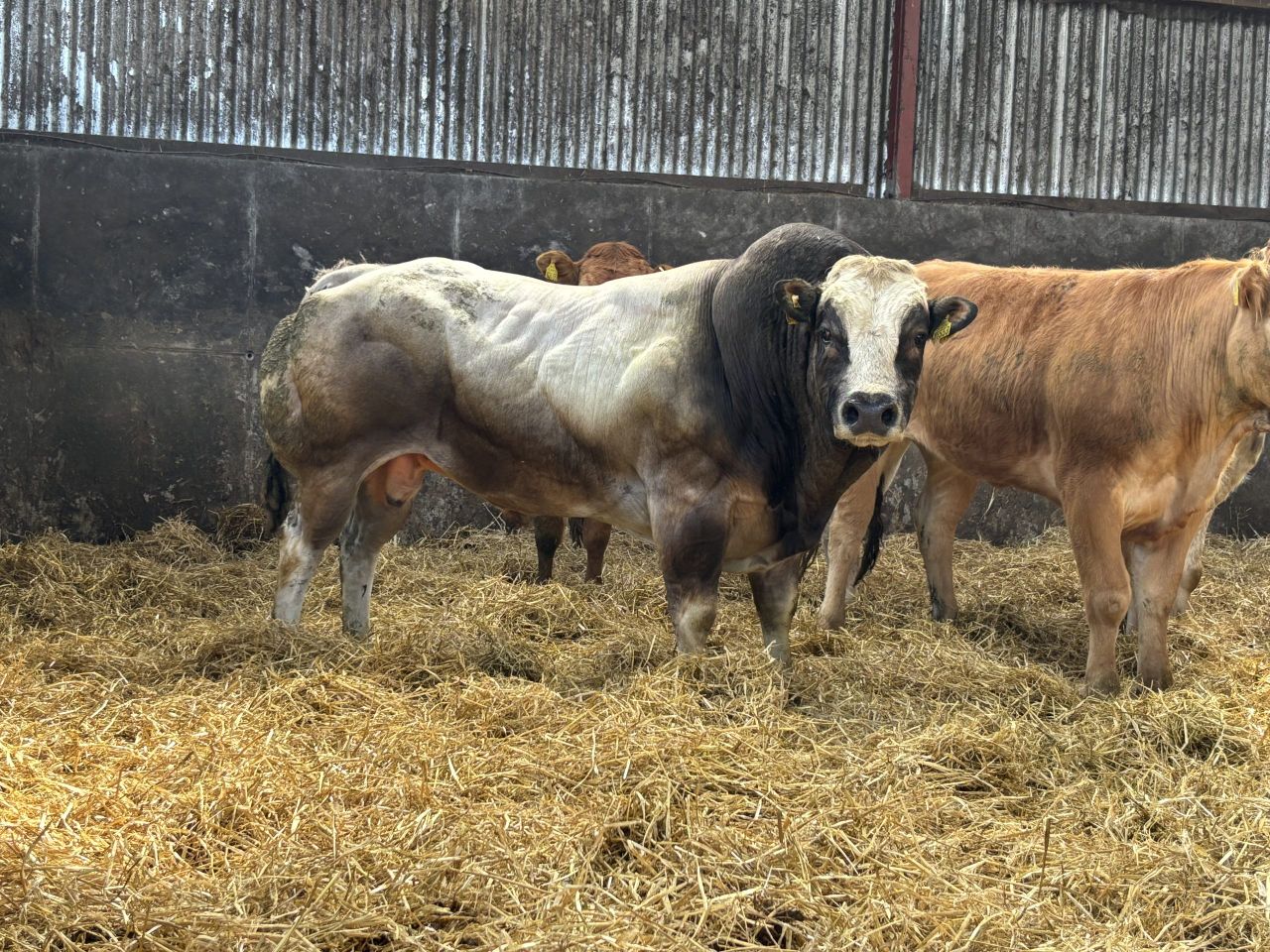
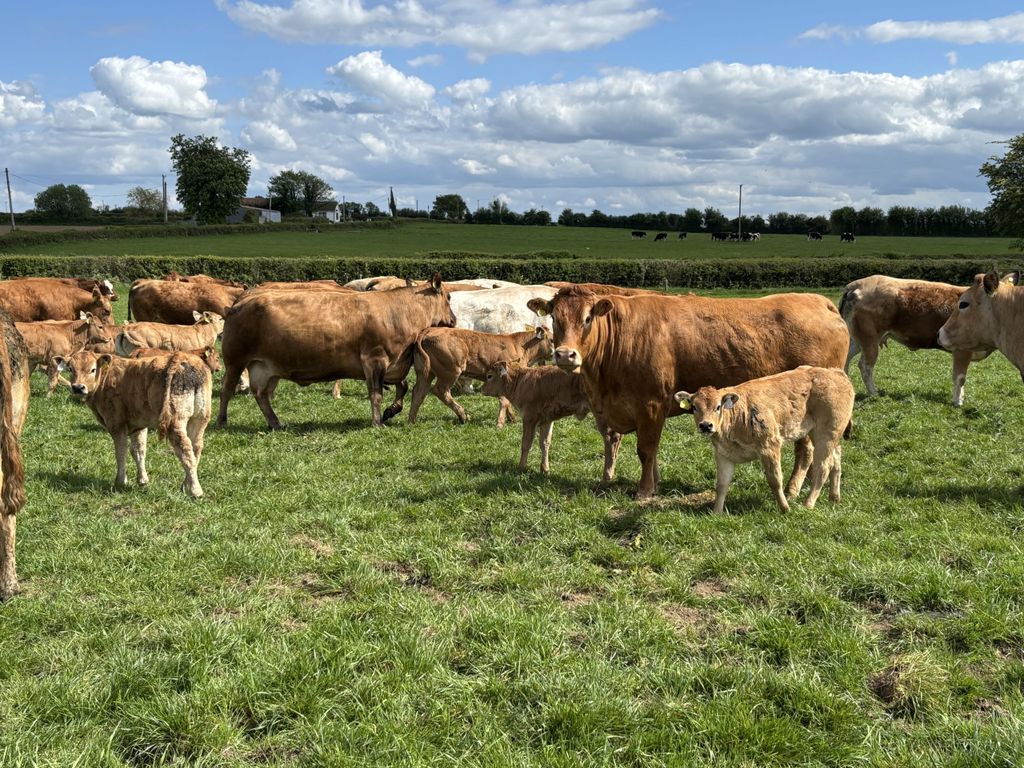
Based in Ballybrophy, Co. Laois, Thomas Carroll is a suckler, beef and tillage farmer running Parthenaise and Piedmontese breeding bulls with his suckler herd.
Approximately 40 suckler cows are calved on the farm annually and and 50 weanlings are purchased in with all cattle brought through to finish.
The 200ac farm was originally a dairy farm but transitioned to beef around the time of milk quota abolition.
Approximately 45ac of the farm is allocated to malting and feed barley production annually.
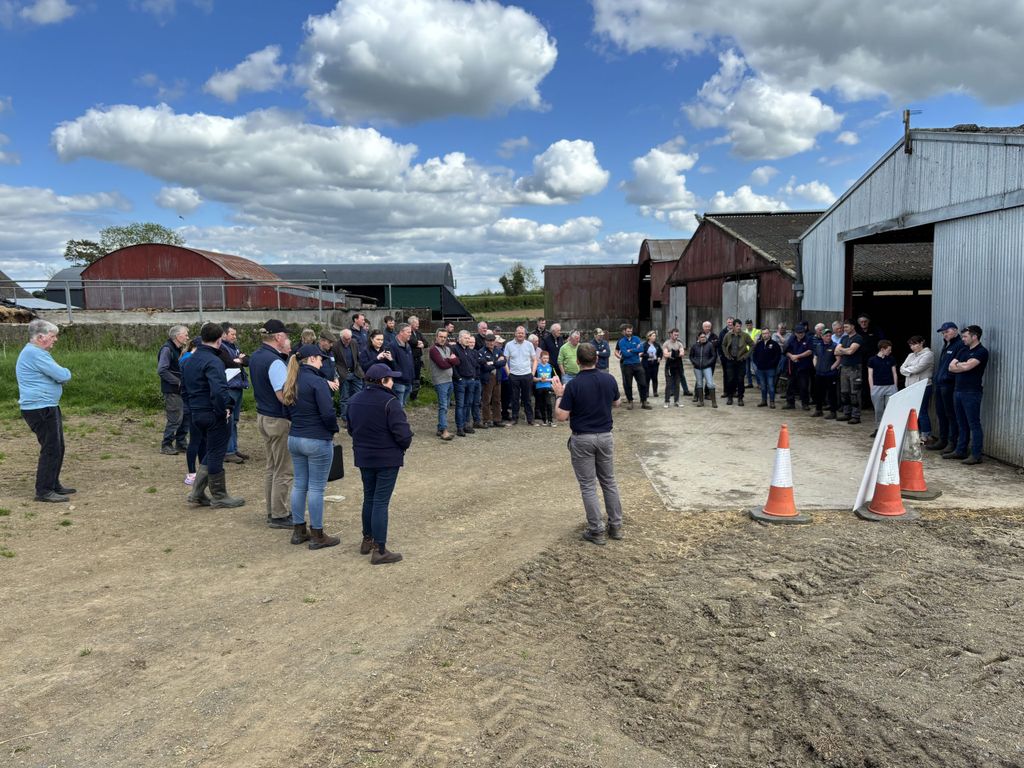
Cattle are slaughtered at Ashbourne Meats, and the farm recently hosted a farm walk in association with the processor as well as Teagasc and the Irish Cattle Breeding Federation (ICBF).
The Parthenaise and Piedmontese sire breeds are uncommon in Ireland, with the number of calves sired by these breeds in 2024 falling into the 'other' category in the Department of Agriculture, Food and the Marine's (DAFM's) 2024 Bovine Statistics Report.
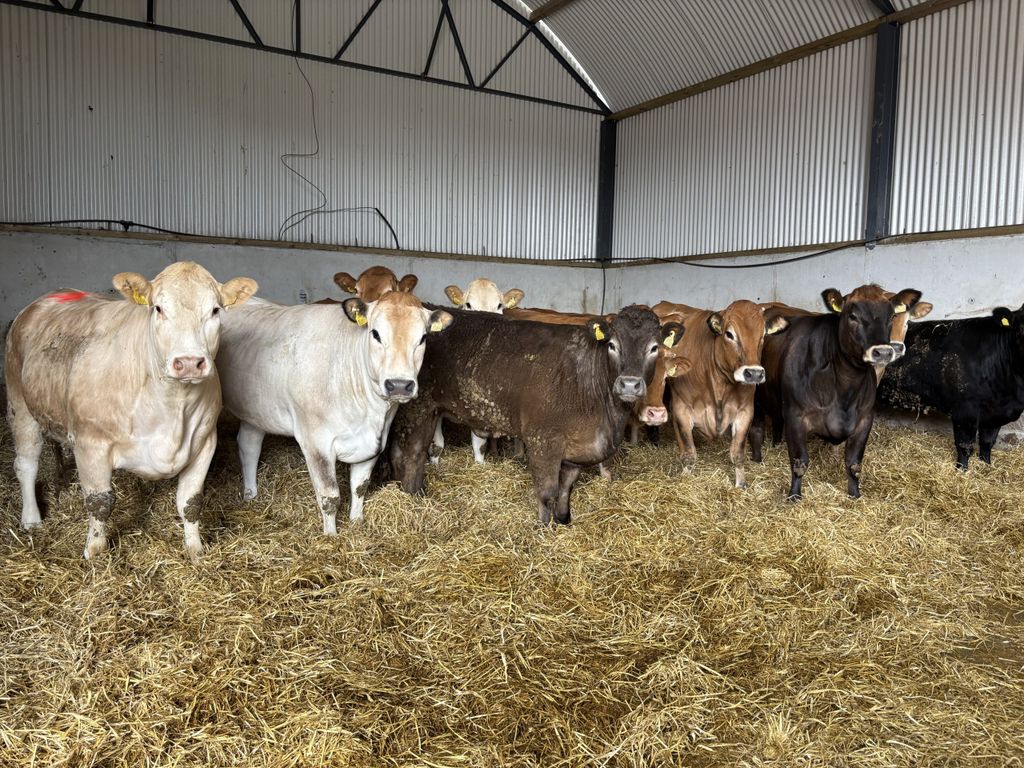
At the farm walk, the host farmer explained: "The main bull I use in the suckler herd is Parthenaise, something I fell into about 10 years ago."
He said that Parthenaise are an easy-calving breed but said "they're probably not for everyone".
"If you were selling your calves at the end of the year, you might be disappointed with their weights but I really find they come into their own from year 1-2 which suits my system here."
He said that the Parthenaise-sired progeny are "very easy calving" and at "about about three months-of-age, they really start to blossom.
"They're very quick to get up and going at birth," he added.
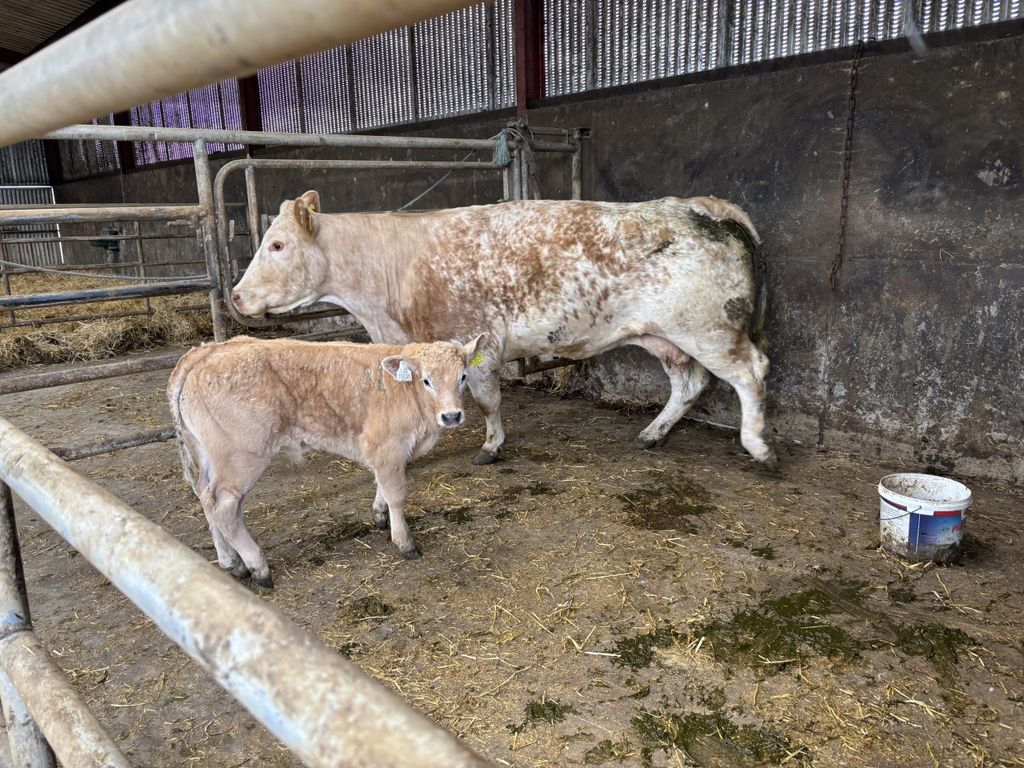
A Piedmontese bull is used on the replacement heifers.
Thomas said that the progeny from this breed are "easy calving" also and that the calving difficulty is "nearly like an Angus to calve but they fill out well".
Commenting on the fleshing ability of these cattle and getting factory-spec carcass fat covers on the progeny from these sire breeds, Thomas said: "The Parthenaise, I have no problem with.
"Maybe its the cross of the cows I have and the feed is probably another thing.
"I grow spring barley here so I try to utilise that as best I can."
He said that thankfully he has had no issues at the factory with under-fat bulls to date.
"Piedmontiese would be a little tougher [to flesh]," he added.
"I'm not in on them long enough but you'd want to be crossing them with beefy-type cows.
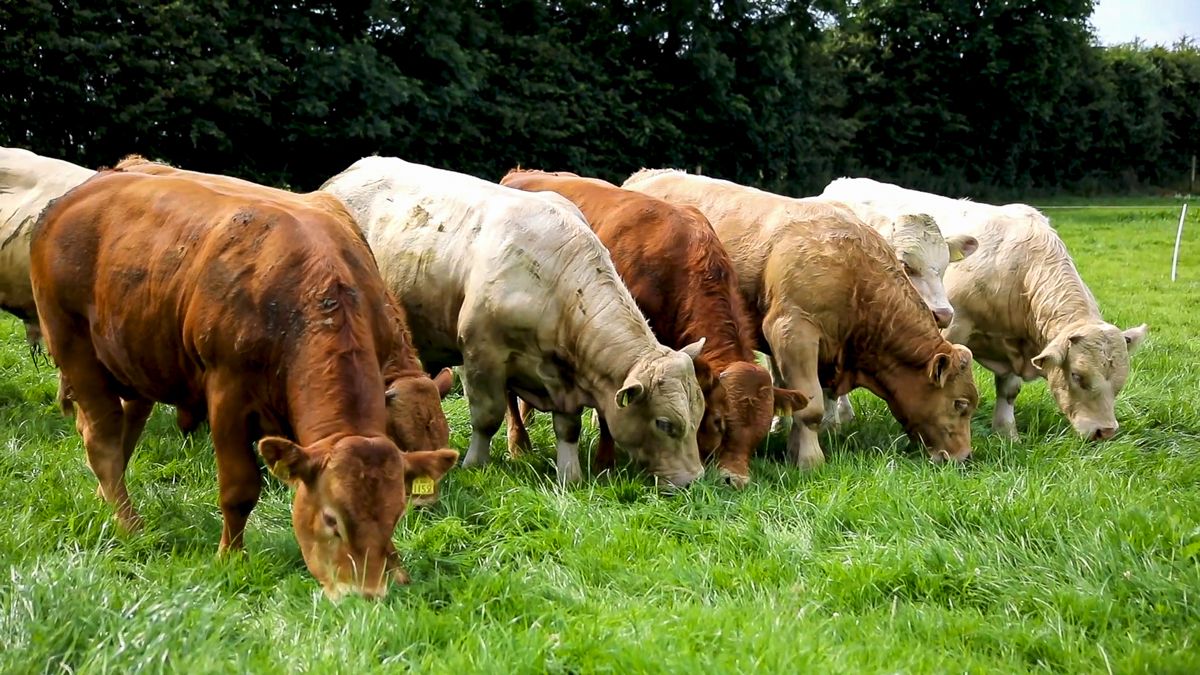
The cow-type on the farm is primarily Limousin-Parthenaise cross with Piedmontese genetics recently introduced through heifers.
Thomas said: "The stock bull is very lean but up to now, I've had no issues with fat cover on carcase specs."
Factory agent comment
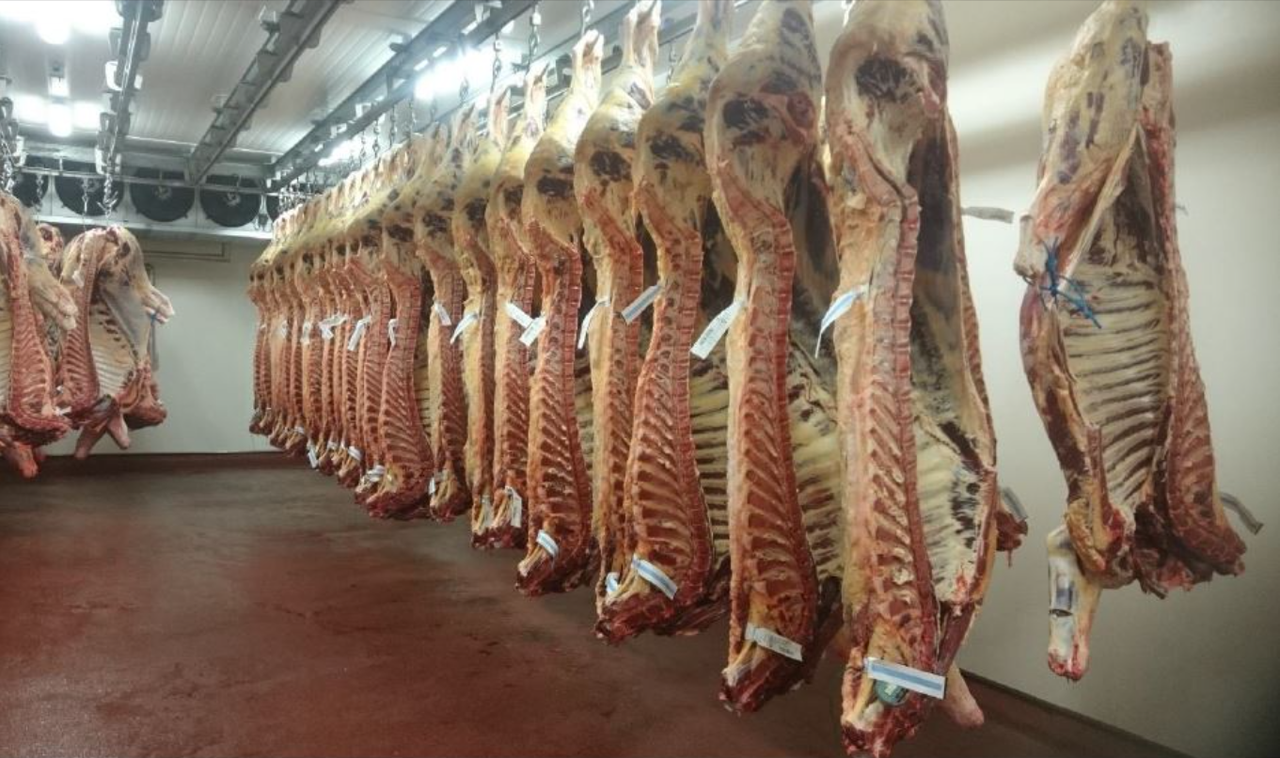
Commenting on the cattle produced on the farm, Ashbourne Meats procurement manager Willie McCormack said: "Tom gives us a nice quality heifer with a 380-420kg carcass.
"Up to 400-410kg is a very suitable carcass. They're mostly 'R' and 'U' grade heifers.
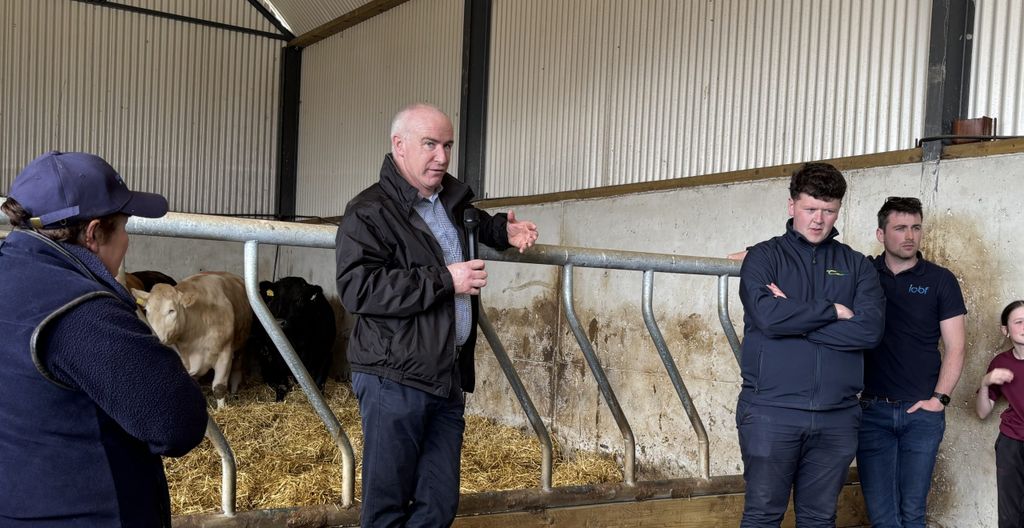
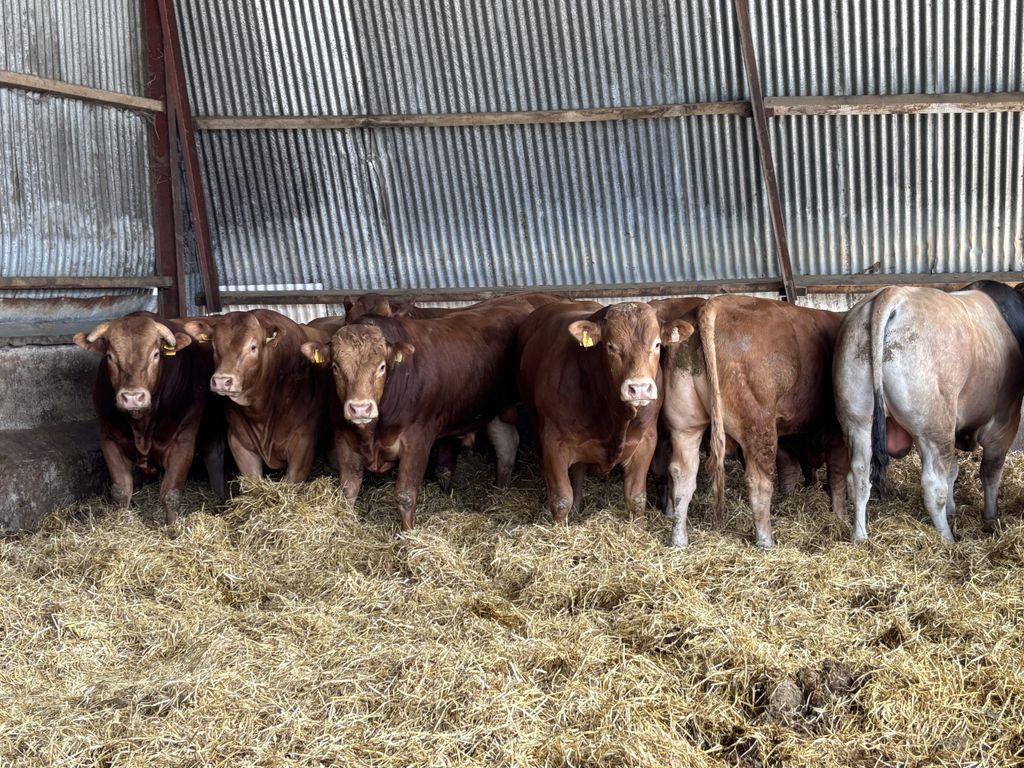
"The bulls are 450-460kg carcase weight. That's a specialised job and you need to communicate with your factory agent on that.
"We have a specialised job in Holland for them so Tom's bulls work well for it."
On bull carcass fat cover, McCormack said: "Tom's diet uses a lot of barley but he has it well managed so that he's able to get the fat cover up on them."
The role of grass in suckler beef systems
Also speaking at the event, Peter Doyle from Teagasc said: "There has never ben a more important year than now to stay investing in grassland, soil fertility and getting high output from grass."
He said that Teagasc estimates the cost of feeding a suckler cow at grass is "just under €1/day".
If a suckler cow is in the shed, the feed costs are "just over €2.40/day" when land charges are included, Doyle explained.
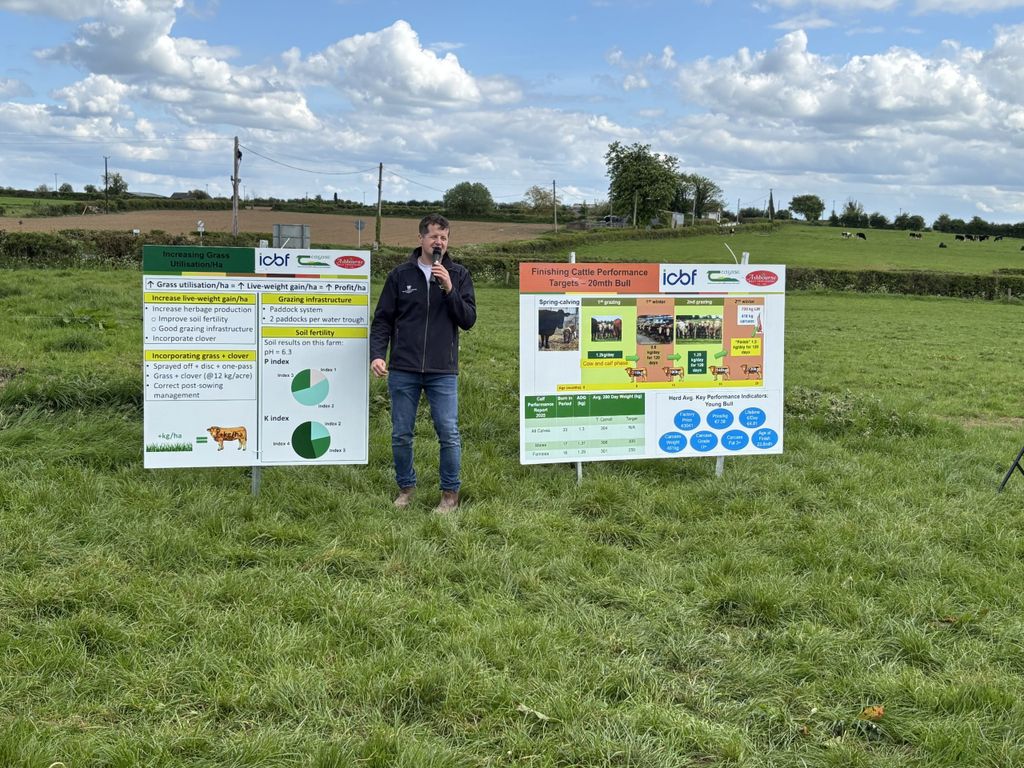
Thomas said his paddocks are all mostly 4ac paddocks on the farm and added that he tries to reseed every year.
He said: "In July or August, I spray off and generally just power-harrow it and sow it.
"The reason I go for that time of year is there is less of a strain grass-wise, after-grass is coming back into play."
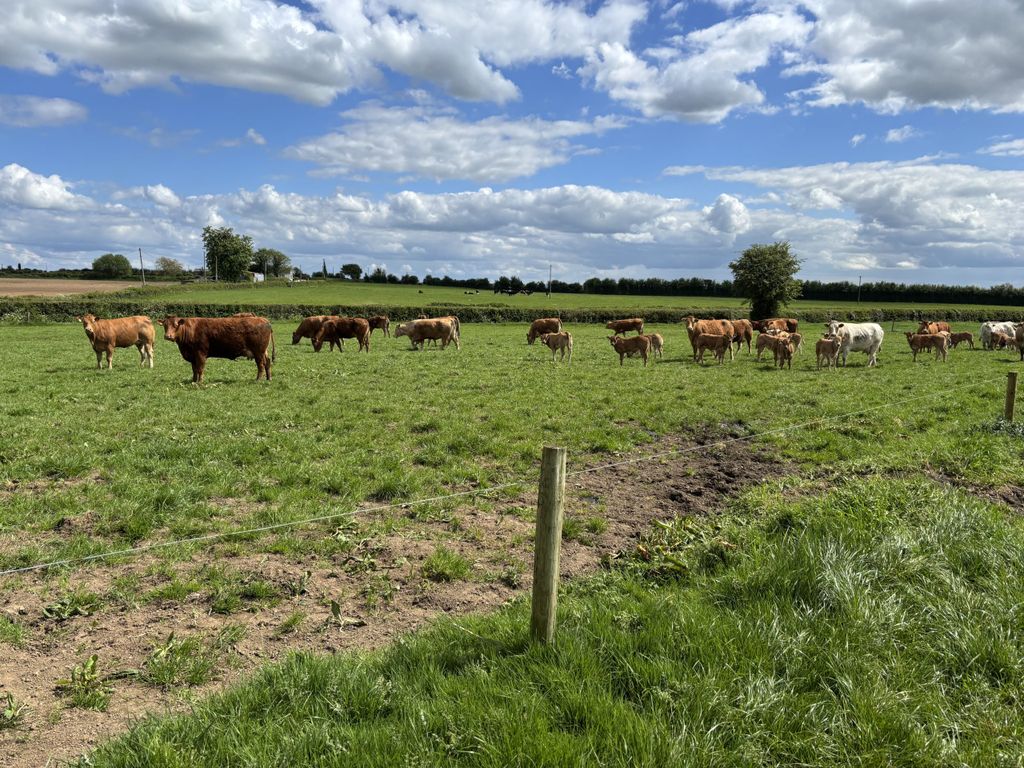
He also incorporates clover into his reseeds.
Doyle highlighted research underway at Teagasc Grange that is showing suckler cow-calf pairs on grass and clover swards are performing better than cow-calf pairs on grass-only swards.
Suckler-bred bull beef
Teagasc's David Argue gave an overview of 20-month suckler bull beef systems.
He stressed that bull beef is a "very specialised system" and requires very different management to heifer or steer systems.
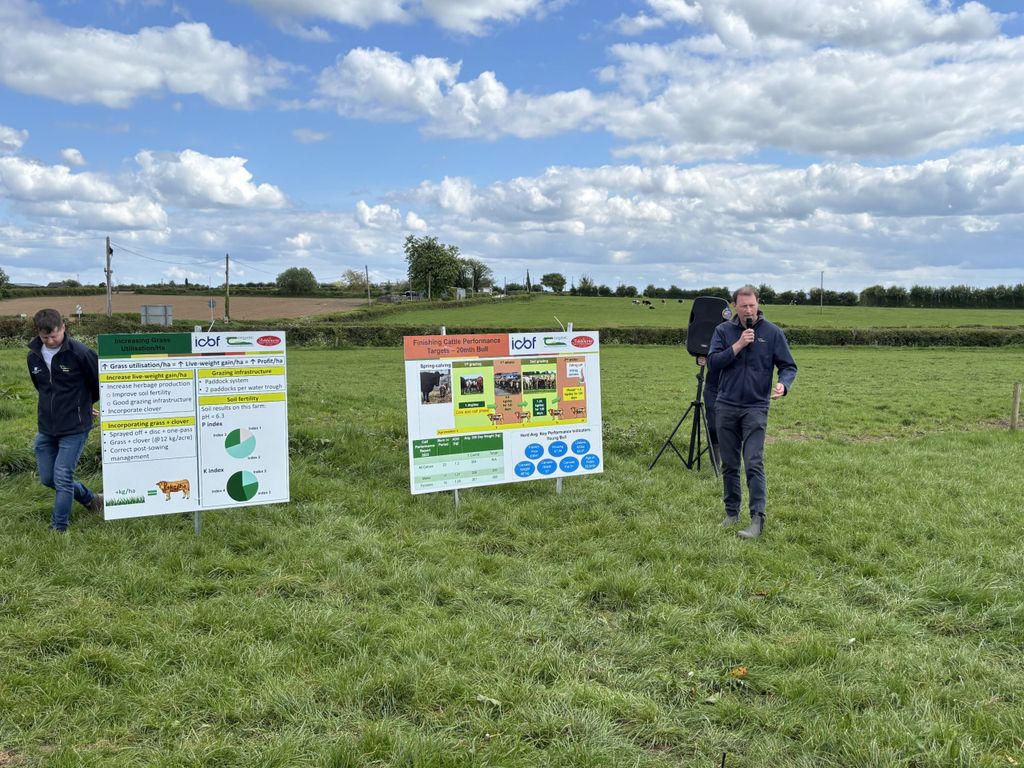
Argue outlined the targets needed to be achieved at different stages of the animals' lifetime to ensure it makes the target of 720kg liveweight and 420kg carcass weight at 20 months-of-age when the animal is slaughtered.
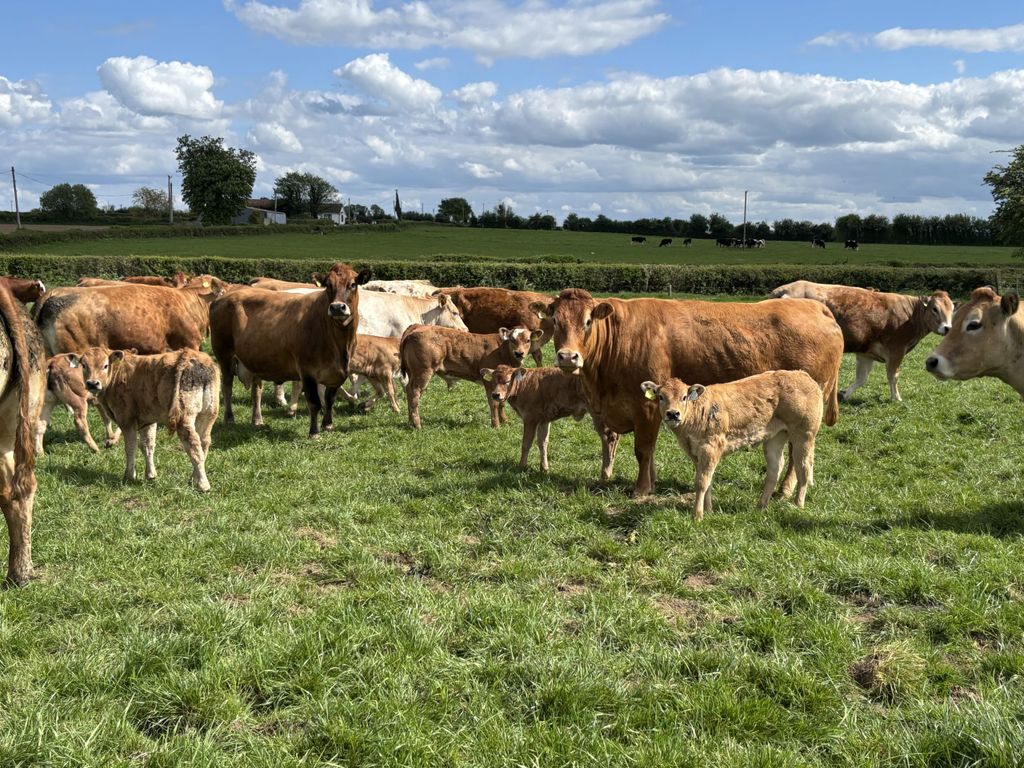
The most recent bulls slaughtered on the Carrolls' farm had an average carcass weight of 461kg with an average price of €3,041/head or €7.38/kg.
The average slaughter age of the bulls was 22.8 months with an average grade of 'U=3='.